
When a toilet clogs, choosing the right tool saves time and prevents mess. This guide explains the critical differences between a toilet plunger vs toilet auger, helping you decide which to use for various clogs. Follow our practical steps to tackle blockages effectively and keep your bathroom running smoothly.
Toilet Plunger vs Toilet Auger: Which Should You Choose?
Dealing with a clogged toilet is never fun. It’s one of those household emergencies that can cause stress and mess. But don’t worry! With the right tools and knowledge, you can handle most clogs on your own. The big question is: should you grab a toilet plunger or a toilet auger? This guide will walk you through everything you need to know about the toilet plunger vs toilet auger debate. You’ll learn how each tool works, when to use them, and step-by-step instructions to clear clogs like a pro. By the end, you’ll be confident in choosing the right tool for the job, saving time, money, and frustration.
In this comprehensive how-to guide, we’ll cover the basics of each tool, their strengths and weaknesses, and a practical decision-making process. Whether you’re a homeowner, renter, or just want to be prepared, understanding the toilet plunger vs toilet auger choice is essential. Let’s dive in and unclog the mystery!
Contents
Key Takeaways
- Plungers are for minor clogs: Use a toilet plunger for simple blockages caused by too much toilet paper or organic waste.
- Augers tackle stubborn clogs: A toilet auger is designed to break up or retrieve objects deep in the drainpipe.
- Start with the plunger: Always attempt to clear the clog with a plunger first, as it’s less invasive and easier to use.
- Correct usage prevents damage: Improper technique with either tool can worsen the clog or harm your toilet’s plumbing.
- Technique matters: For plungers, create a tight seal and use forceful pumps; for augers, insert carefully and crank slowly.
- Prevention is key: Avoid flushing non-flushable items to reduce the need for either tool.
- Know when to call a pro: If both tools fail, it’s time to contact a professional plumber to avoid costly mistakes.
Understanding the Toilet Plunger
The toilet plunger is a classic tool found in almost every home. It’s simple, affordable, and effective for many common clogs. But not all plungers are created equal, and using them correctly makes all the difference. In the toilet plunger vs toilet auger discussion, the plunger is often the first tool people reach for, and for good reason.
Plungers work by creating pressure and suction. When you push down, you force air and water into the drain, dislodging the blockage. When you pull up, you create suction that can break up the clog. This back-and-forth action is key to clearing minor obstructions.
Types of Toilet Plungers
There are two main types of plungers: cup plungers and flange plungers. Cup plungers have a simple rubber cup and are often used for sinks and tubs. For toilets, you want a flange plunger. It has an extended rubber flap that fits snugly into the toilet drain, creating a better seal. This seal is crucial for generating the pressure needed to clear clogs. Some modern plungers come with accordion-style designs for extra power, but the flange type is the standard for toilets.
When shopping for a toilet plunger, look for one with a sturdy handle and flexible rubber. A good seal means better performance in the toilet plunger vs toilet auger matchup for everyday clogs.
How to Use a Toilet Plunger Effectively
Using a plunger might seem straightforward, but many people make mistakes that reduce its effectiveness. Follow these steps for best results:
- Prepare the area: Place old towels or newspapers around the toilet base to catch any splashes. Wear gloves if you prefer to keep hands clean.
- Check the water level: If the bowl is too full, carefully scoop out some water to prevent overflow. If it’s too low, add water to cover the plunger cup for a better seal.
- Create a seal: Insert the plunger into the toilet bowl, ensuring the flange goes into the drain hole. Push down gently to form a tight seal. You should feel resistance when pulling up.
- Plunge with force: Use firm, rapid pumps. Push down and pull up vigorously about 10-15 times. The goal is to create suction and pressure to dislodge the clog. Keep the plunger submerged to maintain the seal.
- Test the drain: After plunging, flush the toilet to see if the clog is cleared. If not, repeat the process. Sometimes, letting the plunger sit for a minute between attempts can help.
Remember, patience is key. Sometimes it takes a few rounds of plunging to clear a stubborn clog. Avoid using excessive force that could damage the toilet.
When to Use a Toilet Plunger
The toilet plunger is your first line of defense. Use it for clogs caused by too much toilet paper, organic waste, or small objects. If the water in the bowl is draining slowly or not at all, but isn’t overflowing, a plunger is often sufficient. It’s best for minor blockages close to the toilet bowl. In the toilet plunger vs toilet auger decision, start here because it’s quick and low-risk.
For example, if your kids flush too much paper, or after a party with heavy use, the plunger can usually handle it. Regular maintenance plunging can also prevent clogs from forming.
Understanding the Toilet Auger
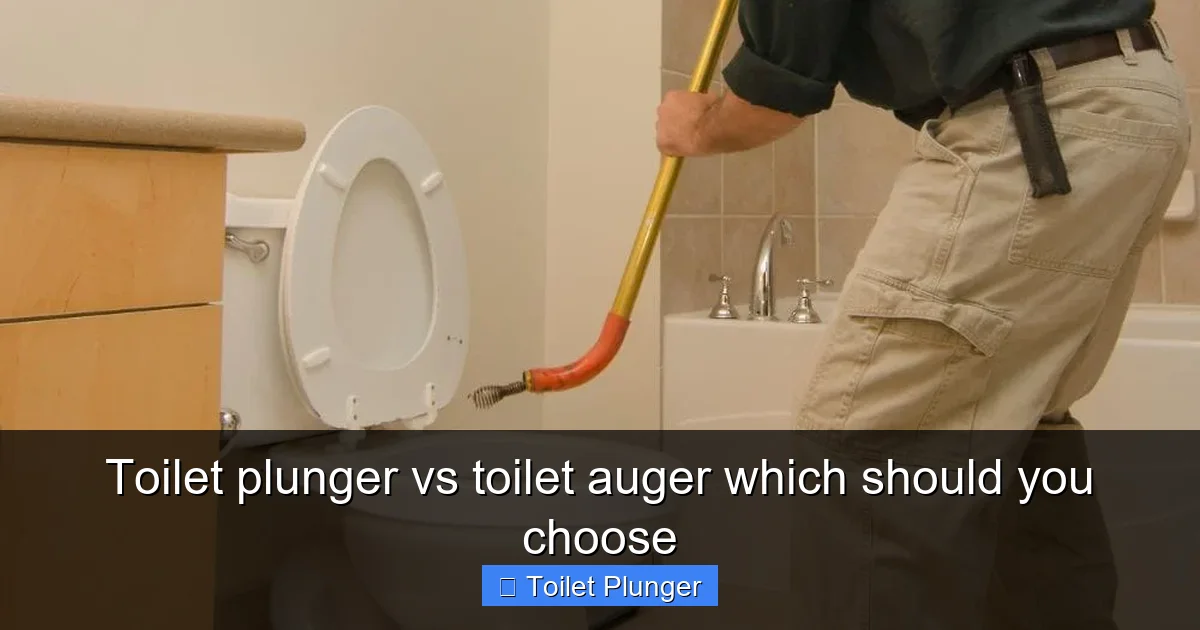
Also known as a plumbing snake or closet auger, the toilet auger is a more specialized tool. It’s designed to reach deeper into the drainpipe where plungers can’t go. If you’re facing a persistent clog, a toilet auger might be the solution. In the toilet plunger vs toilet auger debate, the auger is the heavy-duty option.
Visual guide about Toilet plunger vs toilet auger which should you choose
Image source: toiletreviewer.com
Augers work by physically breaking up or retrieving blockages. They have a long, flexible cable with a corkscrew or hook at the end. You feed the cable into the drain until it hits the clog, then crank the handle to dislodge it. This makes them ideal for tougher jobs.
Types of Toilet Augers
Toilet augers come in manual and motorized versions. Manual augers are hand-cranked and are common for home use. They have a long, flexible cable with a corkscrew tip that can break up or grab debris. Motorized augers are more powerful and typically used by professionals. For most household clogs, a manual toilet auger is adequate. They usually range from 3 to 6 feet in length, enough to reach deep into the toilet trap.
When choosing an auger, look for one with a protective sleeve to prevent scratching the toilet bowl. A comfortable handle and smooth cranking mechanism are also important. In the toilet plunger vs toilet auger comparison, augers are a step up in complexity but offer more power.
How to Use a Toilet Auger Safely
Using an auger requires care to avoid damaging your toilet. Here’s how to do it safely:
- Wear gloves: Protect your hands from dirt and bacteria. Safety glasses are also a good idea to guard against splashes.
- Insert the cable: Place the auger’s tip into the toilet drain and slowly feed the cable into the pipe. Crank the handle as you push gently. Don’t force it; let the cable navigate the curves naturally.
- Feel for resistance: When you hit the clog, you’ll feel resistance. Crank the handle to break up the clog or hook onto it. You might need to push and pull slightly to work through the blockage.
- Retrieve the cable: Slowly pull the cable back out, bringing any debris with it. Be careful not to scratch the porcelain. If the clog is broken up, it should wash away when you flush.
- Flush and clean: Once the clog is cleared, flush the toilet to ensure proper drainage. Clean the auger thoroughly after use with disinfectant and store it dry to prevent rust.
Always follow the manufacturer’s instructions for your specific auger model. Practice makes perfect, so don’t get discouraged if it takes a few tries.
When to Use a Toilet Auger
Turn to the toilet auger when the plunger fails. It’s ideal for clogs caused by foreign objects like toys, sanitary products, or hardened waste. If the clog is deep in the drainpipe or involves tree roots (in severe cases), an auger is necessary. However, for root intrusions, you may need a professional-grade auger.
In the toilet plunger vs toilet auger decision, use the auger for persistent slow drains, gurgling sounds, or when you suspect a solid object is stuck. For instance, if a toothbrush or jewelry gets flushed, an auger can often retrieve it.
Direct Comparison: Toilet Plunger vs Toilet Auger
Now that you understand each tool, let’s compare them head-to-head. This will help you see their strengths and weaknesses in the toilet plunger vs toilet auger matchup. We’ll look at cost, ease of use, effectiveness, and more.

Visual guide about Toilet plunger vs toilet auger which should you choose
Image source: toiletseek.com
Cost and Accessibility
Toilet plungers are cheap and widely available. You can find them at any hardware store for under $10. Toilet augers cost more, typically $20 to $50 for manual models. They are also less common in households. If you’re on a budget or need a quick fix, the plunger is the way to go. However, investing in an auger can save money on plumber calls in the long run. In the toilet plunger vs toilet auger choice, consider your frequency of clogs and budget.
Ease of Use
Plungers are easier to use. Almost anyone can grab a plunger and start working. Augers require a bit more skill and patience. You need to handle the cable carefully to avoid kinks or damage. For beginners, the plunger is more user-friendly. But with practice, using an auger becomes straightforward. In the toilet plunger vs toilet auger debate, ease of use favors the plunger for simple clogs, but the auger is manageable with guidance.
Effectiveness for Different Clogs
This is where the toilet plunger vs toilet auger decision gets critical. Plungers excel at clearing soft clogs near the surface. They use pressure and suction to push clogs through. Augers physically break up or retrieve blockages, making them better for hard or deep clogs. If the clog is caused by a solid object, an auger is often the only home solution. For example, for paper-based clogs, a plunger works; for a child’s toy, an auger is needed.
Think of it this way: the plunger is like a gentle nudge, while the auger is a precise probe. Both have their place in your toolkit.
Step-by-Step Decision Guide: Which Should You Choose?
Follow this practical guide to decide between a toilet plunger vs toilet auger for your specific situation. This step-by-step approach will help you act quickly and confidently.
Visual guide about Toilet plunger vs toilet auger which should you choose
Image source: toiletseek.com
Assess the Clog Severity
Start by evaluating the clog. Is the toilet overflowing? If yes, try to stop the flow by turning off the water valve behind the toilet. If the water is rising, use a plunger immediately to prevent a mess. If the toilet is not flushing but water drains slowly, it might be a minor clog. Also, consider what might have caused it. Recent use of too much paper? Or did something get flushed accidentally? This assessment guides your toilet plunger vs toilet auger choice.
Try the Plunger First
Always begin with the plunger. It’s less invasive and works for most common clogs. Use the technique described earlier. Give it a few good attempts—about 5-10 minutes of effort. If after several tries the clog persists, move on to the auger. Don’t give up too soon; sometimes plunging takes persistence. In the toilet plunger vs toilet auger process, this step saves you from unnecessary work with the auger.
When to Move to the Auger
If the plunger doesn’t work after 5-10 minutes of effort, it’s time for the auger. This indicates a deeper or more solid blockage. Insert the auger carefully and proceed as instructed. Remember, if you’re unsure, it’s okay to call a plumber rather than risk damage. Also, if you know the clog involves a hard object, skip the plunger and go straight to the auger. The toilet plunger vs toilet auger decision is about matching the tool to the clog’s nature.
Practical Tips for Success
Here are some extra tips to make your unclogging efforts more effective, whether you’re using a toilet plunger or toilet auger:
- Use hot water: Before plunging, pour a bucket of hot (not boiling) water into the bowl to soften the clog. Let it sit for a few minutes, then plunge.
- Avoid chemical drain cleaners: They can damage pipes and are often ineffective for toilet clogs. They also pose safety risks and can harm the environment.
- Maintain your tools: Keep your plunger and auger clean and stored properly for longevity. Rinse them with disinfectant after each use.
- Prevent future clogs: Only flush toilet paper and waste. Avoid flushing wipes, even if labeled “flushable,” as well as paper towels, cotton balls, and hygiene products.
- Educate household members: Teach everyone what can and cannot be flushed to reduce clogs and the need for toilet plunger vs toilet auger decisions.
These tips will help you handle clogs efficiently and keep your plumbing in good shape.
Troubleshooting Common Issues
What if things don’t go as planned? Here’s how to troubleshoot common problems with toilet plungers and toilet augers:
- Plunger isn’t creating suction: Check the seal. Ensure the flange is inside the drain and the plunger is submerged in water. Add water if needed. Also, make sure you’re using a flange plunger, not a cup plunger.
- Auger cable won’t go in: Don’t force it. Gently crank and push. If it’s stuck, you might have a sharp bend in the pipe or a severe clog. Try rotating the cable slightly to navigate curves. If it still won’t budge, consider professional help.
- Clog returns frequently: This could indicate a deeper issue in your plumbing, such as a vent problem, tree roots, or a damaged pipe. Contact a plumber for inspection to avoid recurring toilet plunger vs toilet auger scenarios.
- Water backs up into other fixtures: If flushing the toilet causes water to back up in the sink or tub, you may have a main line clog. Stop using all plumbing and call a plumber immediately.
Troubleshooting is part of the process. Stay calm and methodical, and you’ll often find a solution.
Conclusion
In the battle of toilet plunger vs toilet auger, both tools have their place. The plunger is your go-to for quick, minor clogs, while the auger steps in for tougher, deeper blockages. By understanding how and when to use each tool, you can handle most toilet clogs confidently. Remember, start with the plunger, and if it fails, switch to the auger. With practice, you’ll save money on plumber calls and keep your bathroom running smoothly.
We’ve covered everything from basic usage to troubleshooting, giving you a complete how-to guide for the toilet plunger vs toilet auger choice. Keep these tools handy, follow the tips, and you’ll be prepared for any clog. Thanks for reading, and happy unclogging!