
Yes, a standard desk lamp can grow plants, but not all lamps are created equal. Success depends almost entirely on using a bulb that emits the correct type and intensity of light that plants need for photosynthesis. With the right full-spectrum LED or CFL bulb, proper positioning, and suitable plant choices, you can create a thriving mini-garden on your desk.
Have you ever looked at your sad, leggy office pothos or that basil plant struggling on your kitchen counter and wondered, “Could my desk lamp be the hero here?” You’re not alone. The idea of using a simple desk lamp to grow plants is incredibly appealing. It promises a simple, cheap fix for our indoor gardening woes.
But can a desk lamp really grow plants successfully? The short answer is a hopeful “yes,” but with some very important caveats. It’s not as simple as just flipping a switch. Your old lamp with a warm white bulb might make your plant look pretty, but it won’t do much for its growth. To turn your desk lamp into a plant-growing powerhouse, you need to understand a bit of plant science and make some smart choices.
This guide will walk you through everything. We’ll break down the science of light, help you choose the right bulb and plant, and give you practical tips to set up your own successful desk lamp garden. Let’s shed some light on the subject!
Contents
- 1 Key Takeaways
- 2 📑 Table of Contents
- 3 The Science of Light: What Plants Actually “Eat”
- 4 Your Desk Lamp: The Good, The Bad, and The Ineffective
- 5 Choosing the Right Plant for Your Desk Lamp Setup
- 6 Setting Up Your Desk Lamp Garden: A Step-by-Step Guide
- 7 Common Pitfalls and How to Avoid Them
- 8 When to Upgrade: The Limits of a Desk Lamp
- 9 Conclusion
- 10 Frequently Asked Questions
- 10.1 Can I use a regular LED bulb from the store to grow plants?
- 10.2 How long should I leave the desk lamp on for my plants?
- 10.3 What are the signs my plant isn’t getting enough light from the lamp?
- 10.4 Can I grow herbs like basil under a desk lamp?
- 10.5 Is the heat from the bulb dangerous for my plant?
- 10.6 How many plants can I grow under one desk lamp?
- 11 Author
Key Takeaways
- Light Type is Crucial: Plants need specific light spectra (blue for growth, red for flowering). Standard incandescent bulbs are ineffective, while full-spectrum LEDs are ideal.
- Not All Plants Are Equal: Low-light foliage plants like pothos or snake plants are perfect starters. High-light herbs and succulents need much more intense light.
- Distance Matters: Place the light 6-12 inches from most plants to provide enough intensity without burning the leaves.
- Duration is Key: Most plants need 12-16 hours of consistent light per day, mimicking a natural day cycle, which a timer can easily manage.
- Heat is a Hidden Danger: Some bulbs (like old incandescents) emit too much heat. Always check leaf temperature and opt for cool-running LEDs.
- It’s a Supplemental Solution: A single desk lamp is best for keeping a small plant healthy or supplementing weak room light, not for full-scale indoor farming.
📑 Table of Contents
- The Science of Light: What Plants Actually “Eat”
- Your Desk Lamp: The Good, The Bad, and The Ineffective
- Choosing the Right Plant for Your Desk Lamp Setup
- Setting Up Your Desk Lamp Garden: A Step-by-Step Guide
- Common Pitfalls and How to Avoid Them
- When to Upgrade: The Limits of a Desk Lamp
- Conclusion
The Science of Light: What Plants Actually “Eat”
Plants don’t just like light. They use it as food through a process called photosynthesis. But they’re picky eaters. They don’t use all light equally.
Photosynthesis and Light Spectra
Think of light as a rainbow. Plants are mostly interested in the blue and red parts of that rainbow. Blue light (around 400-500 nm wavelength) is like their protein shake. It promotes strong, compact leafy growth. Red light (around 600-700 nm) is like their carb load. It encourages flowering, fruiting, and stretching. The green light in the middle? They mostly reflect it, which is why plants look green to us!
A successful grow light needs to provide a good balance of these colors. Natural sunlight has it all, which is why it’s perfect.
Light Intensity and Duration
It’s not just about color. Plants also need the light to be bright enough (intensity) and on for long enough (duration). A dim light, even if it’s the right color, won’t provide enough energy. Most houseplants need 12-16 hours of consistent, fairly bright light per day to thrive. This is where desk lamps can be tricky. They’re designed to illuminate a page, not power a photosynthesis factory.
Your Desk Lamp: The Good, The Bad, and The Ineffective
Not every lamp on your desk is a candidate. The lamp itself is just a holder. The bulb is the star of the show.
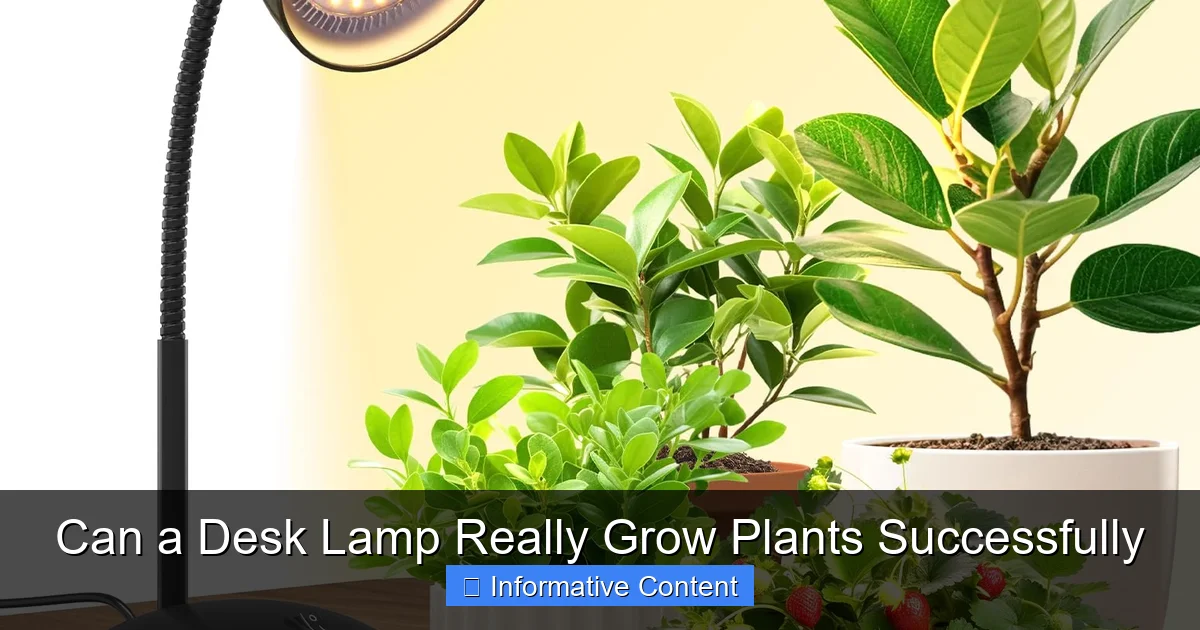
Visual guide about Can a Desk Lamp Really Grow Plants Successfully
Image source: m.media-amazon.com
The Lamp Fixture: What to Look For
You need a lamp that is adjustable. A gooseneck or articulated arm is perfect. This lets you position the light close to the plant (6-12 inches is often ideal) and adjust it as the plant grows. The lamp should also be stable enough to hold the weight of the bulb and not tip over. A simple, sturdy clamp lamp can be a fantastic and cheap option.
Bulb Types: From Useless to Perfect
- Incandescent Bulbs: Forget these. They are terrible for plants. Over 90% of their energy is wasted as heat, not light. They emit mostly yellow and red light with almost no blue. They will cook your plant before they help it grow.
- Halogen Bulbs: A slightly more efficient version of incandescent, but still far too hot and unbalanced in spectrum. Not recommended.
- Compact Fluorescent Lamps (CFLs): A good budget option. Look for “daylight” or “full spectrum” CFLs with a color temperature of 5000-6500K. They run cooler than incandescents and provide a decent spectrum. They are affordable and easy to find.
- LED Bulbs: The best choice for a desk lamp. Modern full-spectrum or “grow light” LEDs are incredibly efficient. They emit very little heat, use minimal electricity, and can be engineered to provide the perfect blend of red and blue light. Many even look like normal white light. They are more expensive upfront but save money in the long run.
Choosing the Right Plant for Your Desk Lamp Setup
This is where many people fail. You can’t grow a tomato plant or a sunflower under a single desk lamp. Be realistic. Your setup is perfect for plants that are adapted to low-light conditions in nature, like forest floor dwellers.

Visual guide about Can a Desk Lamp Really Grow Plants Successfully
Image source: ohohdeco.com
Best Beginner Plants (Low to Medium Light)
- Pothos (Devil’s Ivy): The ultimate survivor. It will thrive with the supplemental light from a good desk lamp.
- Snake Plant (Sansevieria): Incredibly tolerant. It grows slowly and is perfect for a steady light source.
- ZZ Plant (Zamioculcas): Another tough, low-light champion that will do well.
- Peace Lily: Appreciates the extra light for potential blooms, but is fine with less.
- Philodendron (heartleaf): Similar to pothos, it’s a vigorous grower in these conditions.
Plants to Avoid (For Now)
Most flowering plants, herbs (like basil, mint), succulents, and cacti need very high light intensity—far more than a typical desk lamp can provide. They will become “leggy” (stretched and weak) and eventually die without intense, direct light or a dedicated, powerful grow light.
Setting Up Your Desk Lamp Garden: A Step-by-Step Guide
Ready to try it? Here’s your action plan.
Visual guide about Can a Desk Lamp Really Grow Plants Successfully
Image source: content.instructables.com
Step 1: Gather Your Gear
You’ll need: 1) An adjustable desk or clamp lamp. 2) A full-spectrum LED or “daylight” CFL bulb (check for 5000K-6500K). 3) A timer plug (this is a game-changer for consistency). 4) Your chosen low-light plant.
Step 2: Position the Light
This is critical. Place the bulb 6 to 12 inches away from the top of the plant. For seedlings or very light-sensitive plants, start at 12 inches and watch for a week. If the plant seems to be reaching, move it closer. If the leaves look bleached or crispy, move it farther away.
Step 3: Set the Timer
Plug your lamp into the timer, and set it for a 12-hour on, 12-hour off cycle (e.g., 7 AM to 7 PM). This provides consistency, which plants love, and means you never forget to turn the light on or off. Consistency prevents stress.
Step 4: Observe and Adjust
Your plant will tell you if it’s happy. Lush, green growth and new leaves are good signs. Leggy, stretched stems, very slow growth, or leaves turning away from the light mean it needs more intensity (move the lamp closer or get a stronger bulb). Yellowing or scorched leaves mean too much heat or light (move the lamp farther away).
Common Pitfalls and How to Avoid Them
Let’s learn from common mistakes so yours is a success story.
Pitfall 1: Using the Wrong Bulb
The Fix: Never use a standard soft-white bulb. Invest the $10-$20 in a proper full-spectrum LED bulb. It’s the single most important factor.
Pitfall 2: Placing the Light Too Far Away
The Fix: Light intensity drops dramatically with distance. Keep it close. If your lamp arm won’t reach, get a different lamp or a taller plant stand.
Pitfall 3: Inconsistent Light Schedule
The Fix: Buy a timer. For under $10, it removes human error and gives your plant the stable routine it craves.
Pitfall 4: Ignoring Heat Buildup
The Fix: After the light has been on for an hour, feel the leaves. If they are warm to the touch, the bulb is too hot. Switch to an LED bulb, which emits almost no heat.
When to Upgrade: The Limits of a Desk Lamp
A desk lamp is a fantastic tool for a specific job: keeping one or two low-light houseplants healthy in a dark room. It’s a supplemental or sole light source for tolerant species.
However, if you want to grow herbs, start vegetable seedlings, or nurture orchids and succulents, you will need to upgrade. This means dedicated grow lights that are designed for horticulture. These are more powerful, often larger, and cover a broader area. They are the next step in your indoor gardening journey.
Think of your desk lamp as training wheels. It’s a perfect, low-cost way to learn about plant light needs. It proves the concept works. When you’re ready for more, you’ll know exactly what to look for in a professional system.
Conclusion
So, can a desk lamp really grow plants successfully? Absolutely, yes. But the secret isn’t in the lamp itself—it’s in the bulb you screw into it and the plant you place beneath it.
By choosing a full-spectrum LED bulb, pairing it with a resilient low-light plant like a pothos or snake plant, and positioning it close with a consistent timer, you can absolutely create a thriving green spot on your desk. It’s a simple, satisfying project that blends science with a little bit of everyday magic.
It won’t replace the sun, and it won’t turn your desk into a tomato farm. But it will breathe new life into that lonely corner of your home office. Give it a try. Your plants will thank you with fresh, vibrant growth.
Frequently Asked Questions
Can I use a regular LED bulb from the store to grow plants?
Yes, but choose carefully. Look for a “daylight” or “full spectrum” LED with a color temperature rating of 5000 Kelvins (K) to 6500K. These bulbs emit a cooler, bluer-white light that includes more of the blue spectrum plants need for growth. Avoid “soft white” (2700K-3000K) bulbs, as they are too heavy in red and yellow light.
How long should I leave the desk lamp on for my plants?
Most common houseplants need 12 to 16 hours of light per day. A consistent schedule is crucial. The best and easiest way to manage this is to plug your lamp into an inexpensive outlet timer. Set it for a 12-hour on/off cycle to mimic a natural day, giving your plants a crucial period of darkness to rest.
What are the signs my plant isn’t getting enough light from the lamp?
Watch for “leggy” growth, where stems become unusually long and thin as they stretch toward the light. Other signs include very slow or no new growth, smaller-than-usual new leaves, and leaves that turn pale or yellow and may drop off. The plant may also lean or grow heavily in one direction toward the light source.
Can I grow herbs like basil under a desk lamp?
It’s challenging. Most culinary herbs (basil, mint, cilantro) are high-light plants that originated in sunny climates. A single standard desk lamp usually doesn’t provide enough intensity. They will likely become leggy and weak. For herbs, you would need a much stronger, dedicated grow light placed very close to the plant.
Is the heat from the bulb dangerous for my plant?
It can be. Old incandescent and some halogen bulbs get very hot and can scorch leaves or dry out the soil too quickly. This is a major reason to use modern LED bulbs, which run very cool. Always do the “hand test”—if the light feels hot on your hand a few inches away, it’s too hot for your plant.
How many plants can I grow under one desk lamp?
It depends on the lamp’s brightness (lumens/wattage) and the spread of the light. A typical desk lamp with one bulb is best suited for a single small to medium-sized plant, or perhaps two very small plants placed close together. The goal is to have all the plant’s foliage within the bright central beam of the light.