
Yes, Roombas really do work, but they are not magic. They are excellent tools for daily maintenance cleaning on hard floors and low-pile carpets, picking up dust, hair, and crumbs. For deep cleaning or very cluttered homes, a traditional vacuum is still needed.
Contents
- 1 Key Takeaways
- 2 Do Roombas Really Work? Our Honest Review
- 3 How We Tested and What “Work” Really Means
- 4 Step-by-Step: How to Make Your Roomba Work Effectively
- 5 What Roombas Are Really Good At
- 6 Where Roombas Struggle (The Honest Truth)
- 7 Troubleshooting Common Roomba Issues
- 8 Conclusion: Is a Roomba Worth It For You?
- 9 Author
Key Takeaways
- They Excel at Maintenance: Roombas are designed for frequent, light cleaning to keep your floors consistently tidy between deeper vacuums.
- Performance Varies by Model: Higher-end models with smart mapping and self-emptying bases work significantly better than basic, random-bounce models.
- They Struggle with Certain Things: High-pile carpets, large debris, dark floor/black rug combinations, and very cluttered rooms can pose challenges.
- Setup and Prep are Crucial: A successful Roomba run requires you to pick up cords, socks, and other obstacles and ensure its home base is properly placed.
- They Require Regular Maintenance: To keep your Roomba working, you must frequently empty its bin, clean its brushes and sensors, and replace parts like filters and batteries over time.
- They Save You Time and Effort: The primary benefit is convenience—having a robot handle daily dust and pet hair can dramatically reduce your manual cleaning load.
- They’re Not for Every Home: Multi-story homes without a unit on each floor, or homes with lots of fragile items on the floor, may not be the ideal fit.
Do Roombas Really Work? Our Honest Review
You’ve seen the ads. A cute little disc glides silently across a pristine floor. It dodges furniture and gobbles up dirt. The promise is simple: set it and forget it. But is it real? Do Roombas really work, or are they just an expensive gadget? We’ve tested them, lived with them, and broken down exactly what you can expect. This guide will walk you through how they work, what they’re good at, where they struggle, and how to decide if one is right for your home. Let’s get into the honest truth about robot vacuums.
How We Tested and What “Work” Really Means
First, let’s define “work.” A Roomba won’t replace a deep, thorough cleaning with a high-powered upright vacuum. Instead, it works as a maintenance tool. Its job is to keep your floors looking clean every day with minimal effort from you. We judge its success on consistency, convenience, and its ability to handle common dirt like dust, pet hair, and crumbs.
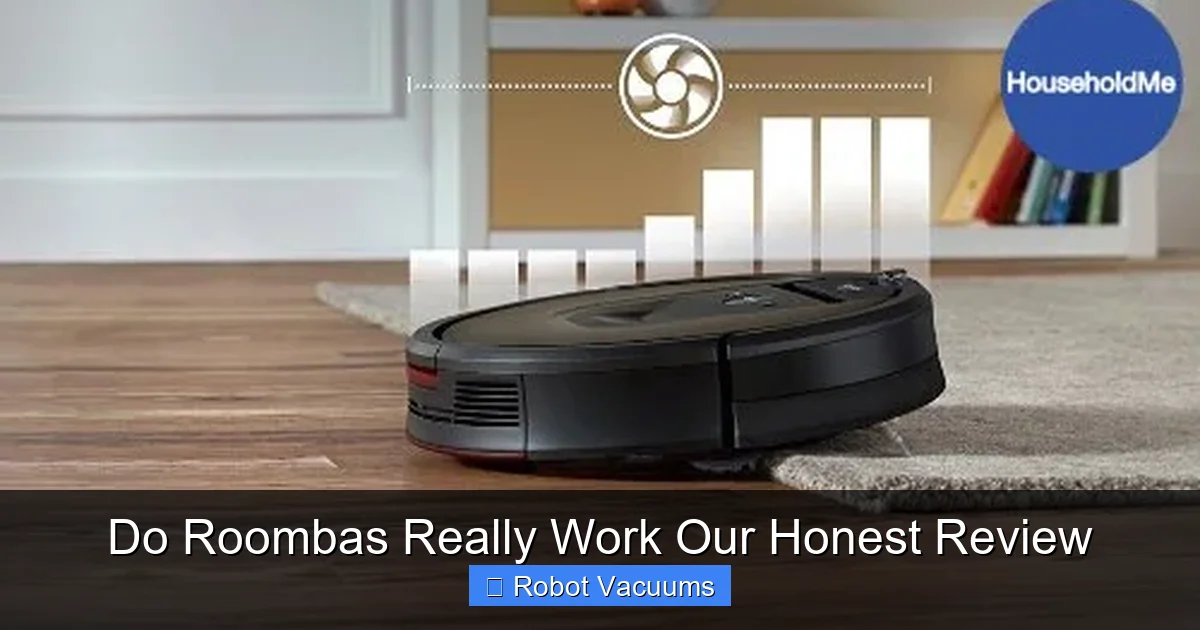
Visual guide about Do Roombas Really Work Our Honest Review
Image source: householdme.com
Our Testing Process
We ran various Roomba models in different home environments. We tested on hardwood, tile, and multiple carpet types. We also looked at how they handled pet hair, cereal crumbs, and everyday dust. We paid close attention to setup, daily use, and the maintenance required to keep them running.
Step-by-Step: How to Make Your Roomba Work Effectively
Success with a Roomba isn’t just about pressing a button. Follow these steps to get the best results.

Visual guide about Do Roombas Really Work Our Honest Review
Image source: householdme.com
Step 1: Choose the Right Model for Your Home
Not all Roombas are the same. Your experience depends heavily on the model you buy.
- Basic Models (e.g., 600 series): These use a random “bounce and clean” navigation. They work but are slower and can miss spots. Best for small, simple apartments.
- Mid-Range with Smart Mapping (e.g., i3/i4): These models learn your floor plan and clean in efficient, neat rows. This is a huge upgrade. They also let you set no-go zones from the app.
- High-End with Self-Emptying (e.g., j7+, s9+): The top tier. These have advanced obstacle avoidance (like avoiding pet waste or cords), detailed mapping, and a base that automatically empties the robot’s bin. This is the true “hands-off” experience.
Practical Tip: If you have a multi-room home, invest in a model with smart mapping. The random clean models will frustrate you.
Step 2: Prepare Your Home (The “Roomba Proof”)
This is the most important step. A Roomba needs a clear path.
- Pick Up the Floor: Gather loose cables, charging cords, socks, kids’ toys, and dog bones. These can tangle in the brushes or stop the robot.
- Check Your Furniture: Make sure chairs are pushed in and there’s at least a 3-foot clearance around the home base.
- Address Floor Hazards: Secure loose rug tassels and consider picking up very plush bathroom mats that it might get stuck on.
Step 3: Set Up the Home Base and App
Place the home base against a wall in an open, central location. Plug it in. Download the iRobot HOME app and follow the instructions to connect your Roomba to your Wi-Fi. This is where you’ll schedule cleans, see maps, and get notifications.
Step 4: Run Your First Clean
Start with a full bin and clean filters. For mapping models, initiate a “Clean Everywhere” run. Let it complete its tour, even if it seems long. It’s learning your layout. Stay home to watch for any issues.
Step 5: Establish a Routine
The real magic happens with a schedule. Set your Roomba to run daily or every other day when you’re at work or out. Consistent runs prevent dirt buildup and keep your floors guest-ready.
What Roombas Are Really Good At
When set up correctly, Roombas shine in several key areas.
Visual guide about Do Roombas Really Work Our Honest Review
Image source: householdme.com
Daily Dust and Debris Control
They are fantastic at picking up the constant layer of dust, pollen, and skin cells that settles on floors. This is a huge win for allergy sufferers.
Pet Hair Pickup
Most models, especially those with rubber brushes, are pet hair heroes. They prevent tumbleweeds of fur from accumulating in corners and under furniture.
Hard Floor and Low-Pile Carpet Performance
On hard surfaces like wood, tile, and laminate, they are extremely effective. They also do well on short to medium-pile carpets and rugs.
Convenience and Time Saving
This is the biggest benefit. Coming home to clean floors without having lifted a finger is a genuine lifestyle improvement.
Where Roombas Struggle (The Honest Truth)
To be fair, you need to know the limitations.
Deep Carpet Cleaning
They lack the powerful suction and motorized brush roll of an upright to dig deep into plush carpeting and remove embedded dirt.
Large or Sticky Debris
They can’t handle cereal clusters, large pieces of broken glass, or sticky spills. These can clog the robot or spread the mess.
They can get confused by very dark floors or black area rugs (sensors see them as cliffs). They might also gently bump into furniture, though most newer models are gentler.
Regular Maintenance Required
You don’t vacuum the vacuum, but you do have to maintain it. This is a non-negotiable part of ownership.
Troubleshooting Common Roomba Issues
If your Roomba isn’t working well, check these things first.
Roomba is Missing Spots or Acting Lost
Ensure all lights are clean. Recharge and restart it. For smart models, check that the map in the app is correct and hasn’t been deleted.
Suction Seems Weak or Bin is Full Quickly
Empty the bin after every clean. Rinse the filter weekly and replace it every 2-3 months. Cut hair and fibers from the brush rolls regularly.
Roomba Gets Stuck Frequently
Re-evaluate your home prep. Look for new obstacles like a low-hanging blanket, a new power strip, or a tasseled rug. Use virtual barriers in the app to block problem areas.
It Won’t Connect to the App
Restart your robot and your Wi-Fi router. Ensure you’re on a 2.4GHz network (Roombas don’t use 5GHz). Reinstall the app as a last resort.
Conclusion: Is a Roomba Worth It For You?
So, do Roombas really work? Yes, they absolutely do—for the job they are designed to do. They are not a replacement for a traditional vacuum but a complement to one. Think of them as a brilliant tool for daily upkeep. If you want to reduce the time you spend cleaning, control pet hair and dust, and maintain a baseline of clean floors with minimal effort, a Roomba is a fantastic investment. Just go in with realistic expectations: pick the right model, prep your space, and commit to its simple maintenance. When you do, you’ll find it’s a hardworking little helper that really does earn its keep.
🎥 Related Video: Is Robot Vacuums Worth the Money?
📺 İncelemedeyim
Avideo showing cleaning performance of the robot vacuum cleaner #asmr Roomba and Roborock, Dreame robot vacuum cleaner …