
The optimal side for a desk lamp depends on your handedness and primary task. For right-handed individuals, place the lamp on the left side to prevent shadows while writing. For left-handed users, the right side is best. For computer work, position the lamp to the side and behind the monitor to minimize glare. The ultimate goal is to achieve even, shadow-free illumination that complements your room’s ambient light.
Have you ever settled in for an evening of reading or focused work, only to find yourself squinting or battling a stubborn shadow right where you need light the most? You’re not alone. The humble desk lamp is a powerhouse for productivity and comfort, but its benefits are fully unlocked only when it’s placed correctly. It’s not just about having light; it’s about having the right light in the right place.
So, what side should a desk lamp be on? The short answer is: it depends. It depends on whether you’re right or left-handed. It depends on if you’re writing on paper or typing on a computer. It even depends on the other lights in your room. Getting this simple detail wrong can lead to eye strain, headaches, and reduced efficiency. Getting it right creates a sanctuary of clear, comfortable light.
This guide will walk you through the simple principles of optimal desk lamp placement. We’ll move beyond guesswork and give you clear, actionable rules. You’ll learn how to set up your lighting for any task. Let’s shed some light on the best practices for your workspace.
Contents
- 1 Key Takeaways
- 2 📑 Table of Contents
- 3 The Golden Rule: Opposing Your Dominant Hand
- 4 Conquering the Computer Desk
- 5 The Importance of Light Layering
- 6 Choosing and Adjusting Your Lamp
- 7 Special Considerations and Setups
- 8 Putting It All Together: A Step-by-Step Setup
- 9 Frequently Asked Questions
- 9.1 What if I’m ambidextrous or use both hands for different tasks?
- 9.2 Can I put my desk lamp directly in front of me?
- 9.3 How high should my desk lamp be?
- 9.4 Is it bad to use a desk lamp in a dark room?
- 9.5 What type of light bulb is best for a desk lamp?
- 9.6 My desk is against a wall. Does that change the placement?
- 10 Author
Key Takeaways
- Follow the Hand Rule: Place your desk lamp on the opposite side of your writing hand to prevent shadows from your hand and arm.
- Prioritize Task Lighting: The lamp’s primary job is to illuminate your work surface without causing glare on screens or shiny paper.
- Mind the Monitor: For computer desks, position the lamp to the side and slightly behind the screen to avoid reflections and maintain screen clarity.
- Layer Your Light: A desk lamp is task lighting; always combine it with ambient room lighting to reduce harsh contrasts and eye fatigue.
- Adjustability is Key: A lamp with a flexible gooseneck or adjustable arm is invaluable for fine-tuning light direction and angle.
- Consider the Bulb: Use a high-quality LED bulb with a color temperature of 2700K-4000K (warm to neutral white) for comfortable, focused light.
📑 Table of Contents
The Golden Rule: Opposing Your Dominant Hand
This is the most fundamental rule for traditional desk work like writing, drawing, or crafting by hand. The goal is to eliminate the shadow cast by your hand and the tool you’re holding.
For Right-Handed People
If you are right-handed, your desk lamp should be placed on the left side of your desk. As your right hand moves across the page, the light coming from the left will illuminate the area ahead of your pen or pencil. The shadow will fall behind your writing, not over it. This provides consistent, shadow-free visibility.
For Left-Handed People
If you are left-handed, the opposite is true. Place your desk lamp on the right side of your desk. This ensures your left hand doesn’t block the light source as you write. It’s a simple switch that makes a world of difference in comfort.
Practical Tip: Test this by holding your hand in a writing position. Notice where the shadow falls with a light source on different sides. You’ll immediately see why the “opposite hand” rule works.
Conquering the Computer Desk
Modern work often involves screens, and lighting for a computer desk has different priorities. Here, the enemy is glare—those annoying reflections on your monitor that force you to crane your neck or squint.
Visual guide about Optimal Desk Lamp Placement What Side Is Best
Image source: cdn.autonomous.ai
The Ideal Placement for Screen Work
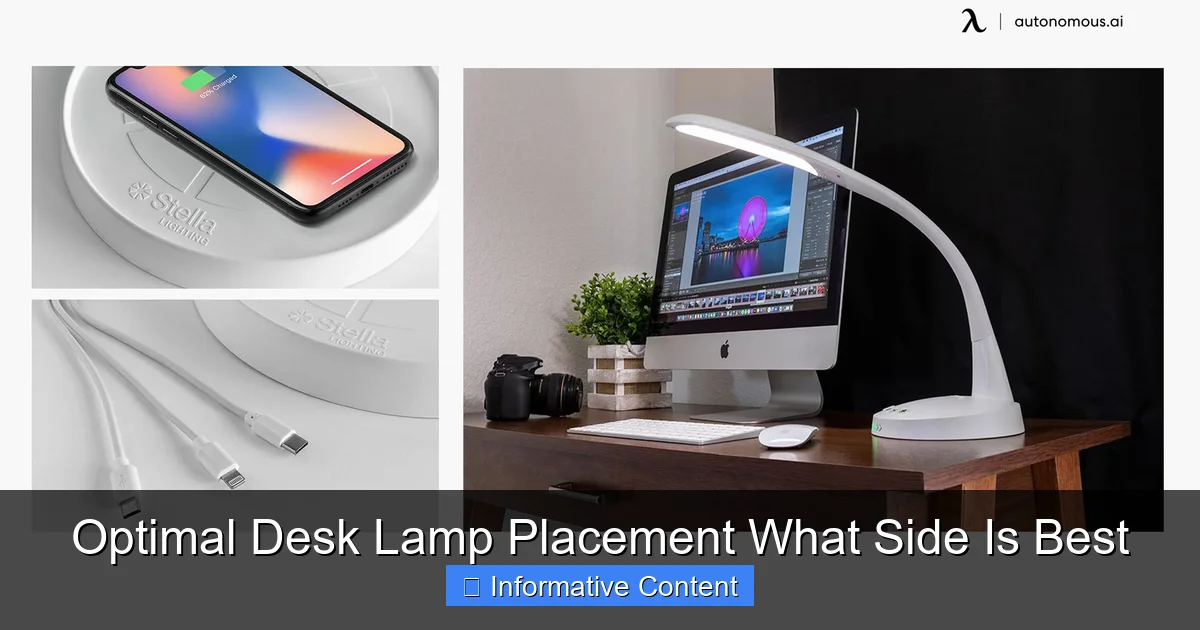
The best position for a lamp when using a computer is to the side and slightly behind your monitor. If you’re right-handed, this often means the left-rear corner of the desk. The light should shine over your shoulder onto the desk surface, not directly onto the screen. This setup illuminates your keyboard, notepad, or desk surface without creating a bright hotspot on your monitor.
What to Avoid
Never place a desk lamp directly behind you, pointing at the screen. This will cause a direct reflection. Also, avoid placing it directly in front of you, as it will shine in your eyes. The light source should never be in your direct line of sight to the screen.
Practical Tip: Use a lamp with a directional shade or a gooseneck. Angle it so the bulb is completely hidden from your view when you are sitting in your normal working position.
The Importance of Light Layering
Your desk lamp is called “task lighting.” It’s the bright, focused light for the job at hand. But it shouldn’t be the only light in the room. Using a desk lamp in a dark room creates a harsh contrast between the bright pool on your desk and the surrounding darkness. This forces your eyes to constantly adjust, leading to fatigue.

Visual guide about Optimal Desk Lamp Placement What Side Is Best
Image source: cdn.autonomous.ai
Always Use Ambient Light
Always pair your desk lamp with ambient or general lighting. This could be an overhead ceiling light, a floor lamp in the corner, or wall sconces. The ambient light fills the room with a soft glow, reducing the strain caused by the bright task light. Aim for a balanced environment where your desk is 2-3 times brighter than the surrounding area, not 10 times brighter.
Practical Tip: If you work late, consider a dimmable overhead light or a small, soft light source behind your monitor (bias lighting) to maintain this balance without disturbing others.
Choosing and Adjusting Your Lamp
Not all desk lamps are created equal. The lamp’s design dictates how well you can follow the placement rules.
Visual guide about Optimal Desk Lamp Placement What Side Is Best
Image source: cdn.autonomous.ai
Go for Adjustability
The most versatile desk lamp has a flexible arm, gooseneck, or multiple pivot points. This allows you to position the light source precisely where you need it, regardless of where the base is sitting. You can place the base to the side and still direct the light head to the perfect angle.
Mind the Shade and Bulb
A lamp with a deep, opaque shade helps control light spill and prevents the bulb from glaring into your eyes. For the bulb itself, choose an LED with a high Color Rendering Index (CRI >80) for accurate colors and a color temperature between 2700K (warm, relaxing) and 4000K (neutral, alert). Avoid cool white bulbs (5000K+) for evening work, as they can disrupt sleep.
Practical Tip: When shopping, look for lamps labeled as “task lamps” or “architect lamps.” They are designed with adjustability and precise light control in mind.
Special Considerations and Setups
Different activities call for slight tweaks to the standard rules.
For Reading Physical Books
Place the lamp behind and slightly to the side of the shoulder opposite your dominant hand. The light should fall directly onto the pages. A lamp with a focused beam or a clip-on lamp attached to the headboard or book itself can be perfect.
For Drawing or Detailed Crafting
Here, eliminating shadows is critical. You may benefit from a combination of lights. Use your main task lamp on the opposite side of your hand, and consider a second, softer light from the opposite angle to fill in any remaining shadows. Artists often use lamps with large, circular shades that provide very even light.
If the desk is used by both right and left-handed people, or for both writing and computing, center a highly adjustable lamp at the back of the desk. Each user can then swing the arm to their preferred side. Alternatively, use two smaller, movable lamps.
Putting It All Together: A Step-by-Step Setup
Let’s create the perfect setup from scratch.
- Identify Your Primary Task: Is this a computer desk, a writing desk, or a hybrid?
- Position the Base: Based on your handedness and task, place the lamp base on the recommended side (e.g., left side for a right-handed writer).
- Set Your Chair and Posture: Sit in your normal working position.
- Adjust the Arm and Head: Angle the lamp so the light pool is centered on your work area. Ensure the bulb is not visible to your eyes.
- Check for Glare and Shadows: Do a test. Write a sentence, type, or open a book. Look for shadows or screen reflections and fine-tune the angle.
- Turn on Ambient Light: Finally, turn on your room’s general light to achieve a comfortable, layered lighting effect.
In conclusion, the question of what side your desk lamp should be on is answered by understanding the interaction between light, shadow, and your specific activity. By following the simple rule of placing the lamp opposite your writing hand, being vigilant about screen glare, and always layering your light, you transform your desk from a merely lit space into an optimally illuminated zone for focus, comfort, and productivity. Take ten minutes tonight to adjust your lamp. Your eyes—and your work—will thank you.
Frequently Asked Questions
What if I’m ambidextrous or use both hands for different tasks?
If you frequently switch hands, the most flexible solution is to use a highly adjustable desk lamp placed at the center-rear of your desk. This allows you to easily swing the light head to either side as needed. Alternatively, consider a lamp with a broad, even light distribution that minimizes shadows from any angle.
Can I put my desk lamp directly in front of me?
It’s not recommended. A lamp directly in front of you, between you and your work, will often shine directly into your eyes, causing discomfort and glare. It can also cast a shadow from your head onto your work surface. Side placement is almost always superior for visual comfort.
How high should my desk lamp be?
The bottom of the lampshade should be roughly at eye level when you are seated. This position helps keep the bright bulb out of your direct line of sight while allowing the light to spread effectively across your desk. An adjustable arm is key to achieving this perfect height.
Is it bad to use a desk lamp in a dark room?
Yes, it’s not ideal. Using only a bright task light in a dark room creates extreme contrast, forcing your pupils to constantly dilate and contract as you look between the bright desk and dark surroundings. This leads to eye strain. Always supplement with low-level ambient light.
What type of light bulb is best for a desk lamp?
A high-quality LED bulb is the best choice. Look for one with a “warm white” or “neutral white” color temperature (2700K to 4000K) and a high Color Rendering Index (CRI of 90+ is excellent). This provides comfortable, crisp light that is easy on the eyes and shows colors accurately.
My desk is against a wall. Does that change the placement?
It can. If the lamp is too close to the wall, you might create a bright hotspot on the wall behind it. Pull the lamp forward so the light can spread across the desk surface. If space is tight, a wall-mounted swing arm lamp can be a fantastic space-saving solution that still offers great positioning flexibility.