Most modern desk lamps, especially LEDs, pose an extremely low risk of causing skin cancer. The primary concern is ultraviolet (UV) radiation, and quality LED and fluorescent lamps emit negligible UV. The real risk comes from prolonged, direct, and close exposure to older, unshielded halogen or certain specialty bulbs. By choosing the right lamp and using it correctly, you can work and read in safety.
You’re sitting at your desk. Maybe you’re working late, reading a book, or finishing a project. Your trusty desk lamp shines a warm, focused light on your task. It’s a cozy scene. But then, a nagging thought pops into your head. You’ve heard about UV rays from the sun. You know tanning beds are bad. Could the light from your desk lamp, so close to your skin for hours, also be a danger? Could it, in the worst-case scenario, cause skin cancer?
It’s a scary question. And on the internet, fear spreads faster than facts. You might see alarming headlines or forum posts that make you want to work in the dark. Let’s clear the air. Today, we’re going to dive deep into the science of light, radiation, and risk. We’ll separate the real concerns from the myths. By the end, you’ll know exactly what’s in the beam of your lamp and how to use it without a worry.
This isn’t about causing panic. It’s about providing peace of mind through knowledge. So, let’s turn on the light of truth and see what we find.
Contents
- 1 Key Takeaways
- 2 📑 Table of Contents
- 3 Understanding the Real Risk: UV Radiation and Skin
- 4 Breaking Down Common Desk Lamp Bulbs
- 5 Putting the Risk in Perspective
- 6 Practical Tips for Safe and Smart Use
- 7 Conclusion: Shining a Light on the Truth
- 8 Frequently Asked Questions
- 8.1 Can the blue light from my LED desk lamp give me skin cancer?
- 8.2 I have an old halogen desk lamp. Should I throw it out?
- 8.3 Are children more at risk from desk lamp UV exposure?
- 8.4 How can I test if my lamp emits UV light?
- 8.5 Is it safer to use a lamp with a warm white or cool white color?
- 8.6 Can desk lamps cause other skin problems, like aging or spots?
- 9 Author
Key Takeaways
- UV Radiation is the Culprit: Only specific types of light radiation, primarily ultraviolet (UV) rays, are proven to damage skin DNA and increase cancer risk.
- Most Modern Lamps Are Safe: Quality LED and fluorescent desk lamps are designed with filters or phosphor coatings that block almost all UV emissions.
- Halogen Lamps Need Caution: Older, unshielded halogen bulbs can emit low levels of UVA and should not be used at very close range for long periods.
- Distance and Time Matter: Risk is tied to intensity, proximity, and duration of exposure. A lamp on your desk is far less risky than a tanning bed.
- Blue Light is a Different Concern: The blue light from LEDs can disrupt sleep but is not linked to skin cancer. It’s a common point of confusion.
- Inspect and Choose Wisely: Look for lamps with diffusers, avoid damaged bulb coatings, and opt for reputable brands to ensure safety.
- Context is Everything: Everyday desk lamp use is safe. The real skin cancer risks remain direct sunlight and artificial tanning devices.
📑 Table of Contents
Understanding the Real Risk: UV Radiation and Skin
To answer “can desk lamps cause skin cancer,” we must start with the cause of skin cancer itself. The main scientific villain is ultraviolet (UV) radiation. This is a type of energy emitted by the sun and some artificial sources.
How UV Damages Skin
UV rays are powerful. They have enough energy to penetrate the outer layer of your skin and reach the living cells underneath. When they hit your skin’s DNA, they can cause a kind of molecular damage. Think of it like a typo in your body’s instruction manual. Usually, your cells can fix these typos. But with repeated, unprotected exposure, the damage can build up. Over years, this can lead to errors in how skin cells grow and divide. This process is what can eventually lead to skin cancers like basal cell carcinoma, squamous cell carcinoma, and melanoma.
Types of UV Light
Not all UV is the same.
- UVA: These are the longest waves. They penetrate deep into the skin, causing aging, wrinkles, and indirect DNA damage. They are the primary rays in tanning beds.
- UVB: These are shorter, more intense waves. They are the main cause of sunburn and direct DNA damage that leads to cancer.
- UVC: The most dangerous, but thankfully, it’s almost entirely filtered out by the Earth’s atmosphere. Some germicidal lamps use UVC.
So, the core of our question shifts. We’re not really asking about “light.” We’re asking: “Does my desk lamp emit significant, skin-damaging UV radiation?“
Breaking Down Common Desk Lamp Bulbs
Desk lamps are just housings. The bulb inside is what matters. Let’s examine the most common types.
Visual guide about Can Desk Lamps Cause Skin Cancer The Truth
Image source: metro.co.uk
LED Lamps (The Modern Standard)
These are by far the most common today. They are energy-efficient, long-lasting, and cool to the touch.
- UV Output: High-quality white LED bulbs produce virtually no ultraviolet radiation. The light is created by exciting a semiconductor, and the white light is often made by coating a blue LED with a yellow phosphor. This process does not generate UV in any significant amount.
- The Blue Light Talk: LED light does contain more blue wavelengths. This can affect your circadian rhythm and sleep if used late at night. This is a separate issue from cancer. Blue light does not have the same DNA-damaging energy as UV light.
- Verdict: Your modern LED desk lamp is extremely safe from a skin cancer risk perspective.
Fluorescent Lamps (CFLs and Tubes)
These were the energy-saving choice before LEDs took over.
- How They Work: Electricity excites mercury vapor inside the tube, which produces UV light. This UV light then hits a white phosphor coating on the inside of the glass, which glows to produce visible light.
- UV Leakage? A properly manufactured fluorescent bulb has a phosphor coating thick enough to absorb almost all the UV. However, very low levels of UVA might escape. The risk is minuscule, especially from a small desk lamp bulb compared to a large office ceiling fixture.
- Important Note: If the bulb is cracked or the coating is damaged, UV exposure could be higher. Always replace damaged bulbs immediately.
Halogen Lamps (The Potential Concern)
Halogen bulbs are a type of incandescent. They are very bright and produce a crisp, white light.
- The UV Factor: Halogen bulbs, especially older models or those not labeled “UV-shielded,” can emit low levels of UVA radiation. The tungsten filament burns very hot, producing a broader spectrum of light that includes some UV.
- Safety by Design: Many halogen desk lamps have a built-in glass filter or dichroic reflector that blocks this UV light. Others use a bulb with a special glass envelope that filters UV. If your lamp or bulb says “UV-shielded” or “UV-stopped,” it is safe.
- The Real-World Risk: For an unshielded halogen bulb, the UV output is still very low compared to the sun. But because a desk lamp is used close to the skin (hands, arms, face) for long periods, it’s the one scenario where being cautious makes sense.
Incandescent Bulbs (The Classic)
The old-fashioned, warm-glowing bulbs.
- UV Output: These emit negligible amounts of UV. The filament isn’t hot enough to produce significant UV radiation. The main risks with these are burning yourself on the hot glass and their poor energy efficiency.
Putting the Risk in Perspective
Let’s be clear. Context is everything in risk assessment.
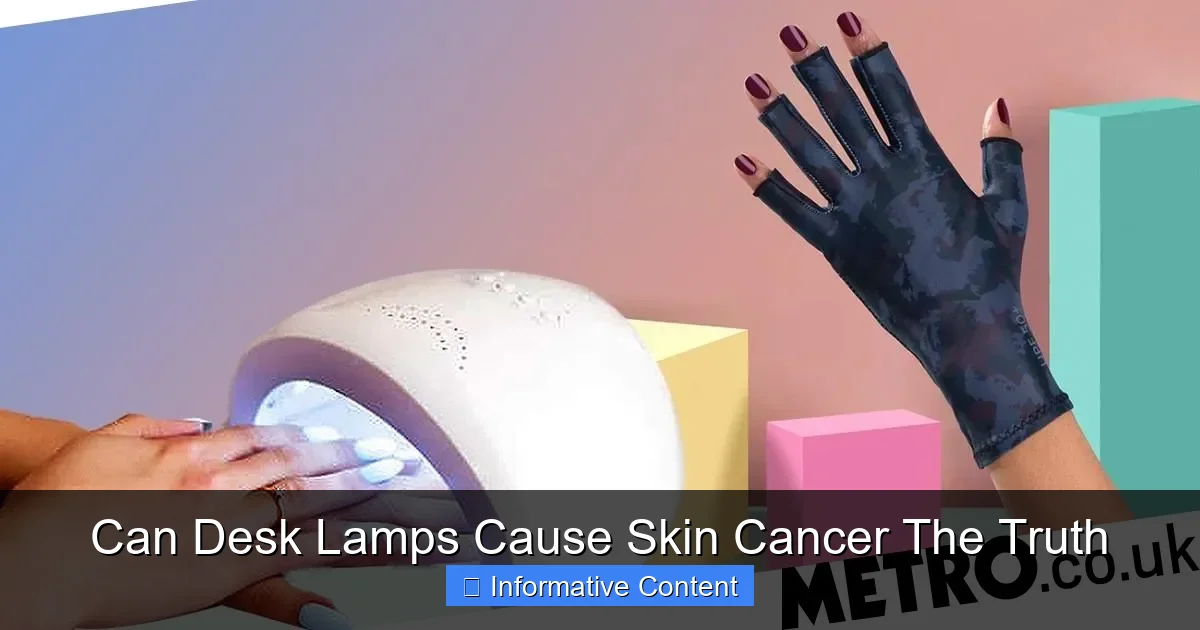
Visual guide about Can Desk Lamps Cause Skin Cancer The Truth
Image source: metro.co.uk
Your desk lamp is NOT a tanning bed. A tanning bed uses powerful, focused fluorescent bulbs specifically designed to emit large amounts of UVA (and some UVB) to tan the skin. The intensity, proximity, and spectrum are completely different from a desk lamp.
Your desk lamp is NOT the sun. Even on a cloudy day, the UV radiation you receive from a few minutes outdoors likely dwarfs what you’d get from a year of sitting under a desk lamp.
The concern, while scientifically valid to explore, is about chronic, close-range exposure to a low-level source. It’s about the cumulative effect over many years. For the vast majority of people with modern lamps, this cumulative dose is so tiny it’s considered irrelevant by health agencies.
Practical Tips for Safe and Smart Use
Want to erase all doubt and use your lamp with 100% confidence? Follow these simple tips.

Visual guide about Can Desk Lamps Cause Skin Cancer The Truth
Image source: img.haikudeck.com
Choose the Right Lamp
- Go LED: Opt for a quality LED desk lamp. Look for well-known brands that adhere to safety standards.
- Check for Halogen Shields: If you prefer or own a halogen lamp, ensure it has a UV-filtering glass shield or uses bulbs marked as UV-protected.
- Avoid Damaged Bulbs: Never use a fluorescent bulb with cracks or a damaged coating.
Use It Wisely
- Maintain Distance: Don’t press your skin against the lampshade or bulb. A normal working distance of 12-24 inches is perfectly safe.
- Mind the Angle: Position the lamp so it illuminates your work, not so it shines directly onto your skin for hours.
- Consider a Diffuser: A lampshade or diffuser scatters the light, reducing intensity and any remote chance of direct beam exposure.
Focus on Proven Protection
Your energy is better spent on proven skin cancer prevention:
- Wear broad-spectrum sunscreen daily on exposed skin.
- Avoid peak sun hours (10 a.m. to 4 p.m.).
- Never use tanning beds.
- Get regular skin checks.
Conclusion: Shining a Light on the Truth
So, can desk lamps cause skin cancer? The direct, clear answer is: It is highly, highly unlikely, and for most people with modern lamps, the risk is effectively zero.
The fear stems from a misunderstanding of light technology. We’ve learned that UV radiation is the proven risk factor. Modern LED and fluorescent lamps are engineered to minimize or eliminate UV emission. The one historical exception—unshielded halogen bulbs—poses a very low-level risk that is easily managed by choosing shielded products or maintaining a reasonable distance.
Don’t let an unfounded worry cast a shadow on your workspace. The light from your desk lamp is a tool for productivity, learning, and comfort. By making an informed choice about the bulb you use, you can enjoy its benefits with complete peace of mind. The real sources of UV danger are outside your window and in tanning salons, not on your desk. Stay informed, be sensible, and keep reading under that safe, warm glow.
Frequently Asked Questions
Can the blue light from my LED desk lamp give me skin cancer?
No, blue light does not cause skin cancer. Blue light is a high-energy visible light that can affect sleep patterns and eye strain, but it lacks the specific energy wavelength (ultraviolet) needed to damage skin cell DNA. This is a common mix-up between two different light-related health topics.
I have an old halogen desk lamp. Should I throw it out?
Not necessarily. First, check if the bulb or lamp has a UV filter. Many do. If it’s unshielded, you can simply replace the bulb with a UV-shielded halogen bulb or switch to a modern LED bulb that fits the fixture (check voltage and base type). Using it at a normal working distance also greatly reduces any minimal risk.
Are children more at risk from desk lamp UV exposure?
Children’s skin is more sensitive to UV damage in general. However, the same principles apply. If you are using a quality LED or shielded lamp, the UV exposure is negligible for all ages. It’s far more important to protect them from direct sunlight with sunscreen and clothing.
How can I test if my lamp emits UV light?
While consumer-grade UV meters exist, they are often imprecise for low-level sources. A more practical approach is to check the product specifications or manufacturer’s website. Look for phrases like “UV-free,” “no UV emission,” or “UV-shielded.” Reputable lighting brands provide this safety data.
Is it safer to use a lamp with a warm white or cool white color?
From a UV risk perspective, the color temperature (warm vs. cool white) does not matter. Both are produced by the same underlying technology (LED phosphor coating, etc.). Cool white LEDs may emit slightly more blue light, which affects sleep, but not UV radiation. Choose the color that is most comfortable for your eyes.
Can desk lamps cause other skin problems, like aging or spots?
Premature skin aging (photoaging) is primarily caused by UVA radiation from the sun. Since quality desk lamps emit negligible UVA, they are not a meaningful contributor to wrinkles, leathery skin, or age spots. Your daily sun exposure is the overwhelming factor for those concerns.