The ideal desk lamp brightness isn’t one-size-fits-all; it depends on your task and environment. For most focused work like reading or writing, aim for 450 to 800 lumens. The key is to combine this focused light with softer ambient room lighting to reduce harsh contrasts and prevent eye strain.
Contents
- 1 Key Takeaways
- 2 📑 Table of Contents
- 3 How Bright Should Your Desk Lamp Really Be?
- 4 Forget Watts: Lumens Are Your New Best Friend
- 5 Finding Your Perfect Brightness: It’s All About the Task
- 6 The Unsung Hero: Ambient Room Light
- 7 Beyond Brightness: Color Temperature & Quality
- 8 Setting It Up Right: Position and Prevention
- 9 Putting It All Together: Your Desk Lamp Checklist
- 10 Frequently Asked Questions
- 11 Author
Key Takeaways
- Lumens Measure Brightness: Forget watts. Look for the lumen rating on the box to know how much light a lamp actually produces.
- 450-800 Lumens is the Sweet Spot: This range is ideal for concentrated tasks like reading, writing, or detailed craft work at a desk.
- Task Dictates Brightness: Casual browsing might need less light (300-450 lumens), while intricate drawing or repair needs more (800+ lumens).
- Ambient Light is Crucial: Always pair your desk lamp with general room lighting to avoid a “cave effect” that tires your eyes.
- Color Temperature Matters: Choose cooler, bluer light (5000K-6500K) for focus and alertness, and warmer light (2700K-3000K) for relaxing activities.
- Prevent Glare and Shadows: Position your lamp opposite your writing hand and use shades/diffusers to create even, comfortable illumination.
- Adjustability is Best: A lamp with dimming and flexible positioning gives you full control to create the perfect light for any moment.
📑 Table of Contents
- How Bright Should Your Desk Lamp Really Be?
- Forget Watts: Lumens Are Your New Best Friend
- Finding Your Perfect Brightness: It’s All About the Task
- The Unsung Hero: Ambient Room Light
- Beyond Brightness: Color Temperature & Quality
- Setting It Up Right: Position and Prevention
- Putting It All Together: Your Desk Lamp Checklist
How Bright Should Your Desk Lamp Really Be?
You buy a new desk lamp. It looks great. You turn it on. It’s either so dim you’re squinting or so bright you feel like you’re in an interrogation room. Sound familiar? Getting the brightness just right is a common struggle. But it’s more important than you might think.
The right light can make you more productive. It can keep your eyes from feeling tired at the end of the day. It can even improve your mood. The wrong light does the opposite. It causes headaches, makes you sleepy, and hurts your focus.
This guide will cut through the confusion. We’ll move beyond vague terms like “bright enough.” You’ll learn the simple numbers and science to find your perfect light. Let’s shed some light on the subject.
Forget Watts: Lumens Are Your New Best Friend
For decades, we bought light bulbs by watts. A 60-watt bulb, a 100-watt bulb. This was a measure of energy use, not light output. With modern LED bulbs, that old rule is useless. A 10-watt LED can be brighter than a 60-watt old-style bulb.
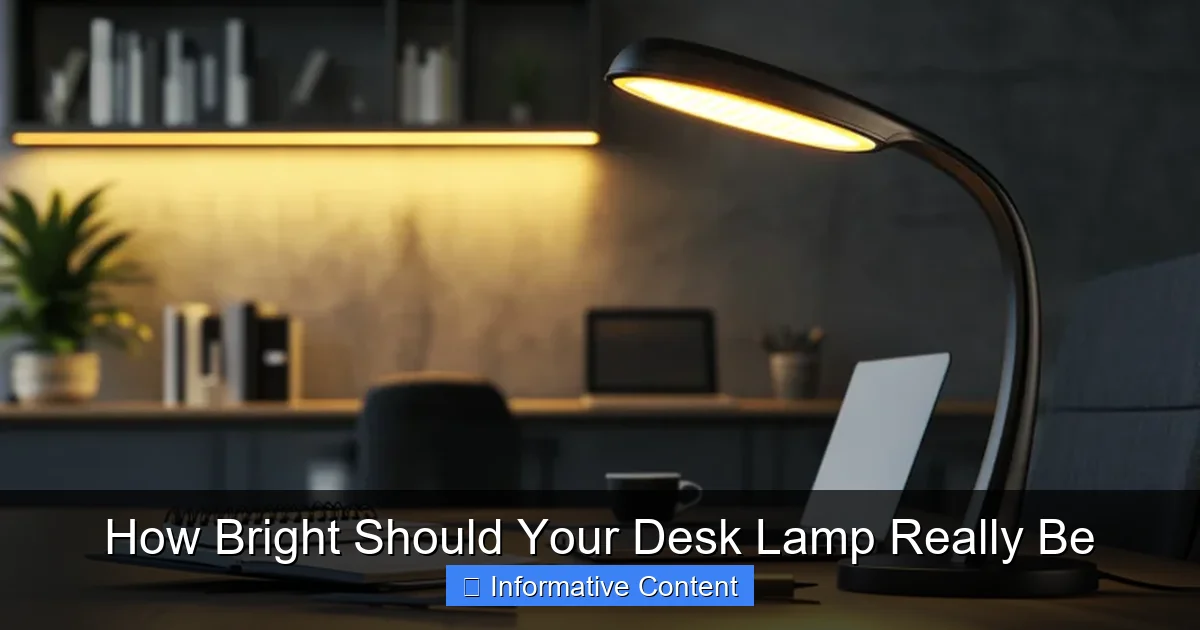
Visual guide about How Bright Should Your Desk Lamp Really Be
Image source: navigz.com
You need to look for lumens.
What Are Lumens?
Lumens (lm) measure the total amount of visible light a source puts out. Simply put: more lumens = brighter light. When shopping for a desk lamp or bulb, the lumen number is your most important clue.
A Quick Lumens Reference Guide
- 250-450 Lumens: Good for ambient or accent lighting. A bit low for serious desk work alone.
- 450-800 Lumens: The gold standard for task lighting. Perfect for reading, writing, computer work, and hobbies.
- 800-1100+ Lumens: Very bright. Ideal for highly detailed tasks like drafting, sewing, or intricate model building.
Think of your desk lamp as a spotlight for your work. The rest of the room should have its own, softer light. This combination is the secret to comfort.
Finding Your Perfect Brightness: It’s All About the Task
Not all desk activities are created equal. The light you need for paying bills is different from the light you need for painting a miniature figurine.
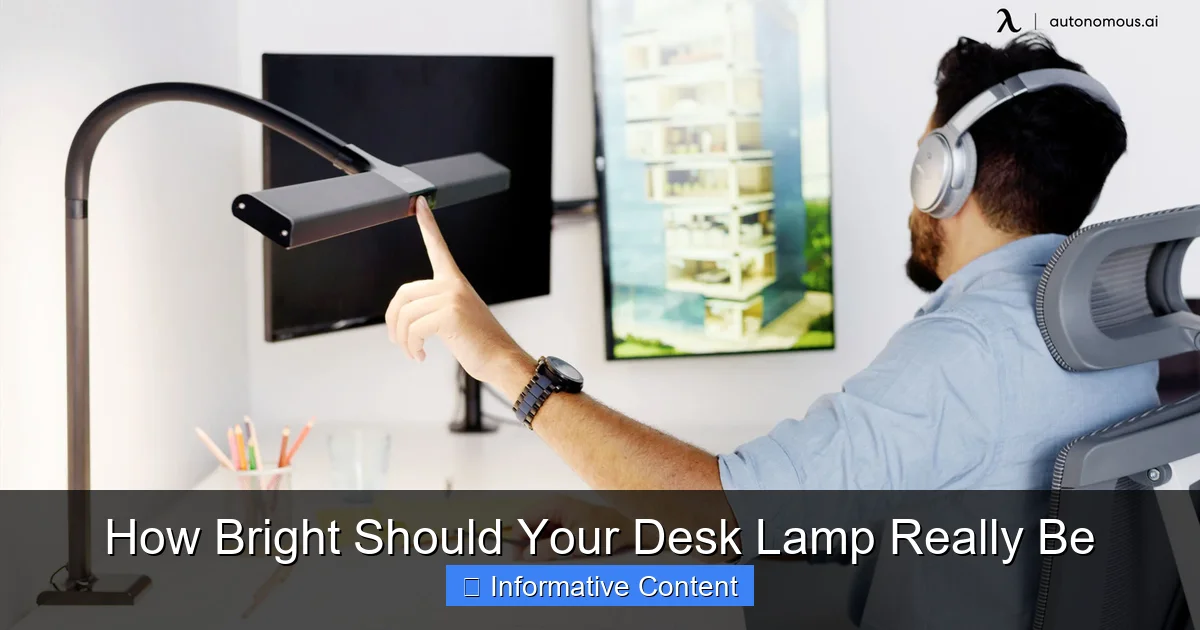
Visual guide about How Bright Should Your Desk Lamp Really Be
Image source: cdn.autonomous.ai
For Reading & Writing (The Classics)
If you’re reading a physical book or writing on paper, you need clear, direct light. Aim for 450 to 800 lumens. This ensures text is crisp and shadows from your hand are minimized. A lamp with a focused beam works best here.
For Computer & Office Work
This is tricky. Your screen is already a light source. Too bright a lamp will cause glare on the screen. Too dim will create a stark contrast that strains your eyes. The solution? Softer, indirect light around 400-600 lumens. Position the lamp so it lights your desk surface and keyboard, not the screen itself.
For Hobbies & Crafts
Detailed work demands more light. Sewing, drawing, knitting, or electronics repair need you to see fine details clearly. Here, you can go brighter—800 lumens or more. Look for lamps with high color rendering (CRI >90) to see colors accurately.
For a Child’s Homework Desk
Kids often don’t notice poor lighting until they get a headache. Choose a safe, sturdy lamp with a simple dimmer. A range of 500-700 lumens is usually perfect. It gives them enough light to focus without being overwhelming.
The Unsung Hero: Ambient Room Light
This is the biggest mistake people make. They use a super bright desk lamp in a completely dark room. This creates a “pool of light” effect. Your eyes constantly adjust between the bright desk and the dark surroundings. That’s a recipe for fatigue.
Visual guide about How Bright Should Your Desk Lamp Really Be
Image source: i.etsystatic.com
Always have a second light source on in the room.
Why Ambient Light Matters
A ceiling light, a floor lamp, or even a softly lit corner makes the whole room gently bright. This reduces the harsh contrast. Your pupils don’t have to work as hard. The result? You can work longer with greater comfort. Your desk lamp should be brighter than the room light, but not the only source of light.
Beyond Brightness: Color Temperature & Quality
Brightness (lumens) is only half the story. The color of the light, called color temperature, is equally vital. It’s measured in Kelvins (K).
Understanding the Kelvin Scale
- Warm White (2700K-3000K): Yellowish, cozy light. Similar to sunset or old incandescent bulbs. Great for relaxing, reading novels, or evening wind-down time.
- Cool White / Daylight (5000K-6500K): Bluer, crisp light. Mimics a bright midday sun. This spectrum boosts alertness, concentration, and is ideal for focused work, studying, and detail-oriented tasks.
For a home office desk, a lamp with adjustable color temperature is a game-changer. Use 5000K-6000K for crunching numbers or writing reports during the day. Switch to 3000K for answering a few evening emails to avoid disrupting your sleep cycle.
The Importance of CRI (Color Rendering Index)
CRI measures how accurately a light source reveals the true colors of objects. It’s a scale from 0 to 100. Sunlight is 100. For any task where color matters (art, design, choosing clothes), look for a lamp or bulb with a CRI of 90 or higher. It makes everything look more vibrant and real.
Setting It Up Right: Position and Prevention
The best lamp in the world won’t help if it’s pointed at your eyes or casts a giant shadow.
The Golden Rule of Placement
If you are right-handed, place the lamp on the left side of your desk. If you are left-handed, place it on the right side. This prevents your writing hand from casting a shadow across your work.
Avoiding Glare
Glare is blinding light that hits your eyes directly. To avoid it:
- Ensure the bulb is never visible from your seated position.
- Use a lamp with a good shade or diffuser that softens and directs the light downward.
- Angle the light so it illuminates the task, not your face.
Embrace Adjustability
A flexible gooseneck or adjustable arm is incredibly valuable. It lets you direct the light exactly where you need it, for any task. Combine this with a dimmer switch, and you have total control over your lighting environment.
Putting It All Together: Your Desk Lamp Checklist
Ready to choose or optimize your lamp? Here’s your action plan.
- Determine Your Primary Task: Is it computer work, reading, or crafts? This sets your lumen target (450-800 for most tasks).
- Check the Lumens: Look at the product specifications. Don’t guess.
- Choose Adjustable Features: Prioritize dimmable brightness and, if possible, adjustable color temperature.
- Ensure High CRI: Aim for CRI >90, especially for creative work.
- Plan Your Placement: Remember the left/right rule. Make sure your room has ambient lighting.
- Test and Tweak: Your eyes are the final judge. Adjust the brightness and position until it feels effortlessly comfortable.
Conclusion
So, how bright should your desk lamp really be? Now you know it’s not a single number. It’s a smart combination of sufficient lumens for your task, the right color temperature for your focus, and balanced ambient light for your comfort.
Investing a little thought into your desk lighting pays huge dividends. It reduces eye strain, cuts down on headaches, and helps you do better work. Stop working in a cave or under a spotlight. Use this guide to create a perfectly lit desk that works for you, not against you. Your eyes—and your productivity—will thank you.
Frequently Asked Questions
Is 500 lumens bright enough for a desk lamp?
Yes, 500 lumens is an excellent middle-ground brightness for a desk lamp. It is perfectly sufficient for standard tasks like reading a book, writing notes, or general computer work. It falls right in the recommended 450-800 lumen sweet spot for task lighting.
Can a desk lamp be too bright?
Absolutely. A desk lamp that is too bright can cause glare on your computer screen or work surface, leading to eye squinting, headaches, and visual discomfort. It also worsens the contrast with a dark room. Always use a dimmer or choose a lamp with appropriate maximum lumens for your needs.
What is the best color temperature for a desk lamp?
For focused work and studying, a cooler color temperature between 5000K and 6500K (daylight white) is best as it promotes alertness. For relaxing or reading before bed, a warmer temperature (2700K-3000K) is better. An adjustable lamp that offers both is the most versatile choice.
Where should I position my desk lamp?
Position your desk lamp to avoid shadows and glare. Place it opposite your writing hand (left side for right-handers, right side for left-handers). Angle it so the light shines directly on your work surface, not into your eyes or directly onto your computer screen.
Do I need a special lamp for working on a computer?
You don’t necessarily need a “special” lamp, but you should use one wisely. Opt for indirect or downward-facing light around 400-600 lumens to avoid screen glare. The key is to illuminate your desk and keyboard without creating bright reflections on your monitor.
How important is a dimmer switch on a desk lamp?
A dimmer switch is highly recommended. It allows you to customize the brightness for different tasks and times of day. You can turn it up for detailed work and down for casual browsing or to match the ambient light in the evening, giving you full control over your visual comfort.