Roombas are highly effective for daily maintenance cleaning, excelling on hard floors and low-pile carpets. They consistently pick up dust, dirt, and pet hair, keeping your home noticeably cleaner with minimal effort. Their true power lies in automation, not deep cleaning, making them a superb tool for upkeep rather than a total replacement for traditional vacuums.
Contents
- 1 Key Takeaways
- 2 How Effective Are Roombas At Cleaning Your Home: The Complete Guide
- 3 Step 1: Understand What “Effective” Means for a Robot Vacuum
- 4 Step 2: Evaluate Roomba Performance on Different Floor Types
- 5 Step 3: Assess Their Ability with Common Messes
- 6 Step 4: Choose the Right Model for Maximum Effectiveness
- 7 Step 5: Prepare Your Home for Optimal Roomba Performance
- 8 Troubleshooting Common Effectiveness Problems
- 9 Conclusion: So, How Effective Are Roombas Really?
- 10 Author
Key Takeaways
- Excellent for Maintenance: Roombas excel at daily or scheduled cleaning, preventing dirt buildup and keeping floors consistently tidy.
- Best on Hard Floors: Their performance is most impressive on hard surfaces like tile, wood, and laminate, where suction and brushes work optimally.
- Great with Pet Hair: Most models, especially those with rubber extractors, are remarkably effective at managing daily pet hair shedding.
- Not for Deep Cleans: A Roomba is not a substitute for a powerful upright or canister vacuum needed for deep carpet cleaning or major messes.
- Navigation is Key: Models with smart mapping (iRobot OS) are far more efficient and thorough than older, random-bounce models.
- Requires Home Prep: Their effectiveness depends on you picking up clutter, managing cords, and setting up virtual boundaries.
- Maintenance is Crucial: Regular emptying of the bin and cleaning of brushes and sensors is essential for sustained performance.
How Effective Are Roombas At Cleaning Your Home: The Complete Guide
You see the ads. A cute little disc whirs around your living room. It dodges furniture. It gobbles up dust. Your floors look spotless. But is it real? Just how effective are Roombas at cleaning your home? The answer is more nuanced than a simple yes or no.
This guide will walk you through everything. You will learn what Roombas do best. You will see where they might struggle. We will cover different floor types and messes. By the end, you will know exactly what to expect. You can decide if a Roomba is the right helper for your house.
Step 1: Understand What “Effective” Means for a Robot Vacuum
First, let’s set the right expectations. A Roomba is not a magic box. It is a tool. Its effectiveness is defined differently than your big, powerful vacuum.

Visual guide about How Effective Are Roombas At Cleaning Your Home
Image source: stupidbusinesses.files.wordpress.com
Think “Maintenance,” Not “Deep Clean”
Roombas are champions of maintenance cleaning. They are designed to run often. Every day or every other day. They pick up the surface dust, dirt, crumbs, and pet hair before it gets ground in. This keeps your home consistently cleaner with zero daily effort from you.
Automation is the Key Benefit
The biggest measure of effectiveness is not a single clean. It is the cumulative effect of daily automation. Coming home to clean floors every day without lifting a finger is the real win. It’s about upkeep, not a weekly power session.
Step 2: Evaluate Roomba Performance on Different Floor Types
Not all floors are the same. Your Roomba’s effectiveness changes with your flooring.

Visual guide about How Effective Are Roombas At Cleaning Your Home
Image source: cdn.mos.cms.futurecdn.net
Hard Floors (Tile, Hardwood, Laminate)
This is where Roombas shine brightest. The combination of suction and the spinning side brush works perfectly. The brush sweeps debris from edges into the vacuum’s path. On hard floors, a Roomba can pick up over 99% of sand, dust, and cereal in tests. It is highly effective here.
Low to Medium-Pile Carpets and Rugs
Roombas do a good job here, especially on low-pile. The brushes agitate the carpet to pull up dirt. Higher-end models automatically increase suction on carpets. They are great for surface dirt and pet hair. For daily maintenance on carpet, they are very effective.
High-Pile Carpets, Shags, and Thick Rugs
This is a challenge. The robot can get stuck. Its suction may not pull dirt from the deep fibers. It might struggle to transition on or off them. For deep cleaning thick carpet, a traditional vacuum is better. A Roomba can still get surface litter, but don’t expect a deep, thorough clean.
Step 3: Assess Their Ability with Common Messes
What kind of dirt are you fighting? Let’s break it down.
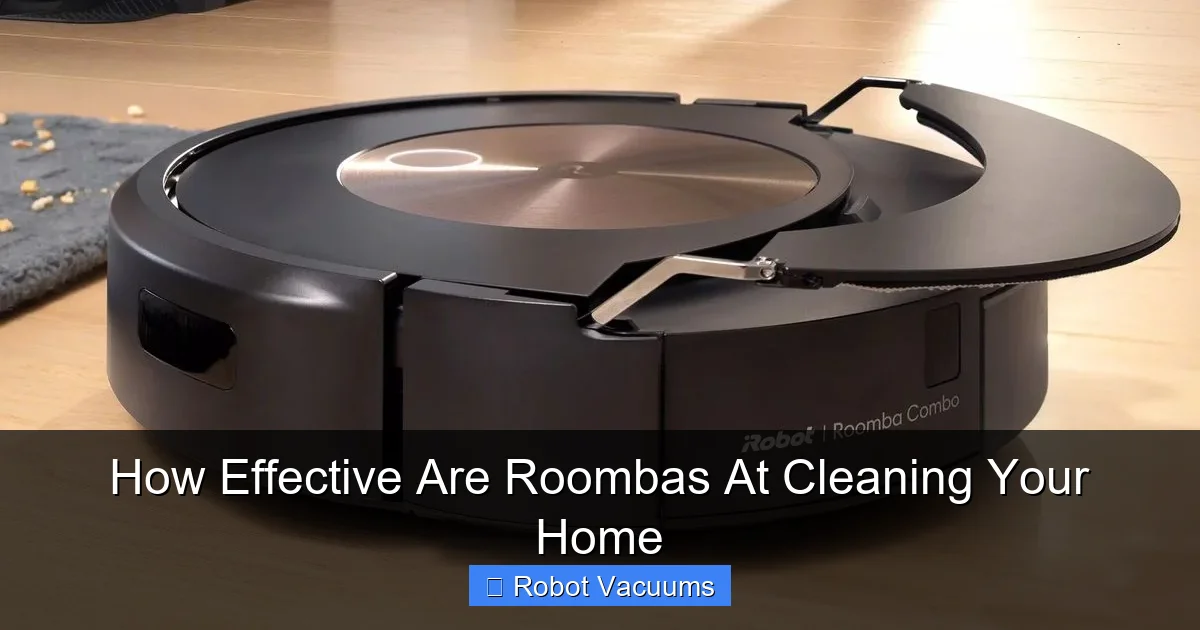
Visual guide about How Effective Are Roombas At Cleaning Your Home
Image source: cdn.mos.cms.futurecdn.net
Dust, Dirt, and Crumbs
This is their core competency. Roombas are extremely effective at this. They are designed for exactly these dry messes. Whether it’s tracked-in dirt or kitchen crumbs, a Roomba handles it with ease.
Pet Hair
This is a major strength for many models. Roombas with rubber extractors (instead of bristle brushes) are pet-hair demons. They prevent tangling. They pull hair off carpets and floors efficiently. For daily pet hair control, they are a game-changer. Just empty the bin more often.
Large Debris (Cereal, Popcorn, Legos)
They can handle surprisingly large bits. But there are limits. A big pile of cereal might overwhelm the bin or intake. It’s better to pick up large chunks manually. For scattered, moderate-sized debris, it works well.
Liquid and Wet Messes
Critical Warning: Standard Roombas are NOT wet vacuums. Do not run them over spills. It will damage the robot and smear the mess. The Braava robot mop series is iRobot’s solution for wet cleaning.
Step 4: Choose the Right Model for Maximum Effectiveness
Not all Roombas are created equal. Picking the right one makes all the difference.
This is the biggest factor. Older, budget models use random “bounce and clean” patterns. They are less efficient and can miss spots. Models with iRobot OS (like the j7+, i3+, s9+) use cameras or sensors to map your home. They clean in neat, efficient rows. They are far more thorough and effective.
Suction Power
Higher-end models have more powerful suction. Look for models that advertise “Power-Lifting Suction” or similar. They do better on carpets. If you have mostly hard floors, even mid-range suction is very effective.
Self-Emptying Base
The Clean Base is a huge effectiveness booster. The robot empties itself into a larger bin in the base. This means it can go on multiple cleaning missions without you touching it. It’s essential for true, hands-free automation, especially with pets.
Step 5: Prepare Your Home for Optimal Roomba Performance
A Roomba needs a little help from you to be its most effective.
Declutter the Floor
Pick up socks, cords, toys, and loose clothing. These are the biggest obstacles. A clear floor allows for a complete clean.
Manage Cords and Tassels
Tuck away lamp cords and blind tassels. Roombas can get tangled and stuck, stopping the clean.
Use Virtual Walls and Keep-Out Zones
If your model supports it, use the app to set “Keep-Out Zones.” You can block off areas like a pet food bowl zone or a room with delicate furniture. This prevents messes and protects your robot.
Provide Light
Models with camera-based navigation need some ambient light to see and map effectively. Running it during the day or with lights on helps.
Troubleshooting Common Effectiveness Problems
Is your Roomba not cleaning as well as it used to? Try these fixes.
Problem: It’s Leaving Dirt Behind
Solution: Check the bin. Is it full? Empty it. Check the filter. Is it clogged? Tap it clean or replace it. Check the main brushes and extractors. Are they tangled with hair? Clean them thoroughly.
Problem: It’s Missing Spots or Seems Random
Solution: Ensure it’s not a random-nav model. If it has mapping, check that the map is correct. You may need to delete the map and let it re-learn. Make sure its sensors and camera lens on top are clean and unobstructed.
Problem: It Gets Stuck Often
Solution: Re-examine your home prep. Look for new obstacles, like a low-hanging blanket or a new rug with dark edges it might mistake for a cliff. Use the provided dual-mode wall barriers to block problem areas.
Problem: Suction Seems Weak
Solution: Perform full maintenance. Clear any clogs in the air path. Replace the filter (a dirty filter kills suction). Ensure the brushes spin freely.
Conclusion: So, How Effective Are Roombas Really?
Roombas are incredibly effective tools for a specific job: automated, daily maintenance cleaning. They keep hard floors and low-pile carpets free of dust, dirt, and pet hair with impressive consistency. They save you time and effort, providing a constant baseline of clean.
They are less effective as a sole cleaning solution for deep-pile carpets or for handling large, wet messes. They work best as part of a team—your robot for daily upkeep and your traditional vacuum for weekly deep cleans.
If your goal is to reduce daily cleaning chores and maintain a tidier home effortlessly, a modern Roomba with smart mapping is remarkably effective. Just set it, forget it, and enjoy cleaner floors every day.
🎥 Related Video: Is Robot Vacuums Worth the Money?
📺 İncelemedeyim
Avideo showing cleaning performance of the robot vacuum cleaner #asmr Roomba and Roborock, Dreame robot vacuum cleaner …