Desk lamp lifespan varies dramatically by technology. A modern LED lamp can last 25,000 to 50,000 hours (over 20 years of normal use), while an old incandescent bulb might only last 1,000 hours. The key to longevity isn’t just the bulb; it’s also the build quality, usage habits, and proper maintenance of the lamp’s entire fixture.
You flip the switch. The warm glow of your desk lamp fills your workspace. It’s a trusty companion for late-night projects, focused reading, or creating the perfect ambiance. But have you ever stopped to wonder, “How long will you actually last?”
We often think of lamps as permanent fixtures. We buy them and expect them to work forever. The truth is more nuanced. Like any product, desk lamps have a finite lifespan. It’s not a matter of if it will eventually need replacing, but when.
This article will shed light on the real lifespan of desk lamps. We’ll move beyond the simple “bulb life” numbers. We will explore what truly determines longevity. You will learn how to maximize your lamp’s life. You will also learn the clear signs that it’s time for a new one. Let’s get started.
Contents
- 1 Key Takeaways
- 2 📑 Table of Contents
- 3 The Biggest Factor: Light Bulb Technology
- 4 Beyond the Bulb: What Else Can Fail?
- 5 Enemies of Longevity: What Shortens Your Lamp’s Life?
- 6 How to Maximize Your Desk Lamp’s Lifespan
- 7 When Is It Time to Replace Your Desk Lamp?
- 8 The Future of Desk Lamp Longevity
- 9 Conclusion
- 10 Frequently Asked Questions
- 11 Author
Key Takeaways
- Technology is King: LED lamps last the longest (25k-50k hrs), followed by CFLs (8k-10k hrs), with incandescent/halogen being the shortest-lived (1k-3k hrs).
- It’s More Than Just the Bulb: The switch, wiring, socket, and mechanical joints can fail long before a modern LED light source does.
- Heat is the Enemy: Excessive heat dramatically shortens the life of both bulbs and internal electronic components. Proper ventilation is crucial.
- Usage Patterns Matter: Frequently turning a lamp on/off (cycling) can stress some bulb types, while leaving it on for extremely long periods generates excess heat.
- Quality Over Price: A well-made lamp from a reputable brand with good heat dissipation will almost always outlive a cheap, no-name counterpart.
- You Can Extend Its Life: Simple habits like gentle handling, regular dusting, and using a surge protector can add years to your lamp’s service.
- Know When to Let Go: Flickering, overheating, buzzing, or damaged cords are signs it’s time to replace your lamp for safety and performance.
📑 Table of Contents
The Biggest Factor: Light Bulb Technology
This is the most significant factor in your lamp’s lifespan. The type of bulb it uses sets the baseline. Here’s a breakdown of the most common technologies.
LED (Light Emitting Diode)
LEDs are the modern champions of longevity. An LED bulb or integrated LED module can last between 25,000 to 50,000 hours. Let’s put that in perspective. If you use your desk lamp for 3 hours every single day, a 30,000-hour LED would last you over 27 years.
LEDs are solid-state devices. They have no fragile filaments or glass tubes. They are highly efficient. They convert most of their energy into light, not heat. This cool operation is a major key to their long life. Many modern desk lamps now have non-replaceable, integrated LEDs. Their lifespan is the lifespan of the entire lamp.
CFL (Compact Fluorescent Lamp)
CFLs were the first big step in energy efficiency. A typical CFL bulb lasts about 8,000 to 10,000 hours. That’s roughly 7 to 9 years at 3 hours per day. Their lifespan is heavily influenced by how often you turn them on and off. Frequent cycling can shorten it significantly.
CFLs contain a small amount of mercury vapor. They also degrade over time, slowly becoming dimmer. While much longer-lived than incandescents, they are now largely overshadowed by LED technology.
Incandescent and Halogen
These are the old-school bulbs. A standard incandescent bulb has a very short life, typically just 750 to 1,200 hours. That’s less than a year of daily use. Halogen bulbs, a more efficient type of incandescent, last a bit longer—around 2,000 to 3,000 hours.
They work by heating a thin tungsten filament until it glows white-hot. This process is inherently inefficient and fragile. The filament eventually evaporates and breaks. If your desk lamp uses these bulbs, you’ll be replacing them often.
Beyond the Bulb: What Else Can Fail?
With an LED lamp rated for 30,000 hours, you might think you’re set for life. Not so fast. The light source is only one part of the system. Other components often fail first.
Visual guide about Discover How Long Your Desk Lamp Will Really Last
Image source: gizmochina.com
- The Switch: The mechanical switch you click every day is a wear item. Cheap switches can fail after a few thousand cycles.
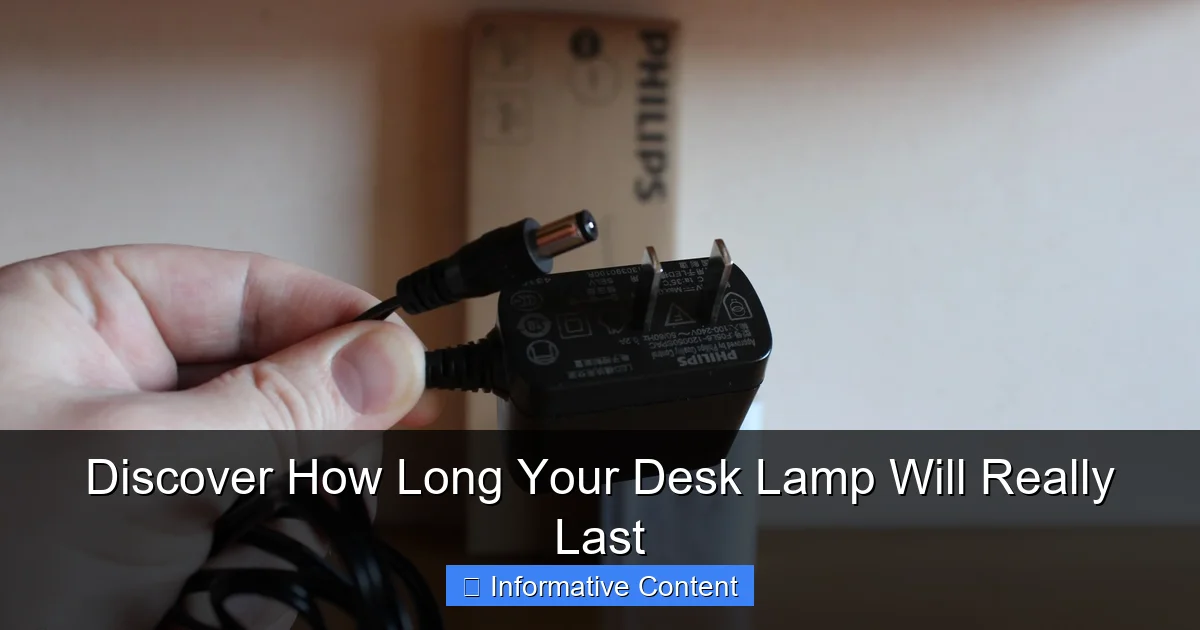
- The Power Supply/Driver: LED lamps require a driver to convert AC power to low-voltage DC. This electronic component has capacitors and other parts that can degrade over 5-10 years.
- The Wiring and Socket: Internal wiring can become brittle. The socket that holds the bulb (if replaceable) can corrode or loosen.
- Mechanical Joints: The hinges, springs, and arms that let you adjust your lamp can wear out. They may become loose or fail to hold a position.
A high-quality lamp is built with robust versions of all these components. A cheap lamp might have a great LED but a flimsy switch that fails in two years.
Enemies of Longevity: What Shortens Your Lamp’s Life?
Knowing what harms your lamp helps you protect it. Here are the main culprits.
Visual guide about Discover How Long Your Desk Lamp Will Really Last
Image source: i.etsystatic.com
Excessive Heat
Heat is public enemy number one for electronics and bulbs. LEDs are sensitive to high temperatures. If a lamp’s design traps heat around the LED chip or driver, its lifespan can be cut in half. Always ensure your lamp has decent ventilation. Don’t drape cloth or paper over it.
Power Surges and Voltage Fluctuations
Sudden spikes in your home’s electrical current can fry the delicate electronics in an LED driver or CFL ballast instantly. Consistent low or high voltage can also cause stress and premature failure.
Physical Stress and Vibration
Constantly bending the gooseneck to its extreme limit. Knocking the lamp over. Placing heavy objects on the shade. These physical abuses strain the mechanical and electrical parts. Gentle handling goes a long way.
Dust and Debris
A thick layer of dust acts like a blanket. It insulates heat, causing components to run hotter. Dust can also clog moving parts and creep into sockets, causing poor connections.
Pro Tip:
Use a surge protector power strip for all your valuable electronics, including your desk lamp. It’s a cheap layer of insurance.
How to Maximize Your Desk Lamp’s Lifespan
You have more control than you think. Follow these simple habits to keep your lamp shining for years.
Visual guide about Discover How Long Your Desk Lamp Will Really Last
Image source: blogger.googleusercontent.com
Choose Quality from the Start
Invest in a lamp from a reputable brand known for build quality. Look for solid metal construction. Look for robust hinges. Read reviews about long-term reliability. A higher upfront cost often means a much longer total life.
Practice Good Usage Habits
- Let It Breathe: Keep the lamp in an open area. Don’t enclose it in a tight bookshelf.
- Be Gentle: Adjust arms and heads smoothly. Don’t force them.
- Mind the On/Off Cycle: For CFLs, avoid turning them on for just a minute. For all lamps, turning them off when you leave the room for a long time saves energy and reduces wear.
Perform Simple Maintenance
Every few months, unplug the lamp and wipe it down with a dry or slightly damp cloth. Gently dust the vents and the bulb (if accessible and cool). Check the cord for any cracks or damage. Tighten any loose knobs or joints if possible.
When Is It Time to Replace Your Desk Lamp?
Don’t wait for complete darkness. Here are the signs your lamp is nearing the end.
Clear Performance Issues
Flickering or Strobing: This often points to a failing driver, ballast, or loose connection. It’s more than just annoying; it can be a electrical fault.
Significant Dimming: If an LED lamp is much dimmer than it used to be, the LEDs are likely degrading.
Buzzing or Humming: A loud buzz usually indicates a failing component in the power supply.
Safety Red Flags (Replace Immediately!)
Burning Smell or Overheating: If the base or head gets too hot to touch, it’s a serious fire hazard. Unplug it immediately.
Visible Damage: Frayed wires, a cracked socket, or exposed internal parts mean the lamp is unsafe.
Intermittent Operation: If it only works when you jiggle the cord or hold the switch a certain way, the internal wiring is failing.
Obsolescence and Upgrade
Sometimes, replacement is about more than failure. Your old incandescent or CFL lamp is likely an energy hog. Upgrading to a modern LED model saves money on your electric bill. It also gives you better light quality and features like dimming or color temperature control.
The Future of Desk Lamp Longevity
The trend is toward even greater durability and integration. We are seeing more lamps with fully integrated, non-serviceable LEDs. The goal is for the entire fixture to last 50,000 hours or more. Manufacturers are improving heat sink designs. They are using better quality drivers. Smart lamps are becoming common. They have even more complex electronics. Their lifespan will depend on both hardware and software support.
The core principle remains. Quality design, proper use, and a basic understanding of the technology are your best guides. They will help you choose a lamp that lasts.
Conclusion
So, how long does a desk lamp really last? The answer is a satisfying “it depends.” It depends on the technology inside it. It depends on how it was built. It depends on how you treat it.
An inexpensive incandescent lamp might be a temporary guest. A well-made LED lamp can be a lifelong partner for your desk. By choosing wisely and caring for your lamp, you ensure it provides reliable, beautiful light for countless hours of work, creativity, and relaxation.
Your desk lamp does more than just fight shadows. It helps you see your potential. Now you know how to make sure it stays bright for the long journey ahead.
Frequently Asked Questions
Can a desk lamp last a lifetime?
While it’s possible, it’s not typical for most mass-market lamps. A very high-quality, well-maintained LED desk lamp with a 50,000-hour rating could technically last 30+ years with moderate use, which feels like a lifetime for many products. However, mechanical parts or electronic drivers may still need service or replacement over that very long period.
Is it worth repairing an old desk lamp?
It depends on the lamp’s sentimental value, quality, and the repair needed. Replacing a standard plug-in bulb or a simple mechanical screw is easy and cheap. Repairing frayed internal wiring or a failed LED driver in a cheap lamp often costs more than buying a new, more efficient model. For a vintage or high-end designer lamp, professional repair is usually worthwhile.
Do LED desk lamps eventually burn out?
Yes, but they don’t “burn out” like a filament snapping. Instead, LED chips slowly degrade and lose brightness over tens of thousands of hours. When an LED lamp is said to have a 25,000-hour lifespan, it usually means its light output will have depreciated to about 70% of its original brightness at that point, not that it will be completely dark.
Does turning a lamp on and off shorten its life?
For LED lamps, the effect is minimal. LEDs are designed to handle frequent switching. For Compact Fluorescent Lamps (CFLs), however, frequent on/off cycling (like every 15 minutes) can significantly shorten their lifespan. It’s best to leave a CFL on if you’ll be out of the room for less than 15 minutes.
Why did my new LED desk lamp stop working so quickly?
Premature failure in a new LED lamp is almost always due to a manufacturing defect, most commonly in the electronic driver or a poor solder joint. It could also be caused by a power surge that damaged the circuitry. This is why checking warranty information and using a surge protector is recommended.
What is the most durable type of desk lamp?
For overall durability and longevity, a well-constructed LED desk lamp with a solid metal body is the best choice. Look for models with good heat dissipation (like aluminum heat sinks), a reputable brand name for quality components, and minimal moving parts if you prioritize sheer durability over adjustability.