
Choosing the right toilet plunger is crucial for solving clogs quickly and protecting your plumbing. This guide breaks down the main types—standard cup, flange, accordion, ball, and specialty plungers—explaining their unique designs and best-use scenarios. You’ll learn how to match a plunger to your toilet’s bowl shape and clog severity for the most effective results.
Contents
- 1 Key Takeaways
- 2 Choosing the Right Types of Toilet Plungers for Your Home
- 3 Step 1: Understand the Basic Mechanics of Plunging
- 4 Step 2: Learn the 5 Main Types of Toilet Plungers
- 5 Step 3: How to Choose the Best Plunger for Your Home
- 6 Step 4: Master the Art of Plunging (The Right Way)
- 7 Troubleshooting Common Plunging Problems
- 8 Conclusion: Be Prepared, Not Scared
- 9 Author
Key Takeaways
- Not all plungers are created equal: Using the wrong type (like a sink plunger on a toilet) is a common reason plunging fails.
- The flange plunger is the universal champion: Its extended rubber flange creates a superior seal in the toilet’s trap, making it the best all-around choice for most homes.
- Bowl shape matters: Modern, elongated bowls often work better with a ball or flanged plunger, while older round bowls accommodate all types.
- Material and durability are key: Look for high-quality, thick rubber that won’t crack and a sturdy, comfortable handle for effective force.
- Proper technique is half the battle: A good seal and forceful, deliberate plunging motions are more important than frantic speed.
- Specialty plungers solve specific problems: Accordion plungers offer extreme force for tough clogs, while toilet augers are for plunger-resistant blockages.
- Hygiene and storage are part of the choice: Consider a dedicated plunger holder or a design with a splash guard to keep your bathroom clean.
Choosing the Right Types of Toilet Plungers for Your Home
Dealing with a clogged toilet is a stressful, messy situation. In that panicked moment, you grab the plunger and hope for the best. But if you’ve ever found yourself plunging frantically with no results, the tool itself might be the problem. Not all toilet plungers are the same. Using the wrong type is a common household mistake.
This guide will walk you through the main types of toilet plungers. You will learn how each one works. We will cover what clogs they are best for. You will also get tips on how to use them correctly. By the end, you will know exactly which plunger to buy for your home. Say goodbye to guesswork and hello to a clear drain.
Step 1: Understand the Basic Mechanics of Plunging
Before we look at types, let’s understand the goal. A plunger doesn’t “push” the clog through. It uses hydraulic pressure. You create a seal over the toilet drain. Then, you push and pull the handle. This action forces water to rush back and forth in the drain pipe. The pressure wave breaks up the blockage or pushes it through.
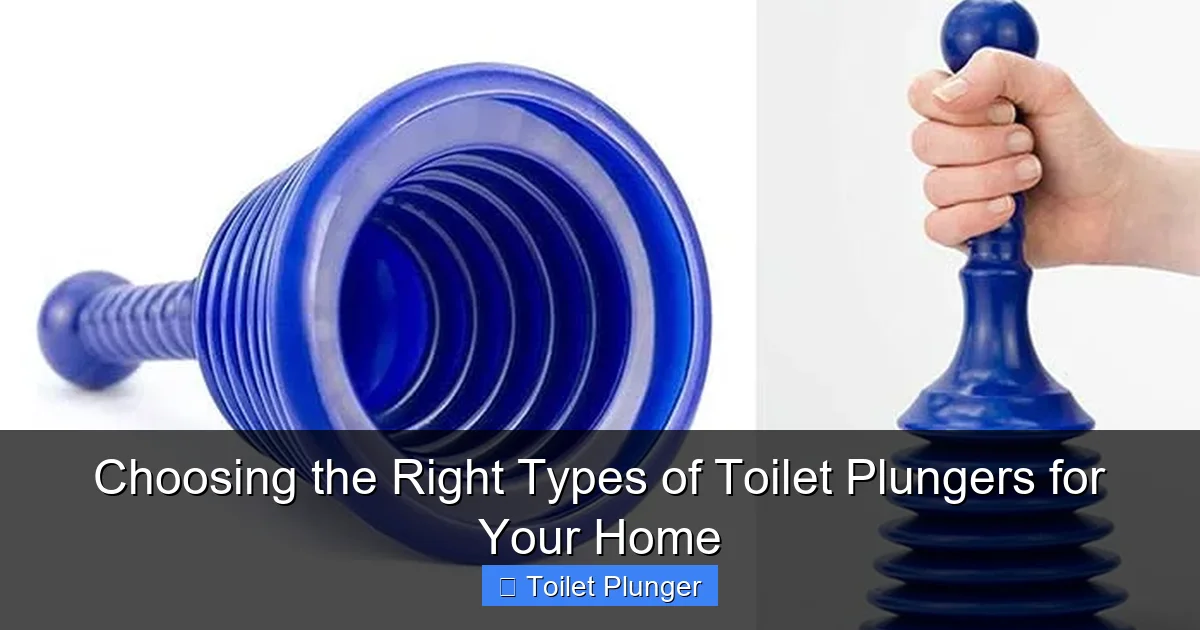
Visual guide about Choosing the Right Types of Toilet Plungers for Your Home
Image source: toiletseek.com
The key to success is a perfect seal. If air or water escapes around the rim of the plunger, you lose pressure. This is why design is so important. The right plunger forms a tight seal in your specific toilet bowl.
What Makes a Toilet Different?
Toilets have a built-in trap. This is a curved pipe that holds water to block sewer gases. The clog is usually lodged in this trap, not in the straight pipe. A good toilet plunger is designed to focus pressure into this curved trapway.
Step 2: Learn the 5 Main Types of Toilet Plungers
Here are the five primary plunger designs you will find. Each has pros and cons.

Visual guide about Choosing the Right Types of Toilet Plungers for Your Home
Image source: toiletseek.com
Type 1: The Standard Cup Plunger (The Sink Plunger)
This is the classic red rubber dome with a wooden handle. Most people have one. But it’s not the best for toilets.
- Design: A simple, shallow rubber cup.
- Best For: Flat sink drains, bathtubs, and shower stalls.
- Why It Often Fails on Toilets: The flat rim cannot easily form a seal inside the toilet’s bowl opening. Water pushes out around the sides.
- Verdict: Do not rely on this for your primary toilet plunger. Keep it for other drains.
Type 2: The Flange Plunger (The Toilet Plunger)
This is the true workhorse for toilets. Often called a “toilet plunger,” it has a key extra feature.
- Design: It looks like a cup plunger with a soft rubber sleeve (the flange) extending from the cup’s bottom. The flange folds out for use.
- How It Works: You insert the flexible flange into the toilet drain. The cup then seals over the bowl’s opening. This creates a double seal—one in the drain and one on the bowl—channeling all your force directly into the trap.
- Best For: Almost all modern toilets. It’s the universal, recommended choice for most homes.
- Tip: For an even better seal, many pros cut off the very tip of the flange. This allows it to fit deeper into the drain.
Type 3: The Accordion Plunger
This plunger is all about raw, focused power. It’s not pretty, but it’s effective.
- Design: Made of hard plastic (like PVC) shaped in a bellows or accordion style.
- How It Works: The rigid design lets you create a tremendous amount of pressure with a single, hard push. There’s little give, so the force goes straight into the water.
- Best For: Extremely stubborn, hard clogs that a rubber plunger can’t handle.
- Caution: The hard plastic can scratch porcelain if you’re not careful. It also requires more effort and can splash more. It’s a specialist tool, not for everyday mild clogs.
Type 4: The Ball Plunger (Beehive Plunger)
This design is a modern take on the flange plunger.
- Design: Features a large, ball-shaped rubber cup with a built-in, non-folding flange. It looks like a beehive.
- How It Works: The large ball holds more water, which can create a more powerful pressure wave. The integrated flange is often sturdier.
- Best For: Elongated toilet bowls, which are common in newer homes. Its shape often fits the longer bowl contour better.
- Note: It can be too large for some compact or older round bowls.
Type 5: Specialty & Automatic Plungers
These are niche tools for specific needs or for those wanting a hands-off approach.
- Toilet Auger (Closet Auger): Not a plunger, but the next step. It’s a long, flexible cable you feed into the trap to hook or break apart a clog. Essential for “plugged by an object” clogs.
- Air Pressure Plungers: Like the “Toilet Shark” or “PlumbTek.” You pump them to build air pressure, then release a blast of force. They can work well but have a learning curve.
- Taze/Grip Plungers: Have a cup designed to collapse inward on the push stroke to minimize splash-back.
Step 3: How to Choose the Best Plunger for Your Home
Now, let’s match a plunger to your situation. Ask these questions.
Visual guide about Choosing the Right Types of Toilet Plungers for Your Home
Image source: toiletseek.com
1. What is your toilet bowl shape?
Round Bowl: A flange plunger or standard ball plunger will fit fine.
Elongated Bowl: A ball plunger or a large-flange plunger is often ideal for the extended shape.
2. How severe are your typical clogs?
Occasional, Soft Clogs: A quality flange plunger is perfect.
Frequent, Stubborn Clogs: Consider having both a flange plunger and an accordion plunger for backup power. Or invest in a toilet auger.
3. Where will you store it?
If space is tight (like in an apartment bathroom), a compact flange plunger with a holder is best. Accordion plungers are bulky.
4. Who will be using it?
For ease of use, a classic flange plunger with a comfortable, grippy handle is best for most people. Avoid flimsy handles.
Our Top Recommendation: For 90% of homes, a high-quality, heavy-rubber flange plunger is the single best purchase. It’s versatile, effective, and easy to use.
Step 4: Master the Art of Plunging (The Right Way)
A great tool used poorly still fails. Follow these steps.
1. Prepare the Area
Put old towels on the floor. Have rubber gloves ready. Ensure you have a bucket.
2. Get a Good Seal
Insert the plunger (fold the flange out if using that type) completely into the drain hole. The cup should be submerged and covered with water. If not, add water from the sink until the cup is covered. This is crucial.
3. Use the Right Motion
Push down firmly slowly to force out air. Then, use strong, deliberate up-and-down motions. The goal is to push and pull. The pulling action is what often breaks the clog loose. Do this for 15-20 seconds.
4. Check and Repeat
Pull the plunger away quickly. If the water drains, success! If not, repeat the process 2-3 more times. If it still won’t clear, you may need a stronger plunger type or an auger.
Troubleshooting Common Plunging Problems
Problem: Water is leaking around the plunger rim.
Solution: You likely have the wrong type (using a cup plunger) or aren’t getting a full seal. Ensure the cup is fully covered in water and centered. Try a flange plunger.
Problem: The clog won’t budge after multiple tries.
Solution: The clog may be too far down or too solid (like a toy). Stop plunging. You risk overflowing the bowl. It’s time to use a toilet auger or call a plumber.
Problem: Plunging creates a huge mess with splash-back.
Solution: Use slower, more controlled motions. Some plungers have built-in splash guards. You can also drape a wet towel over the bowl’s rim to catch droplets.
Conclusion: Be Prepared, Not Scared
A clogged toilet is never fun. But with the right knowledge and tool, it’s a quick fix. Don’t settle for a generic sink plunger. Invest in a proper toilet plunger, most likely a sturdy flange or ball style. Match it to your toilet bowl. Learn the correct plunging technique. Store it neatly in a dedicated holder. This simple preparedness saves time, stress, and money on potential plumbing bills. Remember, the right types of toilet plungers are a small buy for a lot of peace of mind. Make the smart choice today, and you’ll be ready for whatever your plumbing throws at you tomorrow.