Finding the right lumens for your desk lamp is key to a comfortable and productive workspace. For most focused tasks like reading or computer work, aim for 450 to 800 lumens. The ideal amount depends on your specific activity, ambient room light, and personal preference for avoiding glare and eye strain.
Contents
- 1 Key Takeaways
- 2 📑 Table of Contents
- 3 Find the Perfect Desk Lamp Lumens for Your Workspace
- 4 Lumens Explained: The Simple Guide to Light Output
- 5 How Many Lumens Do You Really Need? A Task-by-Task Guide
- 6 Beyond Lumens: Other Crucial Lighting Factors
- 7 How to Adjust for Your Specific Workspace
- 8 Putting It All Together: Choosing Your Ideal Lamp
- 9 Conclusion: Light Your Way to Better Work
- 10 Frequently Asked Questions
- 11 Author
Key Takeaways
- Lumens Measure Brightness: Lumens tell you how much light a lamp emits, not its energy use. More lumens means a brighter light.
- 450-800 Lumens is the Sweet Spot: For most desk-based tasks like reading, writing, or computer work, a lamp providing 450 to 800 lumens offers sufficient, focused light without being harsh.
- Match Lumens to Your Task: Detailed hobbies (e.g., sewing, drawing) need more light (800+ lumens), while ambient accent lighting requires less (200-400 lumens).
- Consider Ambient Light: A darker room needs a brighter lamp to compensate. In a well-lit room, you may need fewer lumens to add task lighting without creating glare.
- Dimmability is a Game-Changer: A dimmable lamp with a wide lumen range (e.g., 300-1000 lumens) offers ultimate flexibility, allowing you to adjust for any time of day or task.
- Color Temperature Matters Too: Pair your lumens with the right color temperature. Cool white (4000K-5000K) boosts alertness for work, while warm white (2700K-3000K) is better for relaxing.
- Proper Placement Prevents Glare: Position your lamp opposite your writing hand to minimize shadows, and use shades/diffusers to soften the light and prevent direct glare on screens.
📑 Table of Contents
- Find the Perfect Desk Lamp Lumens for Your Workspace
- Lumens Explained: The Simple Guide to Light Output
- How Many Lumens Do You Really Need? A Task-by-Task Guide
- Beyond Lumens: Other Crucial Lighting Factors
- How to Adjust for Your Specific Workspace
- Putting It All Together: Choosing Your Ideal Lamp
- Conclusion: Light Your Way to Better Work
Find the Perfect Desk Lamp Lumens for Your Workspace
Have you ever bought a desk lamp that looked great but left you squinting? Or one so bright it gave you a headache? You are not alone. Choosing a desk lamp is about more than style. It is about creating a space where you can see clearly and work comfortably for hours.
The secret is understanding lumens. This simple number holds the key to banishing eye strain and boosting your productivity. Forget watts. Watts are about energy use. Lumens are all about brightness.
Let us break it down together. We will explore what lumens are and how many you really need. You will get clear guidelines for every task, from late-night reading to detailed craft projects. By the end, you will know exactly how to light your perfect workspace.
Lumens Explained: The Simple Guide to Light Output
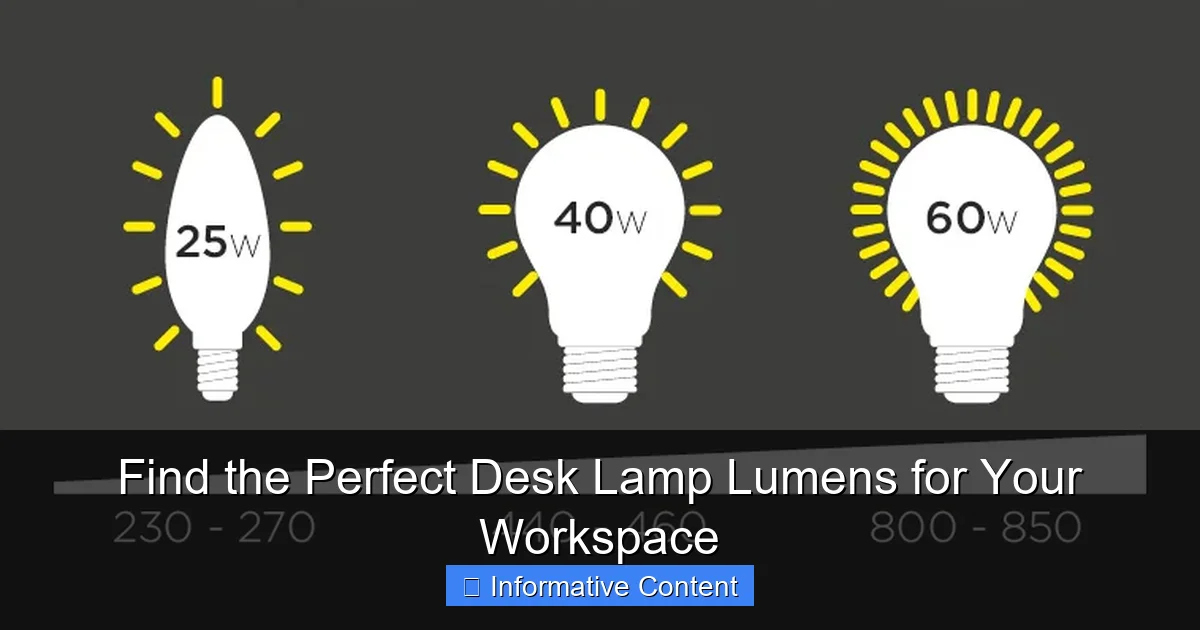
First, let us clear up a common mix-up. For years, we bought light bulbs based on watts. A 60-watt bulb was standard for a lamp. But watts only measure how much electricity a bulb uses. They do not tell you how bright it is.
Visual guide about Find the Perfect Desk Lamp Lumens for Your Workspace
Image source: integral-led.com
Lumens measure the total amount of visible light emitted by a source. Think of it this way. Lumens are to light what gallons are to water. More lumens means more light. It is that simple.
Lumens vs. Watts: A New Way to Shop
With modern LED bulbs, the old rules are gone. An LED bulb might use only 10 watts but produce the same 800 lumens as an old 60-watt incandescent bulb. It is far more efficient. When you shop for a desk lamp, look for the lumen rating on the box. This is your true guide to brightness.
Why Correct Lumens Prevent Eye Strain
Using a lamp with too few lumens forces your eyes to work harder. You might lean in, squint, or get headaches. Too many lumens creates harsh glare and reflections on your computer screen. This also leads to tired, strained eyes. The goal is balanced, comfortable light that illuminates your task without attacking your eyes.
How Many Lumens Do You Really Need? A Task-by-Task Guide
There is no single perfect number for everyone. The right amount of lumens depends on what you are doing. Here is a practical guide based on common desk activities.

Visual guide about Find the Perfect Desk Lamp Lumens for Your Workspace
Image source: modern.place
General Computer Work & Casual Reading (450-650 Lumens)
This is the most common need. If you are working on a laptop, browsing the web, or reading a novel, this range is ideal. It provides a strong pool of light without overwhelming your space. It is bright enough to see clearly but soft enough to avoid screen glare. A lamp in this range is a versatile workhorse.
Focused Office Work, Writing, & Studying (650-850 Lumens)
Need to concentrate? Tasks like writing reports, studying textbooks, or handling detailed paperwork demand more light. This higher lumen range ensures small print and fine details are crystal clear. It helps maintain focus and reduces mistakes. Think of this as your “productivity zone” of lighting.
Detailed Hobbies & Precision Tasks (850+ Lumens)
For activities like sewing, model-building, drawing, or intricate crafts, you need maximum illumination. Lamps offering 850 to 1100+ lumens will flood your workspace with bright, shadow-reducing light. This helps you see the tiniest details and colors accurately, which is crucial for quality work.
Ambient or Accent Lighting (200-400 Lumens)
Not all desk lamps are for hard work. Maybe you have a lamp on a side table for mood lighting. Or you use it to softly highlight a decorative object. In these cases, lower lumens create a warm, inviting glow without the intensity needed for tasks.
Beyond Lumens: Other Crucial Lighting Factors
Lumens are vital, but they are not the whole story. Two other factors work with lumens to create the perfect light.

Visual guide about Find the Perfect Desk Lamp Lumens for Your Workspace
Image source: static.lepro.co.uk
Color Temperature (Measured in Kelvins)
This describes the “color” or “feel” of the light. It is measured in Kelvins (K).
- Warm White (2700K-3000K): Yellowish, cozy light. Perfect for relaxing, reading fiction, or evening use. It is easy on the eyes before bed.
- Cool White / Daylight (4000K-5000K+): Bluish, bright light. Mimics natural daylight. Excellent for focus, alertness, and detailed tasks. Best for home offices and studios.
Pro Tip: Pair higher lumens (for detail work) with a cooler color temperature (for focus). Use lower lumens with a warm temperature for relaxation.
Beam Angle & Light Spread
How does the light leave the lamp? A narrow beam angle creates a concentrated spotlight. A wide beam angle spreads light over a larger area. For a desk, you usually want a balanced spread to evenly cover your work surface without dark corners. A good shade or diffuser helps soften and direct the light effectively.
How to Adjust for Your Specific Workspace
Your room itself changes your lumen needs. Use these tips to fine-tune your choice.
Assessing Your Ambient Room Light
Is your room naturally bright with big windows? Or is it a darker, interior space? In a dark room, your desk lamp is the primary light source. You will likely need the higher end of the lumen ranges we discussed. In a bright room, the lamp just supplements existing light. You can often use fewer lumens to add task lighting without adding glare.
The Power of Dimmability
This is the easiest solution. A dimmable LED lamp is the ultimate flexible tool. Look for one with a wide range, say 300 to 1000 lumens. You can crank it up for an afternoon of detailed work. Then, dim it down for a relaxed evening of checking emails. One lamp fits all tasks and all times of day.
Lamp Placement to Minimize Glare
Where you put the lamp matters as much as how bright it is.
- Place the lamp on the side opposite your writing hand. This prevents your hand from casting a shadow across your work.
- Position it so the light shines onto the desk, not into your eyes. The bulb should not be visible when you are seated.
- If working at a computer, place the lamp so it does not reflect on the screen. Side lighting is often best.
Putting It All Together: Choosing Your Ideal Lamp
Now you have all the knowledge. Let us walk through a simple decision process.
Step 1: Identify Your Primary Task. Are you mostly on video calls? Gaming? Painting? Refer to the task guide above and pick your target lumen range.
Step 2: Check Your Room. Is it dark or bright? Adjust your lumen target up or down by 100-200 lumens accordingly.
Step 3: Prioritize Dimmability. If your budget allows, always choose a dimmable lamp. It future-proofs your purchase for any task.
Step 4: Select the Right Color Temperature. Choose cool white for focus and productivity. Choose warm white for a calming, relaxed vibe. Some smart lamps even let you change color temperature!
Step 5: Look for Good Design. Ensure the lamp has a flexible arm or head for easy positioning. A sturdy base is important. A good shade diffuses light softly.
Conclusion: Light Your Way to Better Work
Finding the perfect desk lamp lumens is a small change with a huge impact. It transforms your desk from a place you tolerate to a place you thrive. You will work more efficiently, read more comfortably, and create more joyfully.
Remember the golden range: 450 to 800 lumens for most tasks. Let your specific activity, room, and need for flexibility guide you. Do not just buy a lamp. Invest in the right light for your eyes and your work.
Your perfect, well-lit workspace is waiting. Now you know exactly how to find it.
Frequently Asked Questions
Is 500 lumens bright enough for a desk lamp?
Yes, 500 lumens is typically bright enough for a desk lamp. It falls perfectly within the recommended range for general computer work, casual reading, and writing. It provides a clear, focused light without being overly harsh for most people.
Can a desk lamp be too bright?
Absolutely. A desk lamp that is too bright can cause significant glare on computer screens and reflective surfaces. This leads to eye strain, headaches, and visual discomfort. Using a dimmable lamp is the best way to always have adjustable, comfortable brightness.
How many lumens do I need for a desk lamp for drawing?
For detailed tasks like drawing, you need more light. Aim for a lamp with 850 lumens or more. This high brightness ensures you can see fine lines, subtle shading, and accurate colors clearly, reducing eye fatigue during long creative sessions.
What is better for eyes, warm or cool light?
It depends on the task and time of day. Cool white light (4000K-5000K) is better for focus and alertness during daytime work. Warm white light (2700K-3000K) is gentler and better for relaxation in the evening. A lamp with adjustable color temperature offers the best of both for eye comfort.
Where should a desk lamp be placed?
Place your desk lamp on the side opposite your dominant hand to prevent shadows. For example, if you are right-handed, place the lamp on your left side. Ensure the light shines down onto your work surface, not directly into your eyes or onto your computer screen.
Are LED desk lamps good for your eyes?
Yes, high-quality LED desk lamps are excellent for your eyes. They provide consistent, flicker-free light and often come with dimmable and color temperature options. Look for lamps with good color rendering (high CRI) for the most natural and comfortable light.