
Most modern LED and fluorescent desk lamps emit negligible to zero harmful UV light, making them safe for regular use. However, some older fluorescent bulbs and specific “full-spectrum” or “daylight” lamps can emit low levels of UVA. The key is understanding bulb technology and using simple precautions like diffusers or maintaining proper distance to minimize any minimal risk.
You’ve just settled into your favorite chair, ready to dive into a good book or finish some late-night work. Your trusty desk lamp casts a warm, focused pool of light on your task. But a sudden thought flickers in your mind: “Is this light safe? Do desk lamps have UV?” It’s a smart question. We slather on sunscreen to block the sun’s ultraviolet rays, so shouldn’t we think about the light sources just inches from our skin and eyes?
Let’s clear the air—or rather, the light—right away. For most people using modern lamps, the short answer is no, your desk lamp is not giving you a secret tan or posing a serious UV threat. But the full picture is a bit more interesting. Not all light is created equal, and the type of bulb in your lamp is the biggest factor. Understanding this can help you make the best, healthiest choice for your home office, study, or craft room.
This article will shine a light on the science behind UV emission. We’ll explore different bulb technologies, separate fact from fear, and give you practical tips to create a well-lit and truly safe workspace. Let’s get started.
Contents
- 1 Key Takeaways
- 2 📑 Table of Contents
- 3 Understanding UV Light: The Invisible Spectrum
- 4 Do Desk Lamps Emit UV? A Bulb-by-Bulb Breakdown
- 5 Assessing the Real Risk: Should You Be Worried?
- 6 Who Might Need Extra Precautions?
- 7 Blue Light vs. UV Light: Don’t Confuse Them
- 8 Practical Tips for a UV-Safe and Eye-Friendly Workspace
- 9 Conclusion
- 10 Frequently Asked Questions
- 10.1 Can a desk lamp cause skin damage like the sun?
- 10.2 Are LED desk lamps completely free of UV?
- 10.3 I use a daylight lamp for crafts. Is it safe?
- 10.4 How can I tell if my old lamp is emitting UV?
- 10.5 Is the light from my computer screen or phone similar?
- 10.6 Should I buy a UV-filtering lamp shade?
- 11 Author
Key Takeaways
- UV Emission Varies by Bulb Type: Incandescent and halogen bulbs emit very low levels of UVA. Most LEDs emit virtually none, while some fluorescent and specialty “full-spectrum” lamps can emit small amounts of UVA.
- Risk is Generally Very Low: For the average user, the UV light from a desk lamp poses a negligible health risk compared to daily sun exposure. It is far below occupational safety limits.
- Intensity and Distance Matter: Any potential effect diminishes rapidly with distance. Sitting a normal arm’s length away from your lamp dramatically reduces exposure.
- Look for Quality LED Lamps: High-quality LED desk lamps with good phosphor coatings are your safest bet for minimal UV and flicker-free, comfortable light.
- Be Mindful of Photosensitivity: Individuals with certain medical conditions (e.g., lupus) or on specific medications should consult a doctor and may need to take extra precautions with any light source.
- Blue Light is a Separate Concern: UV and blue light are different. While UV is mostly filtered by the lamp, the high-energy blue light from LEDs can affect sleep and eye strain—manage this with warmer color temperatures.
- Simple Steps Enhance Safety: Using a lamp shade or diffuser, choosing bulbs with a high Color Rendering Index (CRI), and avoiding staring directly at the bulb are easy ways to ensure a healthy workspace.
📑 Table of Contents
Understanding UV Light: The Invisible Spectrum
To answer “do desk lamps emit UV,” we first need to know what UV light is. Visible light is just one part of the electromagnetic spectrum. Ultraviolet (UV) light has a shorter wavelength and higher energy than the violet light we can see. It’s divided into three main types:
- UVA (315-400 nm): Long-wave UV. It penetrates deep into the skin, contributing to aging and long-term skin damage. Most UV that reaches the earth from the sun is UVA.
- UVB (280-315 nm): Medium-wave UV. It’s primarily responsible for sunburn and plays a key role in developing skin cancer. The atmosphere blocks most of it.
- UVC (100-280 nm): Short-wave UV. This is the most dangerous type, but it’s completely filtered by the Earth’s ozone layer. Artificial UVC is used for germicidal purposes in sanitizing devices.
When we worry about light sources, we’re mainly concerned with UVA and UVB. The good news? Most artificial lights are designed to produce visible light, not UV. But some UV can be an unintentional byproduct of how the light is made.
Do Desk Lamps Emit UV? A Bulb-by-Bulb Breakdown
The UV output of your desk lamp depends almost entirely on the technology inside the bulb. Here’s the detailed breakdown for each common type.
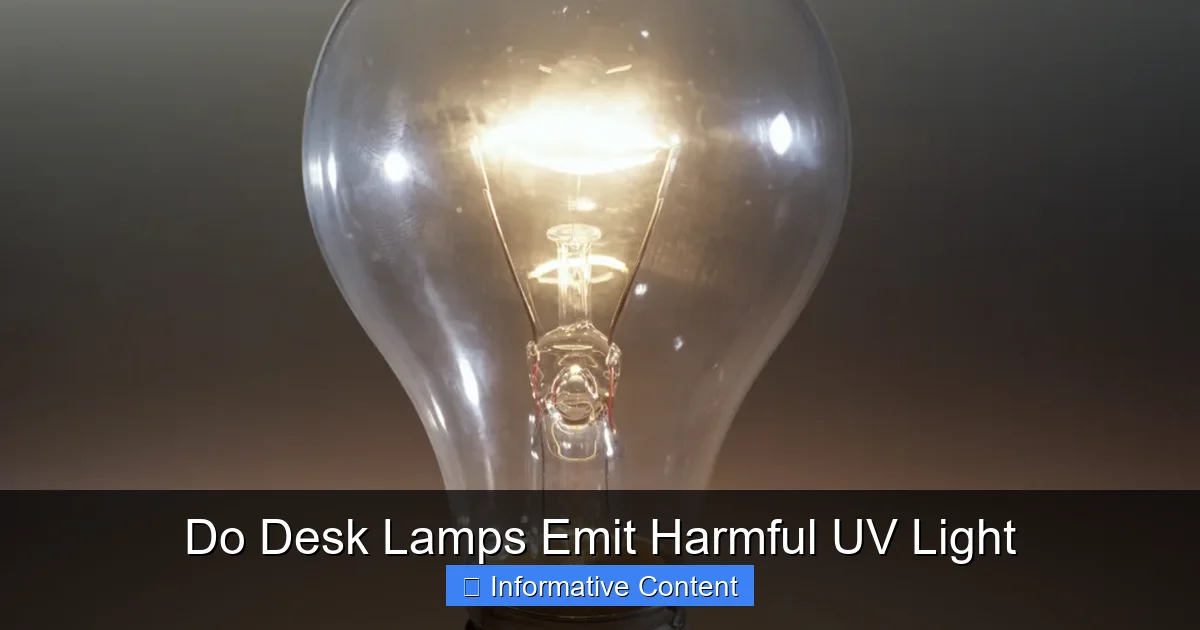
Visual guide about Do Desk Lamps Emit Harmful UV Light
Image source: photos.demandstudios.com
1. Incandescent and Halogen Bulbs
These are the old-fashioned bulbs with a glowing filament. They work by heating a tungsten wire until it’s white-hot. This process creates a broad spectrum of light, including a very small amount of UVA. However, the amount is trivial. The glass envelope of the bulb also acts as a mild filter. You would need to be extremely close to the bulb for a very long time to get any measurable exposure. The primary concerns with these are heat and energy inefficiency, not UV.
2. Fluorescent Lamps (CFLs and Tube Lights)
This is where the question gets more relevant. Traditional fluorescent bulbs work by exciting mercury vapor inside the tube, which then emits UV light (primarily UVC). This UV light hits a phosphor coating on the inside of the glass, which glows and produces the visible light we see.
The glass tube and phosphor coating are designed to absorb the UV. Modern, quality CFLs do this job very well, letting through only minuscule amounts of UVA. However, cheaper bulbs or bulbs with poor phosphor coatings might allow slightly more UV leakage. Also, any tiny cracks or damage to the bulb coating can increase this potential. While still low, fluorescent bulbs are often cited as the most common type of desk lamp that could have detectable UV emission.
3. LED (Light Emitting Diode) Lamps
LEDs are the gold standard for low UV emission. A standard white LED creates light by passing current through a semiconductor to produce blue light. This blue light then strikes a phosphor layer (yellow phosphor) to create a mix that appears white to our eyes.
This process does not involve generating UV light to begin with. High-quality LEDs have excellent phosphor coatings that convert almost all the light efficiently. Reputable studies and safety standards confirm that white LEDs emit negligible, often undetectable, levels of UV radiation. This makes a high-quality LED desk lamp the safest choice from a UV perspective.
4. “Full-Spectrum” and “Daylight” Lamps
Be careful with these terms. “Full-spectrum” aims to mimic the balanced color spectrum of natural daylight, which includes a tiny UV component. Some specialty full-spectrum fluorescent or LED bulbs are designed for tasks like color matching or treating Seasonal Affective Disorder (SAD) and may emit controlled, low levels of UVA to more accurately replicate sunlight. Always check the manufacturer’s specifications for these lamps. For general desk use, a standard LED is perfectly sufficient and UV-free.
Assessing the Real Risk: Should You Be Worried?
Let’s put the tiny amounts of UV that might escape from a desk lamp into perspective. The sun is your primary source of UV exposure. Even on a cloudy day, 15 minutes of sun exposure can deliver more UV than you’d get from a desk lamp in years.

Visual guide about Do Desk Lamps Emit Harmful UV Light
Image source: cdn11.bigcommerce.com
Regulatory bodies like the International Electrotechnical Commission (IEC) set strict limits on UV emission from lamps. General lighting fixtures must fall under the “Exempt Group” risk category, meaning no UV risk under normal conditions. The lamps we’ve discussed, when intact and used as intended, comfortably meet these standards.
The real-world risk for a typical user is virtually zero. You are far more likely to experience eye strain from glare, poor positioning, or the blue light component than any harm from UV. However, understanding exceptions is key to total peace of mind.
Who Might Need Extra Precautions?
While the general public has little to fear, some individuals with specific conditions should be more vigilant:
Visual guide about Do Desk Lamps Emit Harmful UV Light
Image source: cdn11.bigcommerce.com
- People with Photosensitivity: Conditions like lupus, certain forms of eczema, and porphyria can cause skin reactions to light, including artificial light. Some medications (like certain antibiotics, diuretics, and chemotherapy drugs) also induce photosensitivity.
- Individuals with Certain Eye Conditions: Those who are aphakic (have no natural eye lens) or pseudophakic (have an artificial lens without UV filter) may have reduced natural UV protection.
If you fall into one of these categories, consult your doctor. They may recommend using LED lamps, adding extra diffusers, or maintaining a greater distance from any light source as a general precaution.
Blue Light vs. UV Light: Don’t Confuse Them
This is a crucial distinction. In discussions about lamp safety, “blue light” often comes up. Blue light is visible high-energy light (around 400-490 nm). It sits right next to UV on the spectrum but is not ultraviolet.
While LEDs emit negligible UV, they can be rich in blue light. Overexposure to blue light, especially at night, can disrupt circadian rhythms and sleep patterns. It can also contribute to digital eye strain. This is a separate issue from UV damage. You manage blue light by using lamps with warmer color temperatures (2700K-3000K) in the evening and taking regular screen breaks.
Practical Tips for a UV-Safe and Eye-Friendly Workspace
You can easily optimize your setup for comfort and safety with these simple steps:
- Choose High-Quality LED Lamps: Opt for reputable brands. Look for lamps with good color rendering (CRI >80) and adjustable color temperature.
- Use a Lamp Shade or Diffuser: A good shade does more than soften glare; it adds an extra layer of material between you and the bulb, further scattering any light particles.
- Maintain Proper Distance: Follow the “arm’s length” rule. Your lamp should be positioned so the bulb is not in your direct line of sight and is at least a foot away from your skin for long periods.
- Inspect Older Fluorescent Bulbs: If you use CFLs, check for any cracks or peeling of the phosphor coating inside the bulb. Replace damaged bulbs immediately.
- Focus on Overall Eye Comfort: Use indirect lighting to reduce contrast, position your lamp to avoid shadows and glare, and follow the 20-20-20 rule (every 20 minutes, look at something 20 feet away for 20 seconds).
Conclusion
So, do desk lamps emit harmful UV light? For the vast majority of us using modern lighting, especially LEDs, the answer is a reassuring no. The technology in our homes has advanced precisely to provide safe, efficient light. The trace amounts that might come from some bulbs are not a cause for alarm but rather a point of understanding.
By choosing a quality LED desk lamp and setting up your workspace thoughtfully, you eliminate even the smallest hypothetical risk. Your focus can then stay where it belongs—on your work, your book, or your project—bathed in a comfortable, bright, and completely safe pool of light. Shine on, without the worry.
Frequently Asked Questions
Can a desk lamp cause skin damage like the sun?
No, a standard desk lamp is extremely unlikely to cause skin damage. The amount of UV radiation emitted by modern LEDs or even fluorescents is minuscule compared to natural sunlight. You would need to press your skin against the bulb for impractically long periods to reach a harmful dose.
Are LED desk lamps completely free of UV?
High-quality white LED desk lamps are considered effectively free of UV radiation. The process by which they generate light does not produce UV wavelengths. Any emission is typically so low it’s undetectable and falls far within the safest international classification.
I use a daylight lamp for crafts. Is it safe?
Most “daylight” lamps for crafting are designed for color accuracy and use high-CRI LEDs that are still UV-free. However, if it’s a specialty “full-spectrum” lamp marketed to replicate sunlight, check the specs. Some may emit low UVA. For general craft use, a standard 5000K LED daylight lamp is both safe and excellent for task lighting.
How can I tell if my old lamp is emitting UV?
There’s no simple home test. Your best indicators are the bulb type and age. If it’s an old, uncoated fluorescent tube or a damaged CFL, it’s more likely to have UV leakage. When in doubt, replace old fluorescent or incandescent bulbs with a new LED bulb, which is a safe and energy-efficient upgrade.
Is the light from my computer screen or phone similar?
LCD/LED screens emit negligible to no UV light. Their primary light source is a backlight (usually LEDs) that is heavily filtered. The main concern with screens is high-energy visible blue light, which can affect sleep and eye strain, not UV radiation.
Should I buy a UV-filtering lamp shade?
For general use, this is unnecessary. Any fabric or plastic shade acts as a mild diffuser. If you have a specific medical photosensitivity condition, your doctor might recommend special filters. For everyone else, investing in a good quality LED lamp is a more effective and simpler solution.