
Leaving a desk lamp on overnight is generally safe with modern LED bulbs, but it depends heavily on the lamp’s condition, bulb type, and placement. The primary risks are fire from faulty wiring/overheating and unnecessary energy use. For safety, always use cool-to-touch LED bulbs, ensure the lamp is in good repair, and keep it away from flammable materials.
Contents
- 1 Key Takeaways
- 2 📑 Table of Contents
- 3 Is It Safe to Leave a Desk Lamp On Overnight? A Complete Guide
- 4 The Core Concern: Understanding the Fire Risk
- 5 The Biggest Factor: What Type of Bulb Do You Use?
- 6 Beyond the Bulb: Inspecting Your Lamp’s Health
- 7 The Environment: Where is Your Lamp Placed?
- 8 The Cost of Convenience: Energy Use and Your Bill
- 9 Smart Alternatives to Leaving Your Desk Lamp On
- 10 Final Verdict and Best Practices
- 11 Frequently Asked Questions
- 11.1 Can leaving a lamp on overnight cause a fire?
- 11.2 What is the safest type of bulb to leave on for long periods?
- 11.3 Will leaving a lamp on all night run up my electric bill?
- 11.4 Is it bad for the lamp itself to be left on constantly?
- 11.5 I have an old, sentimental desk lamp. Can I leave it on?
- 11.6 Are there any benefits to leaving a small light on at night?
- 12 Author
Key Takeaways
- Risk is Low with Modern Tech: Modern, well-maintained desk lamps with LED or CFL bulbs present a very low fire risk when left on.
- Bulb Type is Critical: Incandescent and halogen bulbs get extremely hot and are poor choices for overnight use due to overheating risks.
- Lamp Condition Matters Most: Frayed cords, loose plugs, and faulty sockets are far greater dangers than the bulb itself.
- Mind Your Surroundings: Never place a lit lamp near curtains, bedding, paper, or other flammable items, regardless of the bulb type.
- Energy & Cost Add Up: Leaving a lamp on for 8+ hours nightly wastes electricity and increases your bill, especially with older bulb types.
- Consider Alternatives: Dimmable lights, smart plugs, or dedicated night lights are often safer and more efficient for overnight needs.
- When in Doubt, Turn it Off: If the lamp is old, feels hot, or you’re unsure of its wiring, the safest practice is to switch it off.
📑 Table of Contents
- Is It Safe to Leave a Desk Lamp On Overnight? A Complete Guide
- The Core Concern: Understanding the Fire Risk
- The Biggest Factor: What Type of Bulb Do You Use?
- Beyond the Bulb: Inspecting Your Lamp’s Health
- The Environment: Where is Your Lamp Placed?
- The Cost of Convenience: Energy Use and Your Bill
- Smart Alternatives to Leaving Your Desk Lamp On
- Final Verdict and Best Practices
Is It Safe to Leave a Desk Lamp On Overnight? A Complete Guide
You’ve finished reading in bed. The room is dark and cozy. You reach over to turn off your bedside lamp. But wait. A thought crosses your mind. What if you left it on? Maybe for a little night light. Or maybe you just drift off before switching it off. Is that a dangerous habit? Or is it perfectly fine?
Many of us have faced this sleepy dilemma. The soft glow of a desk lamp can be comforting. But the worry of fire or a huge electricity bill is real. The answer isn’t a simple yes or no. It’s a “it depends.” This guide will walk you through everything you need to know. We’ll talk about fire risks, bulb types, and smart safety tips. Let’s shed some light on this common question.
The Core Concern: Understanding the Fire Risk
When we ask about safety, we’re mostly worried about fire. Could leaving a desk lamp on overnight start one? The short answer is that the risk is low with a modern, well-made lamp. But it is never zero. Fires can start from electrical faults or overheating.
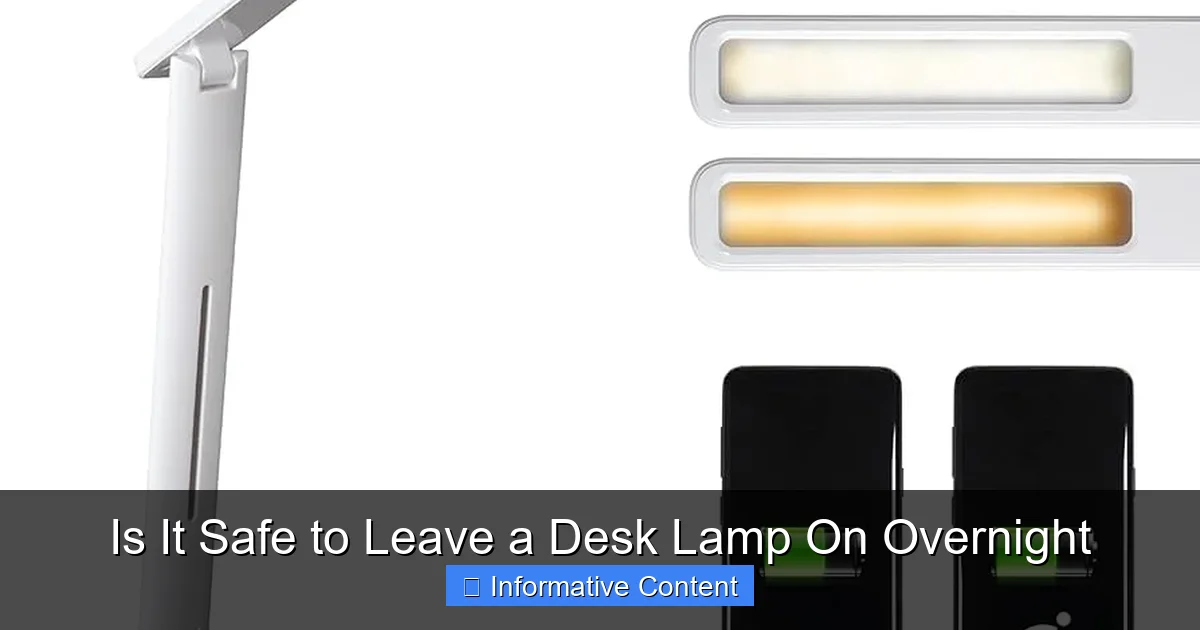
Visual guide about Is It Safe to Leave a Desk Lamp On Overnight
Image source: m.media-amazon.com
Think of your lamp as a system. It has a bulb, a socket, a cord, and a plug. A problem with any part can cause trouble. The goal is to minimize every risk factor.
How Desk Lamps Could Pose a Hazard
Most lamp-related fires start from one of three things. First, faulty wiring or damaged cords. Second, a bulb that gets too hot. Third, something flammable touching the hot part of the lamp. If you control these factors, you dramatically increase safety.
Older lamps, or those that feel warm to the touch, need more caution. A brand-new LED lamp is a very different story from a vintage flea-market find.
The Biggest Factor: What Type of Bulb Do You Use?
This is the most important part of the safety equation. Not all light bulbs are created equal. Their heat output varies wildly. Your choice of bulb makes all the difference for overnight use.

Visual guide about Is It Safe to Leave a Desk Lamp On Overnight
Image source: lampity.com
Incandescent Bulbs: The High-Risk Choice
These are the old-fashioned pear-shaped bulbs. They work by heating a tiny filament until it glows white-hot. About 90% of the energy they use is wasted as heat. The glass can get scorching hot. Leaving an incandescent desk lamp on overnight is not recommended. The prolonged, intense heat can degrade the lamp’s socket and wiring over time. It also poses a serious burn and fire risk if it touches anything.
Halogen Bulbs: Even Hotter
Halogen bulbs are a type of incandescent. They are even hotter and brighter. They are often used in desk lamps for task lighting. You should never leave a halogen desk lamp on unattended or overnight. Their extreme operating temperature is a significant hazard.
CFL Bulbs (Curly Ones): A Better Option
Compact Fluorescent Lamps (CFLs) are much cooler than incandescents. They use about 75% less energy. The risk of them igniting nearby materials is very low. However, they are not ideal for frequent on/off cycling. They also contain a tiny amount of mercury. If they break, you need to ventilate the room. They are generally safe for overnight use from a fire perspective, but not the most efficient choice.
LED Bulbs: The Safest Bet for Overnight Use
This is the winner. Light Emitting Diode (LED) bulbs are perfect for this. They are incredibly energy-efficient. They convert almost all their energy into light, not heat. You can often touch an LED bulb even after it’s been on for hours. It will be warm, but not hot enough to burn you or start a fire. If you plan to leave a desk lamp on overnight, an LED bulb is the only type you should consider. They are cool, cheap to run, and long-lasting.
Beyond the Bulb: Inspecting Your Lamp’s Health
Even with a safe LED bulb, the lamp itself must be in good shape. A faulty lamp can be dangerous even with the safest bulb installed. Make these quick checks a habit.
Visual guide about Is It Safe to Leave a Desk Lamp On Overnight
Image source: askingyard.com
Check the Cord and Plug
Look for any fraying, cracking, or cuts in the cord. Feel the plug after the lamp has been on. Is it unusually warm? A warm plug can indicate a poor connection or faulty wiring. Never run the cord under a rug where damage can go unseen.
Inspect the Socket and Switch
The socket is where the bulb screws in. Is it cracked or discolored? A brown, burnt-looking socket is a major red flag. The switch should click firmly. A loose or flickering switch can cause arcing (small electrical sparks), which is a fire risk.
Feel for Heat on the Lamp Body
Turn your lamp on for 30 minutes. Then feel the lampshade, neck, and base. With an LED bulb, everything should be barely warm. If any part is hot, it’s a sign of poor design or an internal electrical issue. A hot lamp body is a warning sign.
The Environment: Where is Your Lamp Placed?
Safety isn’t just about the lamp. It’s about what’s around it. A safe lamp in a dangerous spot is still a hazard.
Keep it clear. Your desk lamp should be at least three feet away from anything that can burn. This includes curtains, bedding, piles of paper, books, and upholstered furniture. Make sure the lampshade is secure and not tilted against something.
Use a stable surface. The lamp should sit on a level, sturdy desk or table. It should not be in a place where it can be easily knocked over by a pet or in your sleep.
Avoid bathrooms. Never leave a lamp plugged in and on in a bathroom overnight unless it is specifically rated for bathroom/damp locations. Moisture and electricity are a bad mix.
The Cost of Convenience: Energy Use and Your Bill
Safety is one thing. But your wallet matters too. Leaving any light on for 8-12 hours uses electricity. How much it costs depends entirely on the bulb.
Let’s do some simple math. An old 60-watt incandescent bulb left on for 10 hours uses 600 watt-hours (0.6 kWh). Do that every night for a month, and you’ve used 18 kWh just on one light. At an average rate, that’s a few dollars a month for one bulb.
Now, a comparable 10-watt LED bulb? The same 10 hours use only 100 watt-hours (0.1 kWh). The monthly cost is a few dimes. The difference is huge. Leaving an LED desk lamp on overnight has a negligible impact on your energy bill. Leaving an incandescent on is a noticeable waste of money and energy.
Smart Alternatives to Leaving Your Desk Lamp On
Maybe you want light for safety, or for a child, or just because you like it. There are often better tools for the job than your main desk lamp.
Dedicated Night Lights
Modern plug-in or battery-operated night lights are designed for this. They use tiny, efficient LEDs. They give off just enough glow to navigate a room. They are ultra-safe and cost almost nothing to run.
Smart Plugs and Bulbs
This is a brilliant solution. Use a smart plug for your lamp. You can set it on a timer to turn off automatically after you fall asleep. Or use a smart LED bulb you can dim to a very low, safe level all night from your phone.
Dimmable Lamps
If your lamp has a dimmer, use it. Turning the brightness down to 10-20% greatly reduces any heat output and energy use. It provides a perfect night-light level.
Final Verdict and Best Practices
So, can you leave a desk lamp on overnight? With the right setup, yes, you can do so with a high degree of safety and minimal cost.
Here is your safety checklist. Use an LED bulb. Make sure the lamp’s cord, plug, and socket are in perfect condition. Place the lamp on a stable surface away from anything flammable. If you follow these rules, the risk is extremely low.
However, the safest, most energy-efficient habit is still to turn lights off when not needed. For continuous overnight light, a purpose-built night light is often the best choice. Listen to your gut. If a lamp feels hot, smells funny, or flickers, turn it off and unplug it. No convenience is worth risking your safety.
Sleep well, and let there be (safe) light.
Frequently Asked Questions
Can leaving a lamp on overnight cause a fire?
Yes, it can, but the risk is very low with modern LED bulbs and a lamp in good condition. The fire hazard increases significantly with hot bulbs like incandescent or halogen, or if the lamp has faulty wiring or is placed near flammable materials.
What is the safest type of bulb to leave on for long periods?
LED bulbs are the safest by far. They operate very coolly, use little energy, and are designed for long lifespans. Their low heat output makes them the only bulb type recommended for leaving on overnight.
Will leaving a lamp on all night run up my electric bill?
It depends on the bulb. An incandescent bulb will add a noticeable amount. An LED bulb, however, uses so little power that the cost is negligible—often just a few cents per month if left on all night, every night.
Is it bad for the lamp itself to be left on constantly?
Constantly being on can shorten the lifespan of some components, like the switch, but this is minimal with quality lamps. The bulb itself is the part most affected. LEDs have rated lifespans of years, even when left on continuously.
I have an old, sentimental desk lamp. Can I leave it on?
Extra caution is needed. First, replace any old incandescent bulb with a new LED bulb. Second, thoroughly inspect the cord and plug for cracks or fraying. If the wiring is old or brittle, it’s safest not to leave it on unattended. Consider having it rewired by a professional.
Are there any benefits to leaving a small light on at night?
Yes. A small light can provide orientation for safe navigation, reducing the risk of falls. It can also provide comfort for children or adults who are uneasy in total darkness. Using a dedicated, low-wattage night light is the best way to achieve these benefits safely.