The ideal desk lamp height is typically between 15 and 25 inches (38-64 cm) from the work surface. This range ensures optimal light coverage without causing glare or shadows. The perfect height for you depends on your specific task, the lamp’s design, and your personal seating position.
Have you ever bought a stylish new desk lamp, only to find it casts a harsh shadow right over your book? Or maybe it shines directly in your eyes, making you squint. The problem often isn’t the lamp itself. It’s the height.
Getting your desk lamp height right is a small detail with a huge impact. It’s the secret to a comfortable, productive, and eye-friendly workspace. The right height banishes dark spots and annoying glare. It turns a simple light into a tool for better focus.
But how tall should a desk lamp be? Is there a magic number? The short answer is: it depends. But don’t worry. This guide will walk you through everything. We’ll cover the standard rules, the science behind them, and how to customize the perfect setup for your desk.
Contents
- 1 Key Takeaways
- 2 📑 Table of Contents
- 3 The Golden Rule: Standard Desk Lamp Height Ranges
- 4 The Science of Sight: Ergonomics and Eye Comfort
- 5 One Size Does Not Fit All: Tailoring Height to Your Task
- 6 Lamp Types and Their Typical Heights
- 7 Practical Setup: A Step-by-Step Guide to Finding Your Perfect Height
- 8 Common Mistakes to Avoid
- 9 Frequently Asked Questions
- 10 Author
Key Takeaways
- Standard Height Range: Most desk lamps function best between 15 and 25 inches tall, measured from the desk surface to the bulb.
- Task Dictates Height: Detailed tasks like writing need lower, focused light (~16″), while general ambient lighting can be higher (~24″).
- The 40-40-40 Rule: For perfect placement, the bottom of the lampshade should be about 40 inches from the floor and your eyes should be about 40 inches from the task.
- Adjustability is Key: Lamps with flexible goosenecks, swing arms, or adjustable stems offer the most versatility for changing needs.
- Beware of Glare: The lamp should be positioned so the bulb is never directly visible to your eyes, preventing strain and headaches.
- Size Your Base: A lamp’s base should be substantial enough to prevent tipping, especially for tall or heavy lampshades.
- Consider Your Monitor: For computer desks, place the lamp to the side to avoid screen glare, often requiring a taller or adjustable arm.
📑 Table of Contents
The Golden Rule: Standard Desk Lamp Height Ranges
Let’s start with the basics. Most traditional desk lamps are designed to fall within a specific height range. This range is a great starting point for any setup.
The general sweet spot is between 15 and 25 inches (38 to 64 centimeters). This is measured from the top of your desk to the light bulb or the bottom of the lampshade.
Why This Range Works
This height range is not random. It’s based on how light behaves and how we work.
A lamp around 15-18 inches tall creates a focused, intense pool of light. It’s perfect for detailed work like soldering, drawing, or intricate crafting. A lamp in the 20-25 inch range spreads light more broadly. It’s better for general desk illumination, like reading a large book or organizing papers.
Lamps shorter than 15 inches often create a tight, bright circle with sharp shadows at the edges. Lamps taller than 25 inches might start to light the ceiling more than your desk, losing useful brightness.
The Science of Sight: Ergonomics and Eye Comfort
Your desk lamp isn’t just furniture. It’s an ergonomic tool. Its main job is to help you see without straining your eyes. Proper height is critical for this.
Visual guide about Discover How Tall Desk Lamps Should Be
Image source: i.pinimg.com
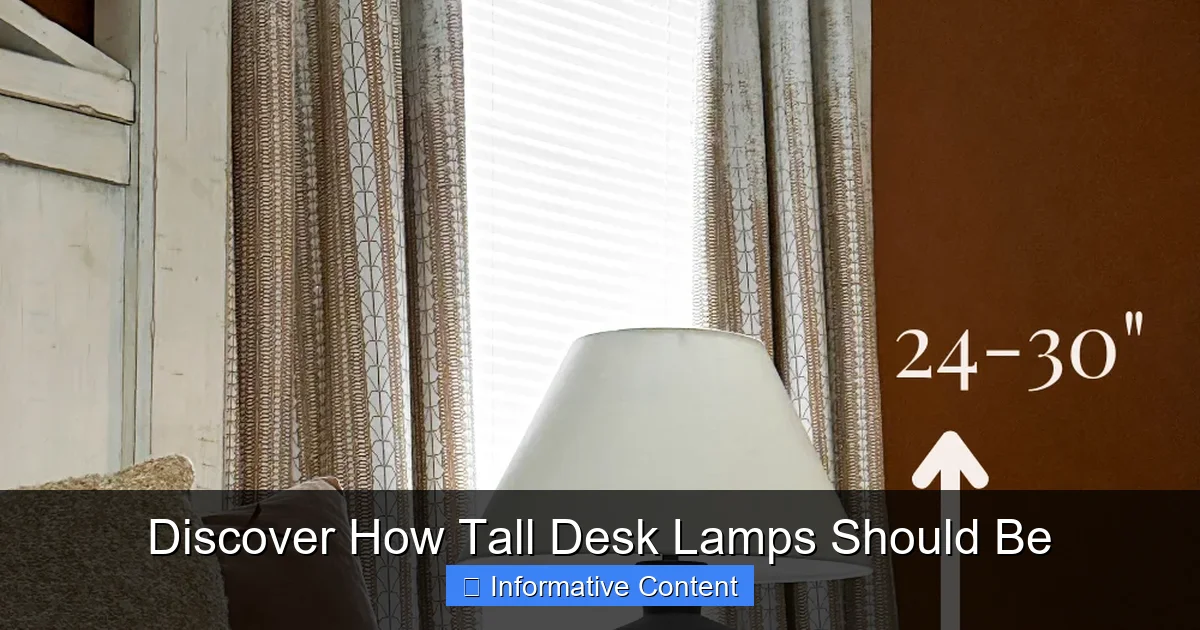
The 40-40-40 Guideline
Experts often recommend a classic rule for optimal lighting placement. Here’s how it works:
- The bottom of your lampshade should be about 40 inches (102 cm) from the floor.
- Your eyes should be about 40 inches from the task you are working on (like a book).
- The light source (the bulb) should be about 40 inches from your task.
This creates a comfortable triangle of light. It minimizes contrast between your task and the surrounding area. This reduces eye fatigue. To use this rule, you need to know your desk height and chair height. An average desk is 29-30 inches tall. A typical chair seat is 18 inches tall. If you sit up straight, your eyes will be roughly 40-48 inches from the floor. This makes the 40-inch lampshade height a perfect target.
Beating Glare and Shadows
The biggest enemy of good desk lighting is glare. Glare happens when you can see the bright bulb directly. It causes squinting, headaches, and fatigue.
The rule: You should never see the bare bulb when seated in your normal working position. The lampshade should completely hide it. The lamp’s height and angle work together to achieve this. A lamp that’s too low might force you to look over the top of the shade. A lamp that’s too high might expose the bulb from below.
Shadows are the other enemy. Your hand or head should not block the light. Placing the lamp on the side opposite your writing hand (left side for right-handers) is a classic fix. The right height ensures the light comes from above and slightly behind, keeping your shadow off the page.
One Size Does Not Fit All: Tailoring Height to Your Task
A sculptor doesn’t use the same light as an accountant. Your primary task should be the main guide for your lamp’s height.
Visual guide about Discover How Tall Desk Lamps Should Be
Image source: officeneedle.com
For Reading and Writing
This is the most common desk task. You need clear, shadow-free light on a flat surface. A lamp height of 16 to 20 inches is often ideal. The light should come from over your shoulder (the non-dominant side). The shade’s bottom should be at or just below your eye level when seated. This throws light onto the page, not into your eyes.
For Computer Work
Modern desks are often dominated by monitors. Direct overhead light causes terrible screen glare. For a computer desk, you often need a taller or highly adjustable lamp, around 20-25 inches or more.
The goal is to position the lamp so it lights the peripheral areas (keyboard, notepad) without shining on the screen. A lamp with a long, articulated arm is a game-changer here. You can position the light source high and to the side, then angle it down onto your desk without hitting the monitor.
For Crafting, Drawing, and Detailed Work
Precision tasks need intense, focused light. A shorter, adjustable lamp (14-18 inches) is best. It gets the light source close to the work area for maximum brightness and detail. A flexible gooseneck or swing arm is essential. It lets you direct the light beam exactly where you need it, at the perfect angle and height for the specific task.
Lamp Types and Their Typical Heights
Not all lamps are created equal. The design dictates how tall it should be and how you use it.
Visual guide about Discover How Tall Desk Lamps Should Be
Image source: officeneedle.com
Traditional Banker’s Lamps
These classic lamps with the green glass shades are usually quite short, often 12 to 18 inches tall. They are designed for close, focused work on paper. Their deep shade is excellent at controlling glare, making them perfect for a traditional writing desk.
Adjustable Swing Arm Lamps
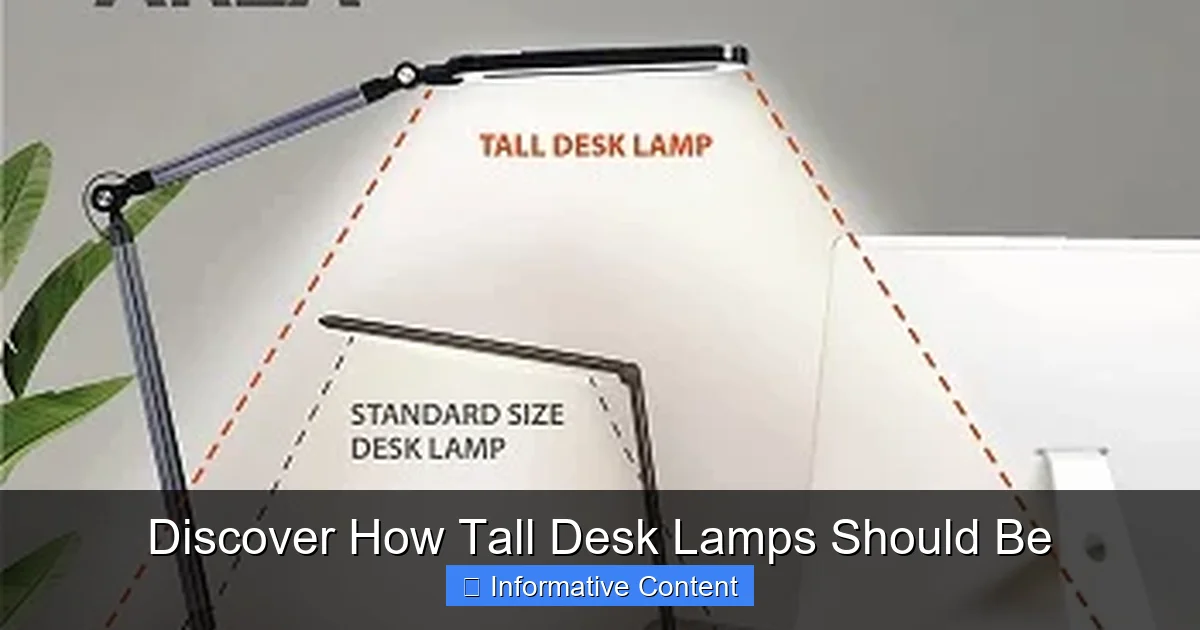
These are the kings of versatility. Their total height from desk to top might be 30-40 inches. But the magic is in the arm. You can adjust the light source through a huge range. You can have it high and out of the way, or swing it low and close for detail work. The height of the mounting point is less critical because of this flexibility.
Modern LED Architect Lamps
These sleek lamps often have a minimalist stem. They are frequently designed to a specific, fixed height based on ergonomic studies, commonly around 20-24 inches. They prioritize a clean look and direct, efficient light. Always check the product specifications for the intended use.
Clip-On Lamps
Clip-on lamps get their “height” from where you attach them. Clipped to a high shelf or a monitor, the light source can be very high. Clipped to a low bookcase, it can be low. Their flexibility makes them great for tight spaces. Just ensure the arm is long enough to position the light where you need it.
Practical Setup: A Step-by-Step Guide to Finding Your Perfect Height
Ready to optimize your own lamp? Follow these simple steps.
- Sit Down: Assume your normal working position at your desk.
- Position the Lamp: Place it on the side opposite your dominant hand (e.g., left side if you’re right-handed).
- Set the Initial Height: Adjust the lamp so the bottom of the shade is roughly level with your eyes or slightly below. This is usually between 15-20 inches from the desk.
- Check for Glare: Look at your work surface. Can you see the bulb? If yes, lower the lamp, tilt the shade, or adjust the angle until the bulb is completely hidden.
- Test with a Task: Do your actual work. Read a book, write a note. Is your hand casting a shadow? If so, try moving the lamp slightly further back or adjusting its height a touch higher.
- Refine: Small adjustments make a big difference. Move the lamp an inch or change the angle a few degrees. Find the spot where the light feels effortless on your eyes.
Remember, if you share the desk with someone of a different height, an adjustable lamp is your best friend.
Common Mistakes to Avoid
Let’s quickly fix some frequent lighting errors.
- Too Tall and Back: A lamp placed too far behind you will cast a shadow of your head onto your work. Bring it forward.
- Too Short and Front: A lamp placed directly in front of you, especially if short, will shine in your eyes and create shadows from your hands. Move it to the side.
- Ignoring the Bulb: Height is useless if you use a harsh, bare bulb. Always use a lamp with a proper shade. For adjustable lamps, a bulb with an opaque tip (like many LEDs) helps reduce direct glare.
- Forgetting Stability: A tall, top-heavy lamp on a tiny base is a tipping hazard. Ensure the base is weighted or wide enough to support the lamp’s height safely.
Finding the perfect desk lamp height is a simple yet transformative act. It’s not about memorizing a single number. It’s about understanding the principles of light, ergonomics, and your own habits. Start with the standard range of 15 to 25 inches. Then, apply the golden rule: no glare, no shadows. Let your specific task guide you. Whether you’re writing a novel, coding an app, or building a model ship, the right light at the right height will make it easier, more comfortable, and more enjoyable. Your eyes—and your productivity—will thank you.
Frequently Asked Questions
What is the most common desk lamp height?
The most common and versatile desk lamp height is around 20 inches (51 cm) from the work surface to the bulb. This height provides a good balance between focused task lighting and broader ambient light for most common desk activities like reading and writing.
Can a desk lamp be too tall?
Yes, a desk lamp can be too tall. If the light source is too high, the light will spread out and become dimmer on your work surface. It may also light up the ceiling or wall more than your desk, and it can increase the chance of seeing the bulb from below, causing glare.
How do I choose a lamp for a desk with a computer monitor?
Choose a lamp with a tall, adjustable arm (like a swing arm lamp). Position it to the side of your monitor and adjust the arm so the light shines down onto your keyboard or desk area without reflecting on the screen. The light source often needs to be higher than with a traditional writing desk.
Does the lampshade affect the ideal height?
Absolutely. A deep, opaque shade allows the lamp to be positioned lower without causing glare, as it hides the bulb better. A shallow or translucent shade may require you to position the lamp higher to prevent the bulb from being directly visible, which changes the ideal height.
Is there an ideal height for a child’s desk lamp?
For a child, the lamp should generally be shorter, around 14-18 inches tall, to provide closer, brighter light for homework and crafts. Most importantly, ensure it is very stable to prevent tipping and uses a cool-to-touch LED bulb for safety.
How important is lamp adjustability?
Adjustability is extremely important for finding the perfect height and angle. A lamp with a flexible neck, swing arm, or adjustable stem allows you to customize the light for different tasks and users. It offers far more versatility than a fixed-height lamp.