
Finding a good house plant for your desk doesn’t require a green thumb! This guide reveals the top low-maintenance options that purify air, reduce stress, and thrive with minimal care. Learn exactly what to look for and how to keep them happy on even the busiest workdays.
Contents
- 1 Key Takeaways
- 2 What Makes a Good House Plant for Your Desk? Your Stress-Free Guide to Thriving Greenery
- 3 Defining “Good”: What Makes a House Plant Truly Great for Your Desk?
- 4 Top 7 Low-Maintenance Desk Plants: The Champions of “Good House Plants”
- 4.1 1. The Indestructible Classic: Snake Plant (Sansevieria)
- 4.2 2. The Glossy Green Machine: ZZ Plant (Zamioculcas zamiifolia)
- 4.3 3. The Cascading Beauty: Pothos (Epipremnum aureum)
- 4.4 4. The Air-Purifying Workhorse: Spider Plant (Chlorophytum comosum)
- 4.5 5. The Elegant Bloomer: Peace Lily (Spathiphyllum)
- 4.6 6. The Compact Succulent: Haworthia (Various species)
- 4.7 7. The Textured Wonder: Peperomia (Various species)
- 5 Your Step-by-Step Guide to Keeping Your Desk Plant Thriving
- 6 Troubleshooting Common Desk Plant Problems
- 7 Building Your Low-Maintenance Desk Jungle: Next Steps
- 8 Conclusion: Your Perfect Desk Plant Awaits (and It’s Easier Than You Think!)
- 9 Author
Key Takeaways
- Prioritize light tolerance: Choose plants that handle low to medium indirect light common in offices, like snake plants or ZZ plants.
- Water wisely, not often: Good desk plants prefer drying out between waterings; overwatering is the #1 killer.
- Air quality matters: Many low-maintenance plants (spider plants, peace lilies) actively filter common indoor pollutants.
- Size and growth rate count: Opt for slow growers that stay compact long-term to avoid constant repotting on your desk.
- Pet safety is crucial: Verify plant toxicity if you have cats or dogs; pothos and ZZ plants are toxic, while spider plants are safe.
- Start simple: Begin with one incredibly resilient plant (like a snake plant) before expanding your collection.
- Observe and adjust: Your plant will tell you what it needs – learn to read its leaves for watering and light clues.
What Makes a Good House Plant for Your Desk? Your Stress-Free Guide to Thriving Greenery
So you want a plant for your desk. Maybe you saw a beautiful succulent on Instagram, or your coworker has a lush fern that looks amazing. You bring one home, water it enthusiastically… and then it turns yellow, drops leaves, or just slowly dies. Sound familiar? Don’t worry! The problem isn’t you – it’s likely you picked a plant that *isn’t* a good house plant for *your* specific desk environment. Finding a truly good house plant means matching the plant’s needs to the realities of your workspace: limited light, irregular watering schedules, and potentially dry air from office HVAC systems. This guide cuts through the confusion. We’ll define exactly what makes a good house plant for desks, spotlight the absolute best low-maintenance champions, and give you the simple, foolproof care steps to keep them thriving for years. No horticulture degree required!
Defining “Good”: What Makes a House Plant Truly Great for Your Desk?
Before we dive into specific plants, let’s clarify what “good” really means in the context of a desk plant. It’s not just about looking pretty (though that’s a bonus!). A genuinely good house plant for your workspace excels in these key areas:
1. Thrives in Typical Office Conditions
Offices are notoriously challenging for plants. Think about it: fluorescent lighting (often weak and unnatural), dry air from constant heating/cooling, limited space, and irregular human interaction (like forgetting to water during a busy week). A good desk plant isn’t fussy. It tolerates lower light levels (bright indirect is ideal, but low light tolerance is a huge plus), handles drier air without crisping, and isn’t overly sensitive to temperature fluctuations near windows or vents. It adapts to the “desk life.”
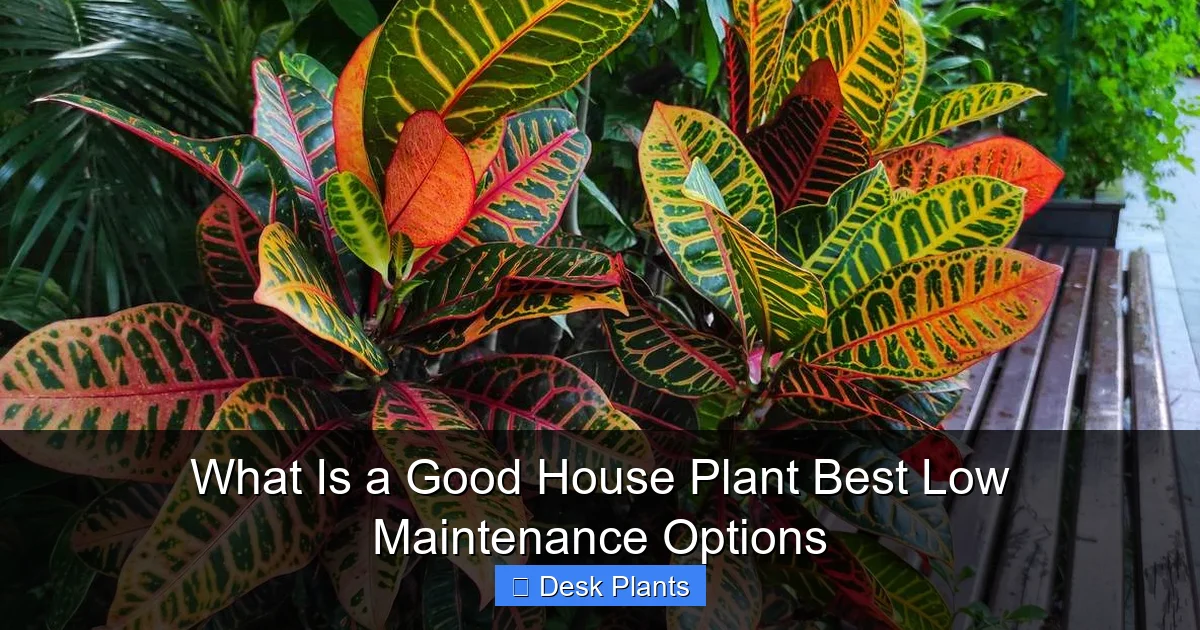
Visual guide about What Is a Good House Plant Best Low Maintenance Options
Image source: openhouseinsurance.com
2. Requires Minimal, Predictable Care
This is the cornerstone of “low maintenance.” A good house plant for your desk shouldn’t demand daily attention. It needs watering infrequently (think weeks, not days), doesn’t require constant misting, and isn’t prone to sudden, dramatic declines if you miss a week. Its care schedule should fit *your* life, not the other way around. Overwatering is the #1 killer of houseplants – the best desk plants actually *prefer* to dry out significantly between waterings.
3. Offers Real Benefits Beyond Looks
Why bother? A good desk plant should earn its spot by providing tangible value. The top benefits include:
- Air Purification: Many plants actively filter common indoor pollutants like formaldehyde, benzene, and trichloroethylene (found in carpets, furniture, and electronics). NASA’s Clean Air Study identified several top performers.
- Stress Reduction & Mood Boost: Studies consistently show that having greenery nearby lowers stress, improves concentration, and increases feelings of well-being and productivity. That little bit of nature on your desk is a mental health tool.
- Humidity Regulation: Plants release moisture through transpiration, subtly increasing humidity in dry office air, which can help with dry skin and respiratory comfort.
4. Stays Manageable in Size
Your desk has limited real estate. A good house plant grows slowly and stays compact for a long time. You don’t want something that rapidly outgrows your space, requiring frequent, disruptive repotting or pruning that creates a mess. Slow, steady growth is ideal for desk dwellers.
5. Is Safe for Your Environment
If you have pets (cats or dogs) that might investigate your desk, plant toxicity is a critical factor. A good house plant for a pet-owning home office should be non-toxic. Always verify this before bringing a plant home if pets have access.
Top 7 Low-Maintenance Desk Plants: The Champions of “Good House Plants”
Now that we know what makes a plant truly “good” for your desk, let’s meet the champions. These plants consistently rank highest for resilience, ease of care, and desk-friendly benefits. They are the foundation of any successful low-maintenance desk jungle.
1. The Indestructible Classic: Snake Plant (Sansevieria)
Often called “Mother-in-Law’s Tongue” (a name only a botanist could love!), the Snake Plant is the undisputed king of low-maintenance desk plants. It’s practically bulletproof.

Visual guide about What Is a Good House Plant Best Low Maintenance Options
Image source: images.ctfassets.net
- Why it’s a good house plant: Thrives on neglect. Tolerates very low light (though prefers medium indirect), infrequent watering (water only when soil is completely dry, every 3-8 weeks depending on conditions), and dry air. NASA-certified air purifier, removing toxins like formaldehyde and benzene. Releases oxygen at night, potentially improving sleep if placed nearby. Slow grower, stays compact for years. Comes in many varieties (cylindrical, tall ‘Laurentii’, compact ‘Hahnii’).
- Desk Care Made Simple: Place it anywhere except direct, harsh sun. Water deeply but infrequently – stick your finger 2 inches into the soil; if dry, water thoroughly until it drains out the bottom, then let it dry out completely again. Wipe leaves occasionally with a damp cloth to keep them dust-free and photosynthesizing efficiently. Pro Tip: Overwatering is its only real enemy. When in doubt, wait another week before watering.
2. The Glossy Green Machine: ZZ Plant (Zamioculcas zamiifolia)
With its waxy, deep green leaves and architectural form, the ZZ Plant brings serious style with zero fuss. It’s incredibly popular for good reason.
- Why it’s a good house plant: Extremely tolerant of low light (one of the best), irregular watering, and neglect. Stores water in its potato-like rhizomes, making it drought-resistant. Excellent air purifier. Very slow grower, maintaining a manageable size. Modern varieties like ‘Raven’ (dark purple-black leaves) add dramatic flair.
- Desk Care Made Simple: Thrives in low to medium indirect light. Water only when the top 2-3 inches of soil are completely dry – this could be every 3-4 weeks or even longer in low light. Like the Snake Plant, it hates soggy soil. Wipe leaves to maintain their shine. Pro Tip: ZZ Plants are toxic if ingested, so keep them away from curious pets and children.
3. The Cascading Beauty: Pothos (Epipremnum aureum)
Known for its heart-shaped leaves and long, trailing vines, Pothos is incredibly versatile and forgiving. It’s perfect for adding a touch of lushness to a desk shelf or letting vines drape gracefully.
- Why it’s a good house plant: Adaptable to a wide range of light conditions (low to bright indirect), though variegation fades in very low light. Water when the top inch or two of soil feels dry. Very fast grower (great for quick gratification), but easy to prune back. Excellent air purifier. Comes in many varieties: Golden (common), Marble Queen (highly variegated), Neon (bright yellow-green), Jade (solid green).
- Desk Care Made Simple: Place it where it gets some indirect light for best growth and color. Water when the top inch of soil is dry. Prune vines regularly to encourage bushier growth and prevent it from taking over your desk. Pro Tip: Pothos is toxic to pets. Propagate cuttings easily in water for free new plants – a great desk project!
4. The Air-Purifying Workhorse: Spider Plant (Chlorophytum comosum)
With its arching, grass-like leaves and adorable “pups” (baby plantlets), the Spider Plant is a cheerful, resilient favorite that’s surprisingly easy to care for.
- Why it’s a good house plant: Tolerates a wide range of light (low to bright indirect), though prefers bright indirect for best growth and pup production. Water when the top inch of soil is dry. One of the top air-purifying plants, especially effective against formaldehyde and xylene. Non-toxic – safe for pets and kids! Produces “pups” that can be easily propagated.
- Desk Care Made Simple: Keep it out of direct sun, which can scorch leaves. Water moderately, allowing the top inch to dry out. The pups can be snipped off and placed in water to root, then planted – perfect for sharing with coworkers! Pro Tip: Brown leaf tips usually mean low humidity or fluoride in water; use distilled or rainwater if possible, or simply trim the brown bits.
5. The Elegant Bloomer: Peace Lily (Spathiphyllum)
Don’t let the “lily” name fool you – it’s not a true lily and won’t take over your desk. Peace Lilies offer beautiful dark green leaves and elegant white “flowers” (spathes) with surprising ease of care.
- Why it’s a good house plant: Thrives in low to medium indirect light (avoid direct sun). One of the best air purifiers, tackling ammonia, benzene, and more. Dramatic visual cue when thirsty – leaves droop noticeably, telling you exactly when to water. Blooms periodically, adding a special touch.
- Desk Care Made Simple: Water when the leaves start to look slightly droopy or when the top inch of soil feels dry. Prefers consistently moist (not soggy) soil. Mist leaves occasionally if air is very dry. Pro Tip: Peace Lilies are toxic if ingested. The drooping is a helpful signal, but try not to let it get *too* dry regularly, as it can stress the plant.
6. The Compact Succulent: Haworthia (Various species)
If you love the look of succulents but find typical ones (like Echeveria) too fussy for indoor light, Haworthias are the perfect desk-sized alternative. They form tight, geometric rosettes.
- Why it’s a good house plant: Tolerates lower light levels much better than most succulents (though bright indirect is ideal). Requires very infrequent watering – only when soil is completely dry, often every 3-4 weeks or less. Slow grower, stays small. Unique, architectural appearance. Many varieties with interesting patterns and colors.
- Desk Care Made Simple: Place in a spot with bright indirect light (a north or east-facing window is great). Use a well-draining cactus/succulent mix. Water deeply but very sparingly, ensuring excess drains away. Pro Tip: Overwatering is fatal. Err on the side of underwatering. Haworthias are generally non-toxic.
7. The Textured Wonder: Peperomia (Various species)
Peperomias offer incredible diversity in leaf shape, color, and texture – from watermelon-patterned to dark red undersides – all in compact, desk-friendly forms.
- Why it’s a good house plant: Most varieties tolerate low to medium indirect light well. Prefer to dry out slightly between waterings. Compact growth habit. Many have interesting foliage that adds visual texture. Some, like Watermelon Peperomia, are moderately good air purifiers.
- Desk Care Made Simple: Avoid direct sun. Water when the top 1-2 inches of soil feel dry. They prefer slightly more humidity than some others; a occasional misting helps, but isn’t mandatory. Pro Tip: Popular desk varieties include Watermelon Peperomia (striped leaves), Raindrop Peperomia (succulent-like leaves), and Emerald ‘n Gold (variegated). Most are non-toxic.
Your Step-by-Step Guide to Keeping Your Desk Plant Thriving
Picking the right plant is half the battle. Now, let’s ensure it succeeds on your desk with minimal effort.
Step 1: Choose the Perfect Spot (Light is Key!)
Light is the most critical factor most people get wrong. Forget “south-facing window = good.” Desks are rarely in ideal spots.
Visual guide about What Is a Good House Plant Best Low Maintenance Options
Image source: thespruce.com
- Assess Your Light: Is your desk near a window? What direction does it face? North windows offer the least direct light (good for Snake Plants, ZZ Plants, Peace Lilies). East/West offer moderate indirect light (good for most on our list). South windows can be too bright/hot unless filtered by a blind (good for Pothos, Spider Plants, Haworthias *if* not direct). No window? Focus on the most low-light tolerant (Snake Plant, ZZ Plant).
- Avoid Direct Sun: Harsh midday sun through a window will scorch leaves on almost all common desk plants. Indirect light (light bouncing off walls/ceilings) is what you want.
- Rotate Occasionally: Turn your plant a quarter turn every few weeks for even growth, especially if light comes from one side.
Step 2: Master the Art of Watering (Less is More!)
This is where most desk plants meet their demise. Overwatering suffocates roots.
- The Finger Test is King: Forget schedules. Stick your finger 1-2 inches into the soil. Water ONLY if it feels dry at that depth. For Snake Plants and ZZ Plants, wait until it’s dry 2-3 inches down or even completely dry.
- Water Thoroughly, Then Drain: When you water, do it slowly and evenly until water runs freely out the drainage hole. Empty the saucer after 15-30 minutes – never let the plant sit in water.
- Adjust for Seasons: Plants need less water in winter (lower light, cooler temps, slower growth) and potentially more in summer (brighter light, faster growth). Always rely on the finger test first.
- Water Quality: If your tap water is very hard or chlorinated, let it sit out overnight before using, or use filtered/distilled water, especially for sensitive plants like Spider Plants (brown tips).
Step 3: Provide Basic Comfort (Beyond Water)
Desk plants don’t need much, but a little attention goes a long way.
- Humidity: Office air is often dry. While our top picks tolerate it, occasional misting (once a week or so) benefits plants like Peace Lilies and Spider Plants. Grouping plants together also creates a slightly more humid microclimate.
- Temperature: Avoid placing plants directly in front of heating vents, air conditioners, or drafty windows. Most desk plants prefer typical room temperatures (65-75°F / 18-24°C).
- Cleaning: Dust blocks light. Wipe leaves gently with a damp cloth every few weeks to keep them shiny and efficient at photosynthesis.
Step 4: Minimal Feeding (Fertilizing)
Desk plants don’t need much food. Over-fertilizing can harm them.
- Less is More: Feed only during active growth (spring and summer). Once a month is plenty.
- Dilute is Key: Use a balanced, water-soluble houseplant fertilizer diluted to half or quarter strength. Follow package instructions for dilution.
- Skip in Dormancy: Do not fertilize in fall and winter when growth slows.
Troubleshooting Common Desk Plant Problems
Even the best low-maintenance plants can have issues. Here’s how to diagnose and fix the most common desk plant woes:
Yellowing Leaves
Most Likely Cause: Overwatering. Check soil moisture immediately. If soggy, stop watering, remove plant from pot, check roots (trim any black/mushy ones), repot in fresh, dry mix, and let soil dry out significantly before watering again.
Other Causes: Underwatering (usually crispy, dry leaves), too much direct sun, or natural aging (older leaves yellow and drop).
Brown, Crispy Leaf Tips or Edges
Most Likely Cause: Low humidity (common in offices) or inconsistent watering (letting soil dry out completely too often). Increase humidity slightly (misting, pebble tray) and ensure more consistent (but not excessive) watering.
Other Causes: Fluoride/chlorine in tap water (use filtered water), over-fertilizing.
Leggy Growth or Pale Leaves
Most Likely Cause: Not enough light. The plant is stretching towards the light source. Move it to a brighter spot with more indirect light.
Drooping Leaves
Most Likely Cause: Underwatering (especially common with Peace Lilies – they droop dramatically when thirsty). Water thoroughly.
Other Cause: Overwatering (roots are rotting and can’t take up water) – check soil moisture. If soggy, see yellowing leaves solution.
No Growth
Most Likely Cause: Too little light or it’s dormant (winter). Ensure it’s getting adequate indirect light. Be patient in winter; resume normal care in spring.
Other Cause: Pot-bound (roots filling the pot) – check if roots are circling densely. Repot into a slightly larger pot in spring.
Building Your Low-Maintenance Desk Jungle: Next Steps
You’ve got the perfect starter plant thriving! What now? Expanding your desk jungle is easy with the right approach.
Start Small, Then Scale
Resist the urge to buy 5 plants at once. Master caring for one or two for a few months. Learn its specific rhythms (how quickly it dries out, how it reacts to light). Success builds confidence.
Propagate Your Winners
Many desk plants (Pothos, Spider Plants, Peperomias) are incredibly easy to propagate. Snip a healthy stem with a few leaves, place it in water, and watch roots grow! It’s free, fun, and a great way to share with colleagues. Once rooted, plant it in soil.
Consider Complementary Plants
Once you’re confident, add plants with slightly different needs but still low-maintenance. Pair a light-loving Haworthia on a brighter spot with a shade-tolerant ZZ Plant further back. Ensure they all fit your overall light conditions.
Embrace the Imperfect
Even the best plants might get a brown tip or lose a leaf occasionally. It’s normal! Don’t panic. Trim the brown bit, adjust care slightly if needed, and keep going. Plants are resilient.
Conclusion: Your Perfect Desk Plant Awaits (and It’s Easier Than You Think!)
Finding a good house plant for your desk isn’t about finding the most exotic or beautiful specimen – it’s about finding the plant that *fits your life* and *thrives in your specific environment*. By prioritizing resilience, low maintenance, and real benefits like air purification and stress reduction, you’ve set yourself up for success. Remember the champions: the indestructible Snake Plant, the glossy ZZ Plant, the cascading Pothos, the air-purifying Spider Plant, the elegant Peace Lily, the compact Haworthia, and the textured Peperomia. They are proven winners for desk dwellers.
The key is simplicity: understand your light, water only when the soil is dry (use the finger test!), and provide basic comfort. Troubleshoot issues calmly using the guide above. Start with one incredibly tough plant, master its care, and then consider expanding. There’s no failure here, only learning. That little bit of green on your desk isn’t just decoration; it’s a daily reminder of nature, a boost to your well-being, and a testament to your ability to nurture something beautiful with minimal effort. You absolutely *can* have a thriving, low-maintenance desk plant. Pick your champion today and enjoy the calm, clean, green energy it brings to your work life. Your perfect good house plant is waiting – go give it a happy home!
🎥 Related Video: Top 10 Low maintenance plants for beginners
📺 A Blissful Life
low maintenance plants, beginner plants, indoor plants, easy care plants, 2024 gardening tips, houseplants for beginners, plant …