
Microfiber attracts dust with incredible efficiency due to a powerful combination of static electricity and its unique physical structure. This guide breaks down the science behind this attraction, explaining how the fibers’ split ends and polyester/polyamide blend create a superior dust magnet. You’ll also learn best practices for using and caring for your cloths to maximize their dust-grabbing power.
Contents
Key Takeaways
- Static Electricity is the Primary Force: The polyester in microfiber generates a strong static charge when rubbed, which electrically attracts and holds dust particles.
- Tiny Fibers Create Massive Surface Area: A single microfiber strand is split into thousands of tiny wedges, dramatically increasing the cloth’s ability to make contact with and trap dust.
- Material Composition is Key: The ideal blend of polyester (for static charge) and polyamide (for absorbency and structure) creates the perfect dust-attracting tool.
- Attraction is an Advantage, Not a Flaw: This powerful pull towards dust is what makes microfiber cloths so effective for cleaning, as they grab and hold debris instead of pushing it around.
- Proper Care Maintains Effectiveness: Washing microfiber correctly—without fabric softeners or excessive heat—preserves its static charge and fiber structure for long-term performance.
- Dust Types Matter: Microfiber is exceptionally good at attracting and holding onto fine, dry dust particles like skin cells, pollen, and pet dander.
Unveiling Why Microfiber Attracts Dust So Easily
Have you ever pulled a clean microfiber cloth from the drawer, only to find it covered in a fine layer of dust or lint before you’ve even used it? It can feel frustrating. But here’s the surprising truth: that dust attraction isn’t a defect. It’s the cloth’s superpower. Understanding why microfiber attracts dust so effectively is the key to using it properly for a spotless home. This guide will walk you through the fascinating science, step-by-step, so you can become a master of dust control.
The Core Science: How Microfiber Meets Dust
Microfiber’s dust-grabbing ability isn’t magic. It’s a brilliant feat of material engineering. The process hinges on two main principles: physics and physical structure. Let’s break them down.
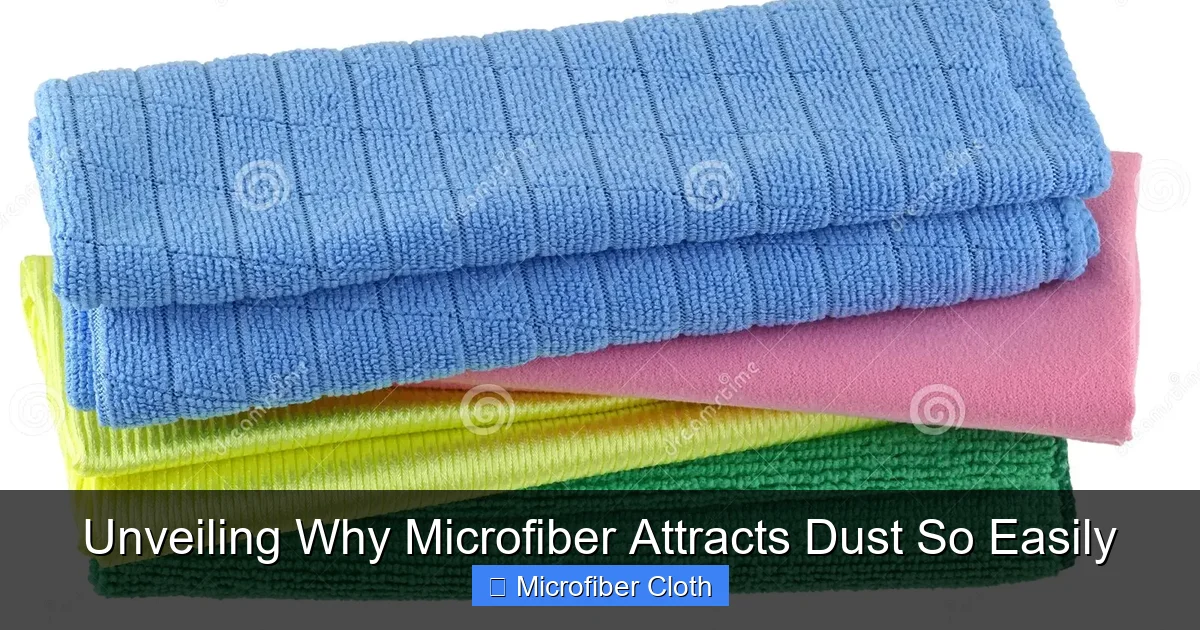
Visual guide about Unveiling Why Microfiber Attracts Dust So Easily
Image source: thumbs.dreamstime.com
Step 1: Understanding the Role of Static Electricity
This is the invisible force doing most of the work. Most quality microfiber cloths are made from a blend of polyester and polyamide (nylon).
- The Triboelectric Effect: When you rub, fold, or even just handle a dry microfiber cloth, the polyester fibers rub against each other or other surfaces. This friction causes electrons to be transferred, creating a static electric charge on the cloth.
- Opposites Attract: Dust particles in your home are often lightly charged. The static charge on the microfiber cloth creates an electrostatic field. This field acts like a magnet, powerfully attracting the oppositely charged dust particles from the air and surfaces.
- Stronger Than Gravity: This electrostatic pull is so strong it can attract dust upward, defying gravity, which is why your cloth can get dusty just sitting on a shelf.
Step 2: Examining the Physical Structure of the Fibers
If static electricity is the “force,” the fiber structure is the “net.” A single strand of microfiber is incredibly thin—finer than a strand of silk. But the real secret is in the splitting.
- Split Microfibers: During manufacturing, each polyester/polyamide fiber is mechanically split. One strand is divided into tens, even hundreds, of tiny wedge-shaped filaments.
- Massive Surface Area: This splitting creates a massive increase in surface area. Think of it like a smooth rope versus a frayed rope. The frayed rope has far more points of contact. A single square inch of microfiber cloth can contain over 200,000 of these tiny fibers.
- The Hook-and-Loop Effect: These split ends are tiny enough to penetrate the microscopic grooves on surfaces and hook onto dust particles. They physically trap and hold the dust within the forest of fibers.
Step 3: The Material Composition: Polyester vs. Polyamide
The blend ratio matters. A typical great cleaning cloth is 70% polyester, 30% polyamide.
- Polyester (The Attractor): This is the component primarily responsible for generating that helpful static charge. It’s excellent for grabbing dry dust and debris.
- Polyamide (The Holder and Absorber): This material is more absorbent than polyester. It gives the cloth structure, durability, and helps with liquid absorption. In the dusting context, it adds to the cloth’s overall trapping capability.
Together, they create a synergistic effect. The polyester pulls the dust in, and the dense forest of split fibers from both materials traps it.
How to Use Microfiber’s Dust-Attracting Power Properly
Now that you know why microfiber attracts dust, let’s use that knowledge for superior cleaning.
For Dry Dusting: Let the Static Work
Do use your cloth dry for electronics, blinds, baseboards, and shelves. The friction created as you wipe will generate the static charge needed to attract and hold dust, not just relocate it. Fold the cloth into quarters to use multiple clean sides.
For Wet Cleaning: The Capillary Action Advantage
When dampened with water or a cleaning solution, the mechanism changes slightly but is still powerful.
- Capillary Action: Water wicks deep into the spaces between those millions of microfibers. As you wipe, dust and grime are drawn into these tiny channels, trapped, and removed from the surface.
- No Lint Left Behind: Unlike paper towels or cotton rags, microfiber doesn’t shed lint, so you won’t trade dust for tiny paper or cloth fibers.
Troubleshooting Common Microfiber Dust Issues
Sometimes, problems arise. Here’s how to fix them based on our new understanding.
Problem: The Cloth is Linting or Leaving Dust Streaks
Cause & Solution: This is often a sign of a low-quality cloth or one that is degrading. The fibers are breaking off. Ensure you buy reputable, split-microfiber cloths. Also, never use fabric softener (it coats the fibers, ruining their properties) and avoid very high heat in the dryer, which can melt the fine fibers.
Problem: It Feels “Less Sticky” and Isn’t Picking Up Dust
Cause & Solution: The cloth may be clogged with residue (from polish, wax, or detergent) or its static charge has been neutralized. Wash it thoroughly with a small amount of liquid detergent in warm water. For a refresh, soak in a mixture of hot water and a cup of white vinegar for 30 minutes, then wash and dry without heat.
Problem: The Cloth Attracts Too Much Dust in Storage
Cause & Solution: This is pure physics in action! The cloth is doing its job even in the drawer. Store it in a sealed container or ziplock bag immediately after it’s completely dry from laundering. This prevents it from acting as an air filter for your linen closet.
Putting It All Together: A Conclusion on Dust and Microfiber
The fact that microfiber attracts dust with such tenacity is its greatest strength. It’s a purposeful design, harnessing the laws of physics and precision engineering. That “problem” of a dusty cloth fresh from storage is actually proof of its efficacy. By understanding the dual role of static electricity and microscopic fiber structure, you can choose the right cloth for the job (dry vs. damp), care for it properly to maintain its charge, and store it wisely. Embrace the attraction. That powerful pull is the secret to a cleaner, dust-free home, making your microfiber cloth not just a tool, but a silent, scientific partner in your cleaning routine.
🎥 Related Video: Easy Way To Find Bed Bugs #easydiy #ytshorts #bedbugs #hotel #howto #howtodiy
📺 The Educator and Sounds Channel
