
Why do witches have brooms? This guide explores the real history behind the witch’s broomstick, from medieval homes and folk magic to flying myths and modern pop culture. You will learn where the idea came from, what it symbolized, and how the image of a witch on a broom changed through the centuries.
Contents
- 1 Key Takeaways
- 2 Introduction: Why witches have brooms at all
- 3 Step 1: Start with the real broom – a simple household tool
- 4 Step 2: Explore the magical side of the broom
- 5 Step 3: Trace how flying witches on broomsticks appeared
- 6 Step 4: See how art and literature fixed the witch’s broom image
- 7 Step 5: Understand the deeper symbolism of the witch’s broom
- 8 Step 6: See how modern culture keeps and changes the broom image
- 9 Step 7: Learn how modern witches use brooms today
- 10 Troubleshooting: Common myths and misunderstandings
- 11 Conclusion: What the witch’s broom really tells us
- 12 Author
Key Takeaways
- Point 1: The link between witches and brooms began in everyday life, because brooms were common tools in medieval homes.
- Point 2: Early myths of flying witches on broomsticks grew from folk magic, fear of heresy, and church-led witch hunts.
- Point 3: The broom became a symbol of female power, domestic work, and the crossing of boundaries between worlds.
- Point 4: Many cultures used brooms in protective and cleansing rituals long before the witch stereotype appeared.
- Point 5: Artists, writers, and later films helped fix the image of the witch on a broom in popular imagination.
- Point 6: Modern witches and pagans often use brooms as tools for spiritual cleansing, not literal flying.
- Point 7: Understanding why witches have brooms reveals deeper stories about gender, fear, and symbolism in history.
Introduction: Why witches have brooms at all
When you picture a witch, you almost always see one thing: a broom. The classic witch flies across the moon on a broomstick, hat pointed, cloak billowing. But why do witches have brooms in the first place? How did a simple cleaning tool become a symbol of magic, fear, and flight?
In this guide, you will learn why witches have brooms by looking at history, myths, and symbolism. We will walk step by step through the real world roots of the broom, the rise of witch hunts, and the stories that turned the broom into a magical vehicle. You will also see how modern witches use brooms today in a very different way.
By the end, you will understand not only why witches have brooms, but also what this symbol says about women, power, and culture across the centuries.
Step 1: Start with the real broom – a simple household tool
To understand why witches have brooms, you need to start with the everyday broom. Before it became a sign of magic, the broom was just a tool used in almost every home.
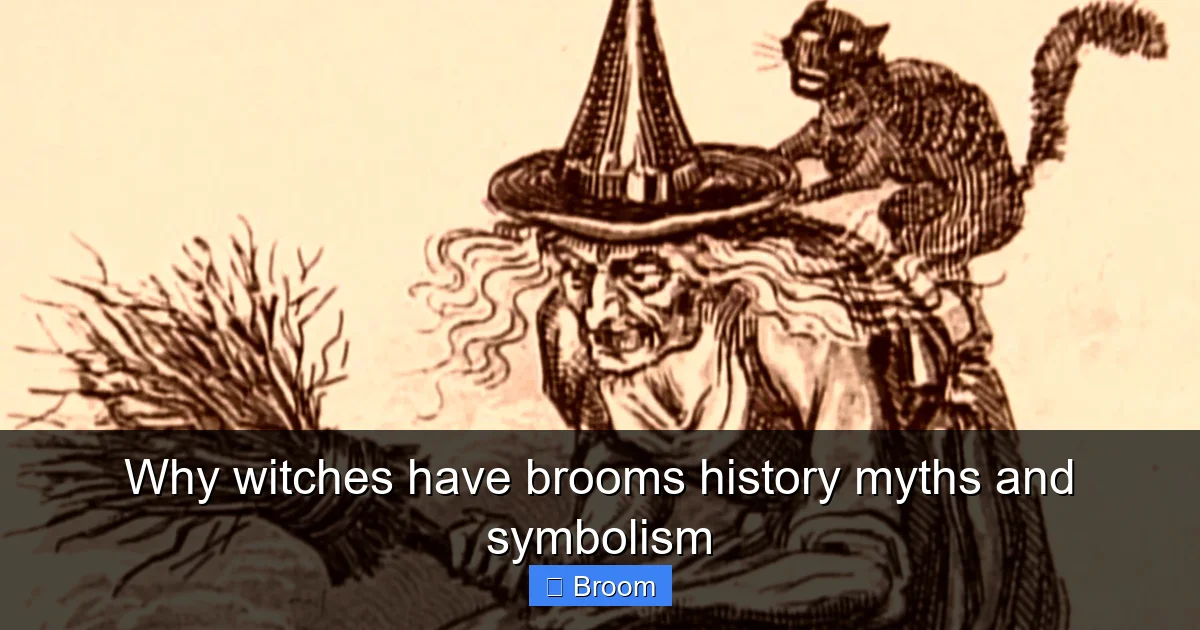
Visual guide about Why witches have brooms history myths and symbolism
Image source: cropper.watch.aetnd.com
Know what brooms were made of
In medieval and early modern Europe, brooms were made from whatever was at hand. People tied together twigs, straw, or heather and fixed them to a wooden handle. These brooms were cheap and easy to make. Almost every house had at least one.
Because brooms were so common, they were linked to daily life. They swept dirt from floors, dust from doorways, and ashes from hearths. The broom was a symbol of home, work, and order. This connection to the home is one of the first clues to why witches have brooms in later stories.
See how brooms were linked to women
In many cultures, cleaning the home was seen as women’s work. So the broom became a sign of female labor. While not every woman used a broom, the image of a woman with a broom became strong in art and story.
Because witches were often imagined as women, people started to link the tools of the home with the tools of the witch. This is a key reason why witches have brooms rather than, for example, pitchforks or shovels. The broom matched the gendered roles of the time.
Step 2: Explore the magical side of the broom
To see more clearly why witches have brooms, you need to look at old beliefs about magic and protection in the home. Long before the witch stereotype, people saw brooms as more than cleaning tools.

Visual guide about Why witches have brooms history myths and symbolism
Image source: images2.minutemediacdn.com
Learn about brooms in folk magic
Many cultures used brooms as protective objects. People placed brooms across doorways to guard against evil spirits or bad luck. Some believed you could sweep away misfortune by sweeping from the door outward. Others thought that a broom placed bristles up would keep unwanted visitors away.
In wedding customs, couples sometimes “jumped the broom” as a sign of entering a new life together. In these cases, the broom became a symbol of crossing a boundary and starting a new path. This idea of crossing a line later fed into the idea of witches crossing between worlds.
Connect cleansing to spiritual power
The broom did not just clean dirt. It also symbolically cleaned energy. In folk belief, sweeping could clear a space of bad influences. This is one more reason why witches have brooms: a tool that clears and protects fits well in magical practice.
As fears about magic and heresy grew in Europe, any object tied to folk magic could be seen with suspicion. The broom, already used in rituals and charms, became easy to link with witches. Over time, this link grew stronger, until the broom became one of the main signs of a witch.
Step 3: Trace how flying witches on broomsticks appeared
Now we reach the part most people think of when they ask why witches have brooms: the image of flying. How did anyone get the idea that witches rode brooms through the sky?
See how fear and imagination shaped witch stories
During the late Middle Ages and early modern period, church authorities and secular courts became obsessed with witchcraft. They believed witches met in secret gatherings, called sabbats, where they worshipped the devil and did harmful magic.
To explain how witches could meet in far away places at night, people said they must fly. The broom, already linked to women and home, became a logical vehicle. If a woman was accused of witchcraft, it was easy to imagine her grabbing the nearest tool and flying off into the night.
Understand confessions and torture
Many details about flying witches came from confessions extracted under torture. When people were in great pain and fear, they often told interrogators what they wanted to hear. Authorities asked leading questions about flying, sabbats, and broomsticks.
Over time, these forced stories shaped public belief. If one accused person said witches flew on brooms, others might repeat the same image. This helped fix the idea that witches have brooms and use them to fly. These tales were then copied into books about witchcraft and spread across Europe.
Consider the role of “flying ointments”
Some historians believe that stories of flying witches came from the use of herbal ointments. These ointments sometimes contained plants with strong hallucinogenic effects. People might have felt as if they were flying or leaving their bodies.
In some tales, witches rubbed these ointments on their skin or on tools like brooms. The broom then became a focus for these strange experiences. Whether or not this was common in real life, the stories were powerful. They added to the idea that witches have brooms not just for sweeping, but for magical travel.
Step 4: See how art and literature fixed the witch’s broom image
Once stories of flying witches spread, artists and writers began to show and repeat them. This step is crucial in understanding why witches have brooms in modern culture.
Look at early drawings and woodcuts
In the 15th and 16th centuries, printers made woodcut images to go with pamphlets and books about witchcraft. These images often showed witches riding brooms through the sky. Some even showed them riding other tools, like forks or animals, but the broom became the most common.
These pictures were simple, bold, and easy to copy. They spread through towns and villages. People who could not read still saw the images. Over time, the link between witches and brooms grew stronger in the public mind.
Notice how stories repeated the same symbol
Writers of plays, poems, and tales began to use the broom as a quick way to show that a character was a witch. The question of why witches have brooms became less important than the fact that everyone recognized the symbol.
By the time of later fairy tales and folk stories, the witch on a broom was already a familiar figure. This made it easy for new generations to accept the image without question. The broom was no longer just a tool; it was an icon.
Step 5: Understand the deeper symbolism of the witch’s broom
So far you have seen the history and stories that explain why witches have brooms. Now it is time to look at what the broom symbol actually means on a deeper level.
See the broom as a symbol of female power
The broom comes from the domestic sphere, a space long linked with women. When a witch takes a broom and flies with it, she is taking a tool of housework and turning it into a tool of freedom. She leaves the home, the rules, and the limits placed on her.
In this sense, the witch’s broom can be seen as a symbol of resistance. It shows a woman who refuses to stay in her assigned role. This is one reason why witches have brooms in stories that fear female independence. The flying witch is both frightening and strangely free.
Think about boundaries and crossing worlds
The broom also marks thresholds. It sweeps doorways. It lies across the floor at the edge of a room. In rituals, people jump over brooms to move from one state of life to another. All of this connects the broom to the idea of crossing boundaries.
When a witch rides a broom through the night sky, she crosses the greatest boundary of all: the line between the human world and the spirit world. This helps explain why witches have brooms rather than other tools. The broom already had a natural link to borders and transitions.
Notice the mix of sacred and ordinary
Another reason why witches have brooms lies in the contrast between the sacred and the ordinary. The broom is a simple object. It belongs to the most basic tasks of life. Yet in witch lore, it becomes a vehicle for magic, danger, and wonder.
This mix of plain and powerful makes the symbol strong. It suggests that magic can hide in the everyday. It also reflects old fears that dangerous power might be hidden in ordinary people, especially those who were poor, female, or different.
Step 6: See how modern culture keeps and changes the broom image
Today, when people ask why witches have brooms, they often think of cartoons, Halloween, and fantasy films. Modern media has both kept and softened the old image.
From horror to Halloween fun
In earlier times, the witch on a broom was a sign of real fear. People believed witches could harm crops, spread illness, or curse neighbors. Now, in many places, the witch has become a playful figure, especially at Halloween.
Children dress up as witches with pointed hats and toy brooms. Cartoons show friendly witches learning to fly on brooms. The symbol is still strong, but the meaning has shifted. Instead of pure fear, there is now a mix of humor, charm, and fantasy.
How films and books shape what we see
Films, novels, and comics have done a lot to answer, in their own way, why witches have brooms. In some stories, the broom is a magical device, like a flying car. In others, it is a family heirloom or a mark of witch identity.
These tales do not always care about historical accuracy. Still, they keep the old image alive. Each new story adds a layer to the symbol, even as the basic idea stays the same: witches have brooms, and brooms mean magic and flight.
Step 7: Learn how modern witches use brooms today
Not everyone who calls themselves a witch today believes in the old myths. Many modern witches and pagans see the broom as a spiritual tool, not a vehicle for literal flying. This final step shows how the symbol lives on in real practice.
Using brooms for cleansing rituals
Modern witches often use a broom, sometimes called a “besom,” to cleanse a space. They sweep the air, not the floor, to clear away negative energy before a ritual. This is very close to the old folk idea of sweeping out bad luck or spirits.
In this way, the question of why witches have brooms has a simple answer in modern practice: the broom is a tool for spiritual cleaning and protection. It fits well with the long history of the broom as a guardian of the home and the doorway.
Symbolic flying and inner journeys
Some witches speak of “flying” in a symbolic sense. They might use meditation, trance, or guided journeys to explore inner worlds or spiritual realms. The broom can serve as a symbol of this travel, even if no one leaves the ground.
Here, why witches have brooms connects back to the oldest stories of crossing between worlds. The broom stands for movement, change, and the courage to explore the unknown.
Troubleshooting: Common myths and misunderstandings
When people ask why witches have brooms, they often run into myths that mix truth and fiction. This section helps you sort out a few common issues.
Myth 1: Witches always rode brooms in all cultures
In reality, the image of a witch on a broom is strongest in European and later Western culture. Other cultures have different images of magical people and their tools. So when you look at why witches have brooms, remember that this is not a universal rule, but a specific cultural story.
Myth 2: Witches chose brooms only because they were funny or random
The broom might seem like a strange choice, but as you have seen, it makes sense. It was linked to women, to the home, to protection, and to crossing boundaries. All of these reasons help explain why witches have brooms rather than some other object.
Myth 3: The broom is just a joke now, with no deeper meaning
Even in playful settings like Halloween, symbols carry history. When you see a witch on a broom, you are looking at centuries of fear, imagination, and change. Understanding why witches have brooms can deepen your view of this familiar image and the stories behind it.
Conclusion: What the witch’s broom really tells us
The question of why witches have brooms leads you through a long journey. You start with a simple household tool, move through folk magic and witch hunts, and arrive at modern films and spiritual practice. Along the way, the broom shifts from a cleaning stick to a sign of power, fear, and freedom.
Witches have brooms in stories because brooms were part of daily life, tied to women and the home, and rich with symbolic meaning. They stood at doorways and boundaries, and they were used in rituals of protection and change. When fear of witchcraft grew, it was easy to imagine these tools taking flight.
Today, the image of the witch on a broom still lives in our minds, costumes, and stories. By understanding the history, myths, and symbolism behind it, you can see that this familiar picture is far more than a simple Halloween joke. It is a window into how societies view women, magic, and the power hidden in ordinary things.
🎥 Related Video: Broomsticks – History and Use in Witchcraft║Witchcraft 101
📺 HearthWitch
See More ☾ Broomsticks have been engrained in culture as one of the most iconic symbols of the witch. But where did the idea of …