
This guide explains exactly what broom to use for concrete finish and how to get a clean, even, non-slip texture on driveways, patios, and walkways. You’ll learn the best broom types, bristle materials, sizes, and step-by-step techniques to create a professional-quality broom finish on fresh concrete.
Contents
- 1 Key Takeaways
- 2 Introduction: Why the Right Broom Matters for Concrete Finish
- 3 Understanding Broom Finish on Concrete
- 4 Key Factors When Choosing What Broom to Use for Concrete Finish
- 5 Best Broom Types for Concrete Finish
- 6 Step-by-Step: How to Use a Broom for Concrete Finish
- 7 Adjusting Texture: Light, Medium, or Heavy Broom Finish
- 8 Common Problems and How the Right Broom Helps
- 9 Care and Maintenance of Your Concrete Broom
- 10 Conclusion: Choosing the Best Broom for a Professional Concrete Finish
- 11 Author
Key Takeaways
- Point 1: The best broom to use for concrete finish depends on the surface (driveway, patio, steps) and the level of slip resistance you want.
- Point 2: Soft to medium poly bristle brooms work best for most broom finishes because they create clean lines without tearing the concrete.
- Point 3: Timing is critical – broom the concrete when it is firm enough to hold ridges but still plastic enough to mark easily.
- Point 4: Use a wide broom (24–36 inches) for large slabs and a narrow broom or hand brush for edges, joints, and steps.
- Point 5: Pull the broom in straight, even passes, overlapping slightly to avoid stripes and patchy texture.
- Point 6: Different broom textures (light, medium, heavy) are created by bristle stiffness, broom angle, and pressure.
- Point 7: Proper cleaning, storage, and dedicated “concrete-only” brooms help you get a consistent concrete finish every time.
Introduction: Why the Right Broom Matters for Concrete Finish
If you are pouring a driveway, patio, or sidewalk, you have probably heard the term “broom finish.” It is the most common finish for outdoor concrete. It looks simple, but the broom you choose makes a big difference. The wrong broom can leave harsh grooves, torn paste, or uneven stripes.
In this guide, you will learn exactly what broom to use for concrete finish in different situations. You will see which bristle types work best, what broom size to pick, and how to broom the concrete step by step. You will also get tips to avoid common mistakes, like dragging stones or creating patchy textures.
By the end, you will know how to choose the best broom for a clean, non-slip, professional concrete finish, even if you are a DIY beginner.
Understanding Broom Finish on Concrete
Before choosing what broom to use for concrete finish, it helps to know what a broom finish really is. A broom finish is created by dragging a broom over fresh concrete after it has been leveled and smoothed. This creates tiny ridges on the surface.
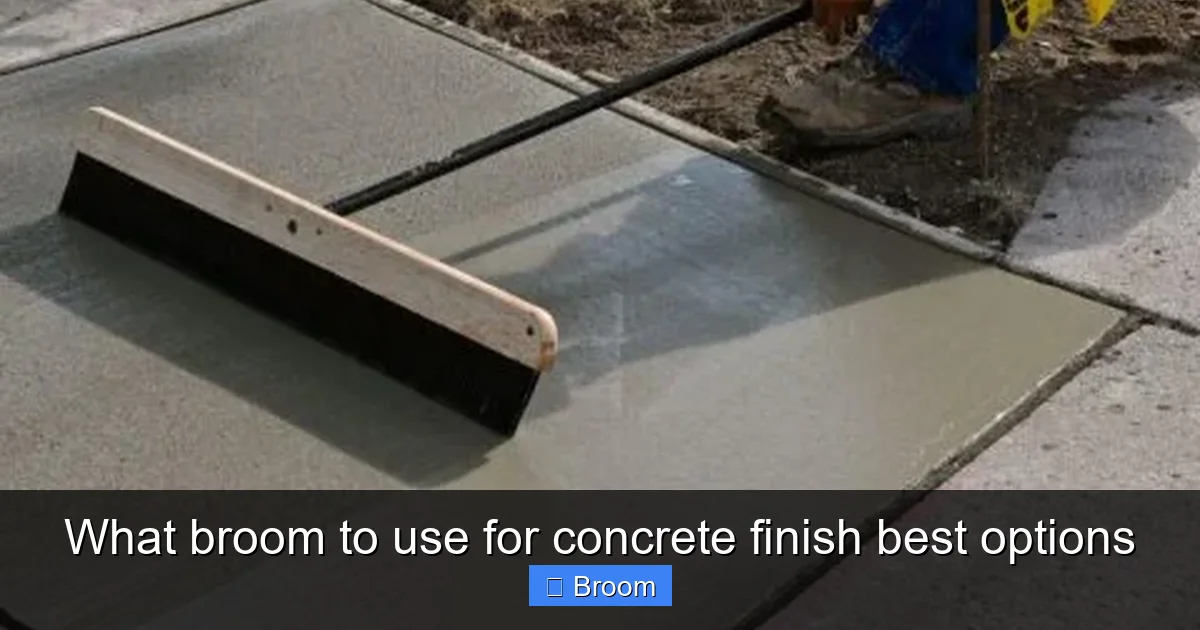
Visual guide about What broom to use for concrete finish best options
Image source: concretepolished.com
These ridges do three important things:
- Add slip resistance, especially when the surface is wet.
- Give the concrete a uniform, attractive texture.
- Hide minor imperfections from troweling or floating.
The broom marks can be light, medium, or heavy. The texture depends on what broom you use for concrete finish, how stiff the bristles are, and how much pressure you apply. That is why choosing the right broom is so important.
Key Factors When Choosing What Broom to Use for Concrete Finish
There is no single “best” broom for every job. The best choice depends on how and where the concrete will be used. Here are the main factors to consider when deciding what broom to use for concrete finish.

Visual guide about What broom to use for concrete finish best options
Image source: abrahamconcrete.com
1. Bristle Material
Bristle material is one of the most important details when you pick what broom to use for concrete finish.
- Soft to medium poly (plastic) bristles
These are the most popular choice for broomed concrete. They are flexible, durable, and resist water. They create clean lines without cutting too deep into the surface. They are ideal for driveways, patios, sidewalks, and general outdoor slabs. - Nylon bristles
Nylon bristles are tough and springy. They can last a long time and keep their shape. They are good if you want a sharper, more defined texture. However, they may be a bit aggressive on very soft concrete if you press too hard. - Horsehair or natural bristles
These are softer and usually used for finishing or very light textures. They are less common for standard broom finishes on outdoor concrete but can be used when you want a very fine, subtle finish.
For most DIY projects, when you ask what broom to use for concrete finish, the safest answer is a soft or medium poly bristle concrete broom.
2. Bristle Stiffness
Once you know the material, the next step in choosing what broom to use for concrete finish is stiffness.
- Soft bristles create a light, fine texture. Good for patios, pool decks, and decorative areas where you want slip resistance but a smoother feel.
- Medium bristles give a standard broom finish. This is ideal for most driveways, walkways, and general outdoor slabs.
- Stiff bristles create aggressive, deep grooves. These are used where maximum traction is needed, like steep ramps or industrial areas, but can look rough on residential work.
If you are unsure what broom to use for concrete finish on a typical home project, choose medium stiffness. It gives good grip and a clean look.
3. Broom Width and Handle Type
The size of the broom also matters when picking what broom to use for concrete finish.
- 24–36 inch (60–90 cm) brooms are best for large slabs. They cover more area and help create straight, even lines.
- 12–18 inch (30–45 cm) brooms are useful for narrow sections, steps, and around obstacles.
- Long handles or bull float adapters allow you to broom from the edge of the slab without stepping on the fresh surface.
Many pros use a wide concrete broom on a long pole for the main area and a smaller hand broom along edges and around posts. This combination is often the best answer when deciding what broom to use for concrete finish on complex layouts.
4. Surface Use and Location
Think about how the concrete will be used. This will strongly guide what broom to use for concrete finish.
- Driveways and parking pads: Medium broom, poly or nylon bristles, 24–36 inch width, straight or slightly angled pull.
- Sidewalks and walkways: Medium or light broom, 24 inch width, fine to medium texture so it is comfortable to walk on.
- Patios and pool decks: Soft to medium broom for a lighter, more barefoot-friendly finish.
- Steps and ramps: Medium to stiff broom for extra traction, especially in wet or icy climates.
Matching the broom to the use is the smartest way to decide what broom to use for concrete finish on any project.
Best Broom Types for Concrete Finish
Now let’s look at popular options and when each one is the best broom to use for concrete finish.
Soft Poly Concrete Broom
This is a go-to choice for many contractors and DIYers.
- Best for: Patios, pool decks, light-use walkways, decorative slabs.
- Texture: Fine, smooth ridges with good slip resistance.
- Why choose it: Gentle on the surface, less likely to tear the paste. Great when you want a neat look and comfortable feel.
If you are unsure what broom to use for concrete finish in a backyard living area, a soft poly broom is usually perfect.
Medium Poly or Nylon Concrete Broom
This is probably the most versatile option.
- Best for: Driveways, sidewalks, general outdoor slabs.
- Texture: Standard broom finish, visible lines, strong grip.
- Why choose it: Works well in most climates and for most uses. Easy to find and simple to use.
When people ask what broom to use for concrete finish on a driveway, this medium broom is the usual answer.
Stiff Bristle Concrete Broom
This broom is more specialized.
- Best for: Ramps, loading areas, steep driveways, industrial or farm use.
- Texture: Deep, aggressive grooves.
- Why choose it: Maximum slip resistance, even in mud, snow, or heavy traffic.
Only pick this when you know you need a very rough texture. For most homes, this is not the first choice when deciding what broom to use for concrete finish.
Edging and Detail Brooms
These are narrow hand brooms or small brushes.
- Best for: Steps, narrow paths, around posts, near walls, and tight spaces.
- Texture: Matches the main broom but in small areas.
- Why choose it: Lets you keep a consistent finish where a big broom will not fit.
For a professional look, use a small detail broom along all edges after you use your main broom. This completes your plan for what broom to use for concrete finish across the entire slab.
Step-by-Step: How to Use a Broom for Concrete Finish
Knowing what broom to use for concrete finish is only half the job. You also need the right technique. Here is a simple step-by-step guide.
Step 1: Prepare Your Tools
Before you start placing concrete, set out everything you need.
- Your chosen concrete broom (soft, medium, or stiff).
- A long handle or bull float adapter.
- A smaller hand broom for edges and steps.
- Clean water and a bucket (for rinsing the broom if needed).
Have the broom nearby but not in the way of the concrete crew. When you know what broom to use for concrete finish, you can plan your workflow and avoid rushing later.
Step 2: Place, Screed, and Float the Concrete
Pour the concrete, then screed it to level the surface. Use a bull float or darby to smooth out ridges and fill low spots. At this stage, do not broom yet. The concrete is too soft.
Allow bleed water to rise and evaporate. Never broom while there is still water on the surface. This is a key rule, no matter what broom you use for concrete finish.
Step 3: Test the Concrete for Proper Timing
Timing is critical. To check if the concrete is ready for brooming:
- Lightly press your fingertip into the surface.
- If it leaves a deep mark and feels mushy, wait longer.
- If it resists a little and leaves a shallow mark, it is close.
- If it is very hard and barely marks, it may be too late.
Another test is to drag a small hand broom or brush over a small area. If the broom tears the surface or pulls up paste, wait. If it creates clean, sharp lines, it is the right time to use whichever broom you chose for your concrete finish.
Step 4: Start Brooming in Straight Passes
Once the concrete is ready, attach the handle to your broom.
- Stand at one edge of the slab.
- Place the broom gently on the surface, bristles down.
- Pull the broom steadily toward you in a straight line.
- Lift the broom at the end of the pass to avoid dragging concrete back.
Each pass should be smooth and even. This is where your choice of what broom to use for concrete finish really shows. A good broom will glide and leave uniform ridges.
Step 5: Overlap Each Pass
Overlap each new pass by about 1–2 inches (2–5 cm) over the previous one. This prevents gaps or stripes between passes.
Keep the broom angle consistent. A slight tilt (not flat, not vertical) usually works best. Too much angle can create harsh lines. Too flat can cause the broom to chatter.
Work across the entire slab, always pulling in the same direction unless you are intentionally creating a cross-broom pattern.
Step 6: Broom Edges, Joints, and Steps
After the main area is broomed, switch to your smaller broom.
- Broom along edges where the big broom could not reach.
- Follow the direction of the main broom lines if possible.
- Broom each step tread for good traction.
- Broom along control joints, keeping lines neat.
Using a smaller broom here finishes the job and keeps the texture consistent. This is part of a complete plan for what broom to use for concrete finish on every part of the slab.
Step 7: Final Checks and Touch-Ups
Walk around the slab and look at the surface from different angles.
- Check for missed spots or uneven texture.
- Lightly re-broom small areas if needed, but avoid overworking.
- Do not go back onto the slab once it is too firm, or you may damage the finish.
Once you are satisfied, let the concrete cure properly according to the mix and weather conditions.
Adjusting Texture: Light, Medium, or Heavy Broom Finish
When you decide what broom to use for concrete finish, you also choose the final texture. You can fine-tune it with a few simple adjustments.
For a Light Broom Finish
- Use a soft bristle broom.
- Apply light pressure.
- Hold the broom at a low angle.
- Broom when the concrete is a bit firmer.
This is ideal for patios and pool decks where you want comfort and subtle lines.
For a Medium Broom Finish
- Use a medium bristle broom.
- Apply moderate pressure.
- Hold the broom at a moderate angle.
- Broom at the standard time, when concrete still marks easily but holds ridges.
This is the most common answer when people ask what broom to use for concrete finish on driveways and walkways.
For a Heavy Broom Finish
- Use a stiff bristle broom.
- Apply firm pressure.
- Hold the broom more upright.
- Broom a bit earlier, while the surface is slightly softer (but not mushy).
Use this only when you truly need extra grip, as it can be rough on shoes and hard to clean.
Common Problems and How the Right Broom Helps
Even if you know what broom to use for concrete finish, issues can still appear. Here are some common problems and how to fix or prevent them.
Problem 1: Torn or Gouged Surface
Cause: Concrete too soft, broom bristles too stiff, or too much pressure.
Fix: Wait a bit longer before brooming. Use a softer broom or reduce pressure. If the damage is minor, you can lightly re-broom once the surface firms up. This is why it is important to match what broom to use for concrete finish with the actual condition of the concrete.
Problem 2: Uneven or Patchy Texture
Cause: Inconsistent timing, varying pressure, or switching brooms mid-job.
Fix: Try to broom at the same stage of set across the slab. Use the same broom and technique from start to finish. If one area looks different, lightly re-broom the surrounding zones while the concrete is still workable.
Problem 3: Visible Stripes or Lines Between Passes
Cause: Not overlapping passes, or changing broom angle.
Fix: Overlap each pass by 1–2 inches and keep a steady angle. If you see stripes early, you can re-broom across the entire width to blend the texture.
Problem 4: Stones Dragging Through the Surface
Cause: Aggregate near the surface, broom bristles pushing stones.
Fix: Make sure bull floating and troweling bury stones properly. Use a softer broom and lighter pressure. If a stone drags, stop, pick it out, and lightly re-broom that area.
Care and Maintenance of Your Concrete Broom
Once you have chosen what broom to use for concrete finish, take care of it so it lasts and keeps working well.
- Rinse after each use. Wash off cement paste before it hardens in the bristles.
- Store flat or hanging. Do not crush the bristles under heavy items.
- Keep a “concrete-only” broom. Do not use your finish broom for sweeping dirt or gravel, or you will damage the bristles.
- Inspect regularly. Replace your broom if the bristles become bent, clumped, or worn unevenly.
Good maintenance makes sure that when you decide what broom to use for concrete finish on your next project, your trusted broom is ready to go.
Conclusion: Choosing the Best Broom for a Professional Concrete Finish
A clean, even broom finish looks simple, but it depends heavily on your choice of broom and timing. When you understand what broom to use for concrete finish, you can match bristle type, stiffness, and size to the job and the final texture you want.
For most home projects, a soft to medium poly concrete broom, 24–36 inches wide, will give you a reliable, attractive finish. Use a smaller hand broom for edges and steps. Broom only when the concrete is firm enough to hold ridges, and pull the broom in straight, overlapping passes.
With the right tools and technique, you can create a durable, non-slip, professional-looking broom finish on your concrete, even as a DIYer. The key is knowing exactly what broom to use for concrete finish and how to use it with confidence.
🎥 Related Video: Putting A Perfect Broom Finish On Concrete! West Coast Style!
📺 West Coast Custom Concrete
How to put a perfect broom finish on concrete.